Contents
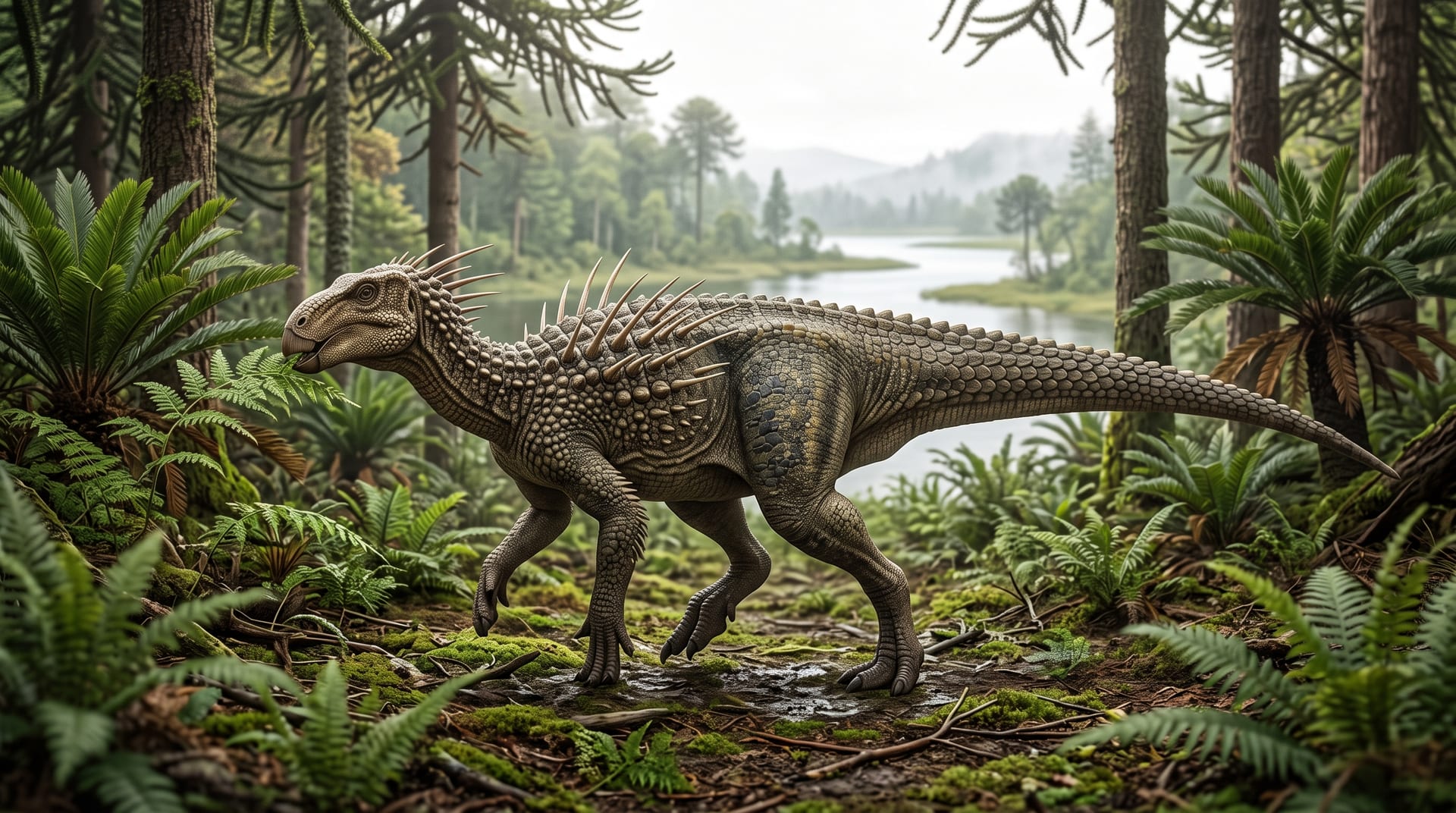
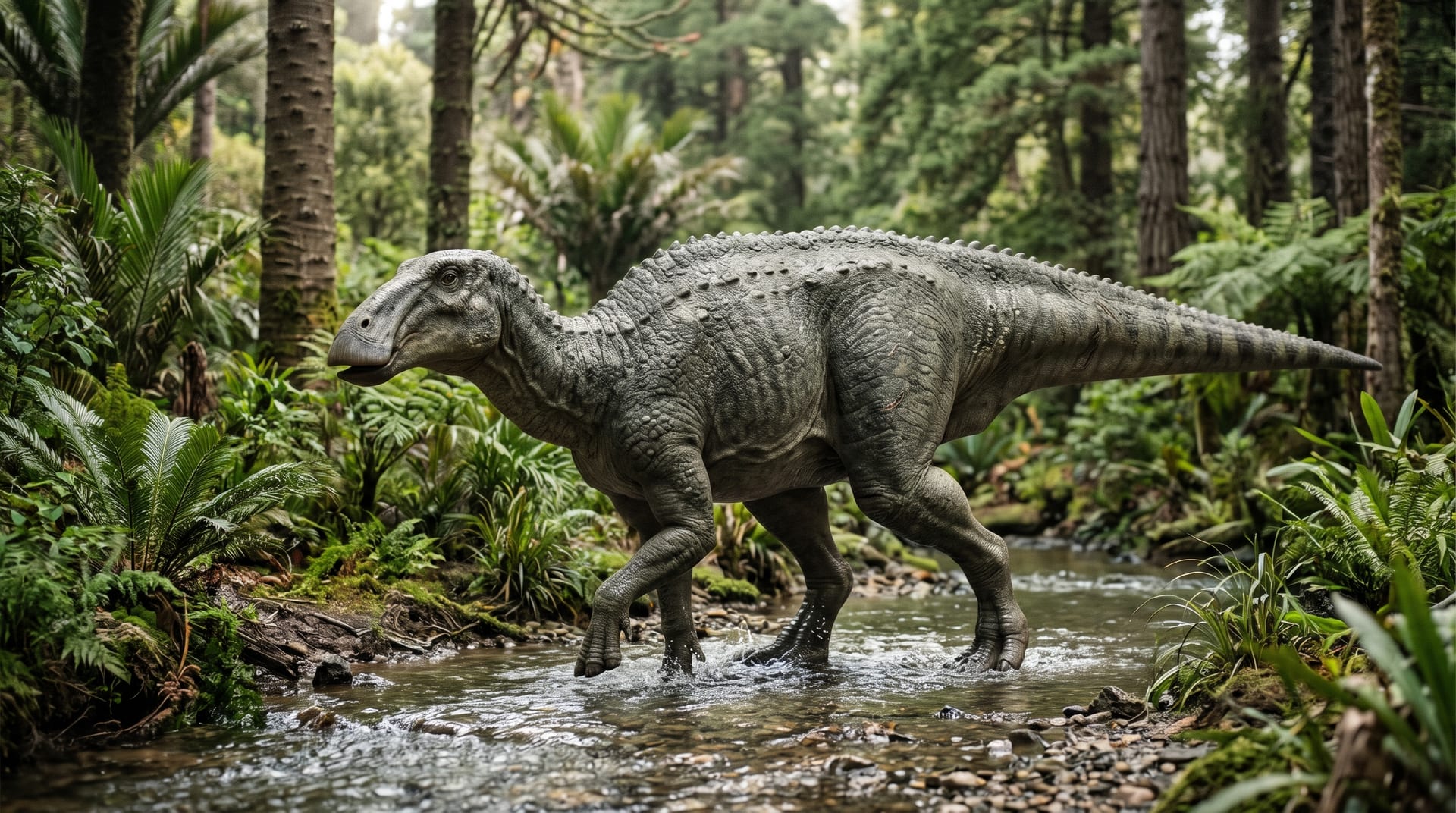
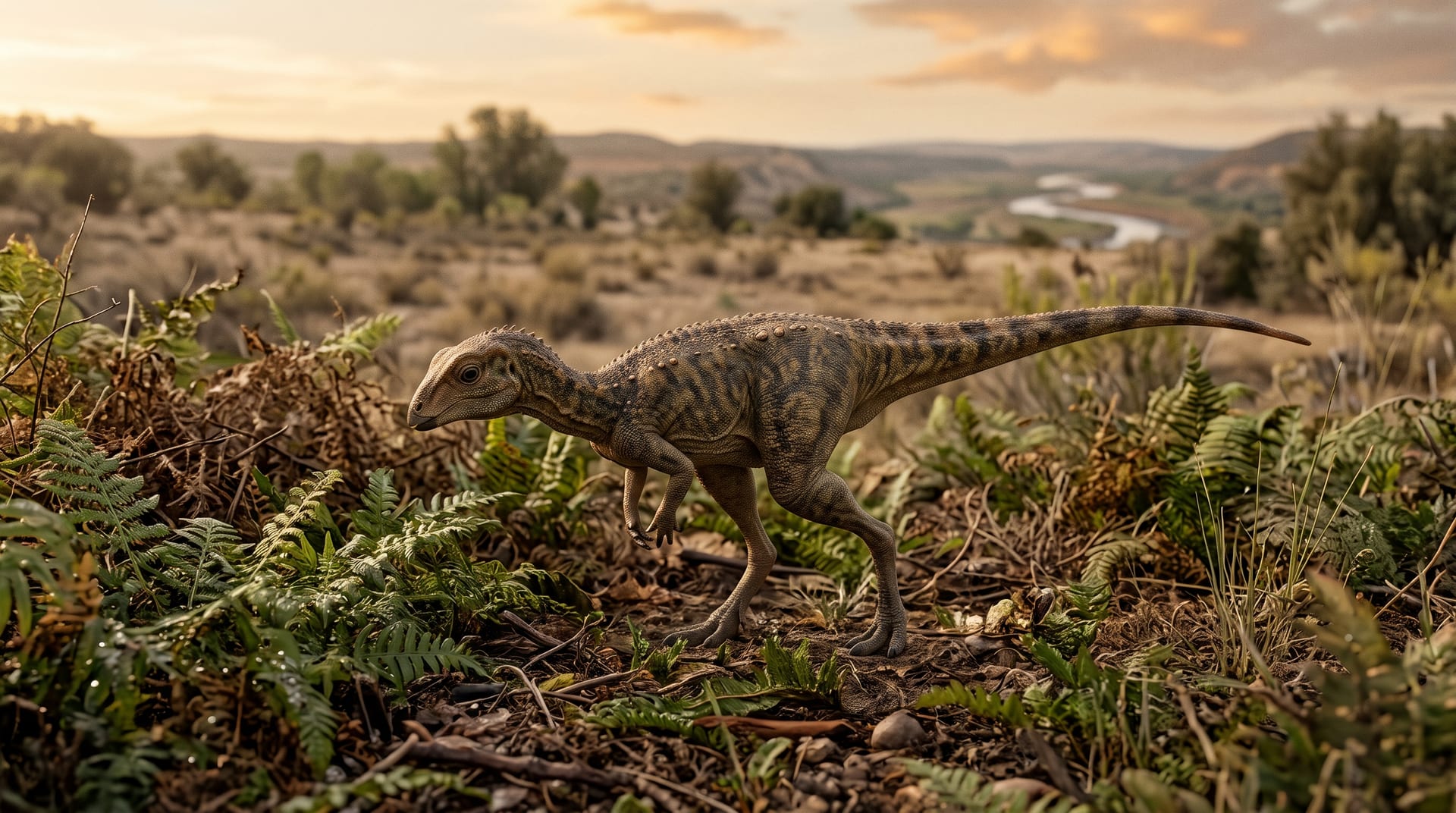
Foskeia was a tiny herbivorous dinosaur from the Burgos province of Spain that lived in the Early Cretaceous, around 120 million years ago. It was an ornithopod barely half a metre long2, roughly comparable in size to a modern chicken. Its only species, Foskeia pelendonum, is known from the remains of at least five individuals1.
How big was Foskeia?
At barely half a metre long2, Foskeia was small even among ornithopods. Sci.News describes it as roughly comparable in size to a modern chicken, which sets it apart from many of its larger ornithischian relatives1. A 2016 study of the same fossils called the animal slender and one of the smallest ever reported3 among ornithopods.
The bones come from animals of different ages. The 2016 study sorted them into three growth stages: one very small, three medium-sized and one bigger individual3. Bone microstructure shows that the largest specimen was a sexually mature adult, with a metabolic regime approaching that of small mammals or birds. Koen Stein of the Vrije Universiteit Brussel, who supervised that bone study, notes that young individuals are prone to changes in anatomical features2 as they grow, so knowing how it grew matters when comparing it with other species. An earlier analysis of the limb bones had read the largest known individual as a late subadult4.
Its body changed as it grew. Young Foskeia began life as quadrupedal animals and moved over to walking on two legs at an early stage. The more mature individuals had proportionally smaller forelimbs2, and muscle attachment marks on the thigh and shin bones point to a more dynamic and efficient locomotor system4 developing as the animal matured.
What did Foskeia eat?
Plants made up its diet, as the genus name signals: it refers to Foskeia’s small size and presumed herbivorous habits4, and despite its size it had specialized dentition2. The teeth of its maxilla and dentary, the main tooth-bearing bones of the upper and lower jaws, are unique, remarkably similar to those regarded as having a “rhabdomorphan” affinity, and it had a minimum of three premaxillary teeth3.
The maxillary teeth had spatulate crowns, set one behind the other in the jaw. On the dentary teeth, each secondary ridge is prolonged as a denticle3. Despite its extreme smallness, the skull as a whole was highly derived, with unexpected anatomical innovations2.
When and where did Foskeia live?
Its fossils date to the Upper Barremian to Lower Aptian3 of the Early Cretaceous.
All known fossils come from the Vegagete site in Burgos province, in the red-clay floodplain deposits of the Castrillo de la Reina Formation, between the municipalities of Villanueva de Carazo and Salas de los Infantes1. The site lies in the Cameros Basin in the north of Spain3. According to the VUB press release, it relied on bursts of speed in dense forests2.
How was Foskeia discovered?
The Vegagete deposit was excavated in 1998, from a red clay lens of roughly three square meters. Fidel Torcida Fernández-Baldor of the Dinosaur Museum of Salas de los Infantes first uncovered the fossils2. A first brief description assigned them to Hypsilophodon cf. foxii, and they were later classified as “Ornithopoda indet.”3
In 2016, Paul-Emile Dieudonné and colleagues published a full description of the bones, numbered MDS-VG,1 to MDS-VG,2803, but gave the animal no formal name; it was known as the Vegagete ornithopod. New skull bones from later fieldwork, studied with μCT scanning4, allowed a formal description.
The genus and species were named in 20265 in the journal Papers in Palaeontology1, in a study led by Paul-Emile Dieudonné of the National University of Río Negro, Argentina. The name Foskeia comes from ancient Greek: fos means “light”, for the lightweight and small body, and skei derives from boskein, foraging. The species name pelendonum refers to the Pelendones, a Celtiberian tribe2 from the Fuentes del Duero area.
What kind of animal was Foskeia?
Classification places Foskeia within Rhabdodontomorpha, a group of ornithischian dinosaurs that lived mainly during the Early to Late Cretaceous. The 2026 analysis places it as sister to the Australian Muttaburrasaurus and near the origin of the European herbivorous lineage Rhabdodontidae. It also expands the European clade Rhabdodontia. Thierry Tortosa of the Sainte Victoire Natural Reserve says the animal helps fill a 70-million-year gap2. Tábata Zanesco Ferreira of the Universidade Federal do Rio de Janeiro says it is not a “mini Iguanodon” but something fundamentally different1.
Studies have not agreed on its exact place in the family tree. The 2016 analysis recovered it as a basal iguanodontian and a stem taxon within Rhabdodontidae3. In 2025, Łukasz Czepiński and Daniel Madzia placed it in the Rhabdodontoidea. The 2026 study moved the whole rhabdodontomorph group to the base of the Ankylopollexia4, and its dataset also revived the long-debated Phytodinosauria, a grouping of the plant-eating dinosaurs that Dieudonné says should be further tested with more data2.
Similar dinosaurs
- Muttaburrasaurus: its sister in the 2026 analysis2, but a large ornithopod 7.0 m long from Australia, living 110–100 million years ago6.
- Rhabdodon: a rhabdodontid from the Late Cretaceous, 76–70 million years ago, 4.0 m long and found in Austria, France, Romania and Spain7.
- Zalmoxes: a rhabdodontid from Romania, 3.0 m long, that lived 69 million years ago8.
- Hypsilophodon: a slender ornithopod from England; the 2016 analysis found the Vegagete animal more derived than slender ornithopods like Hypsilophodon3 and Gasparinisaura.