Contents
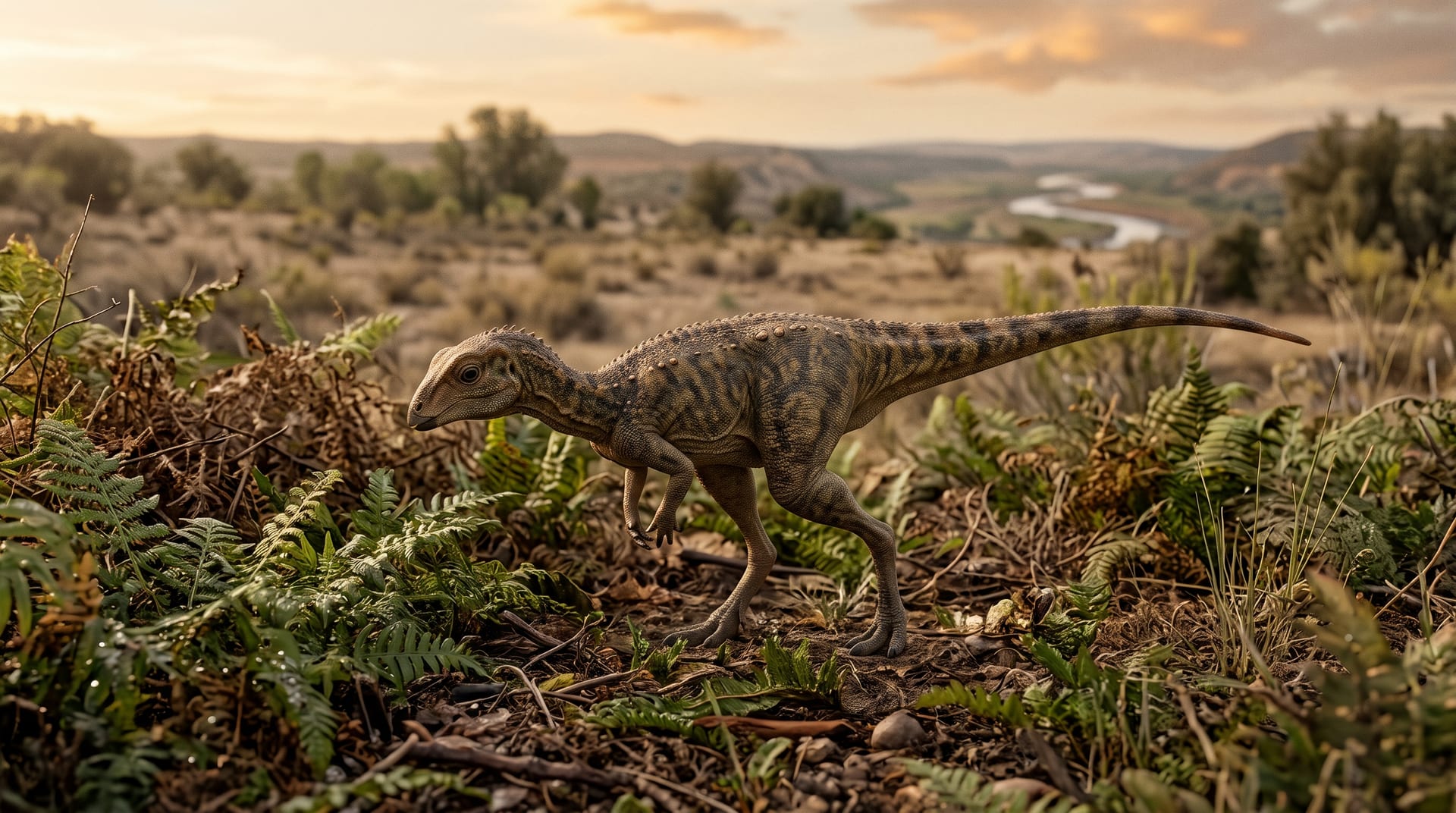
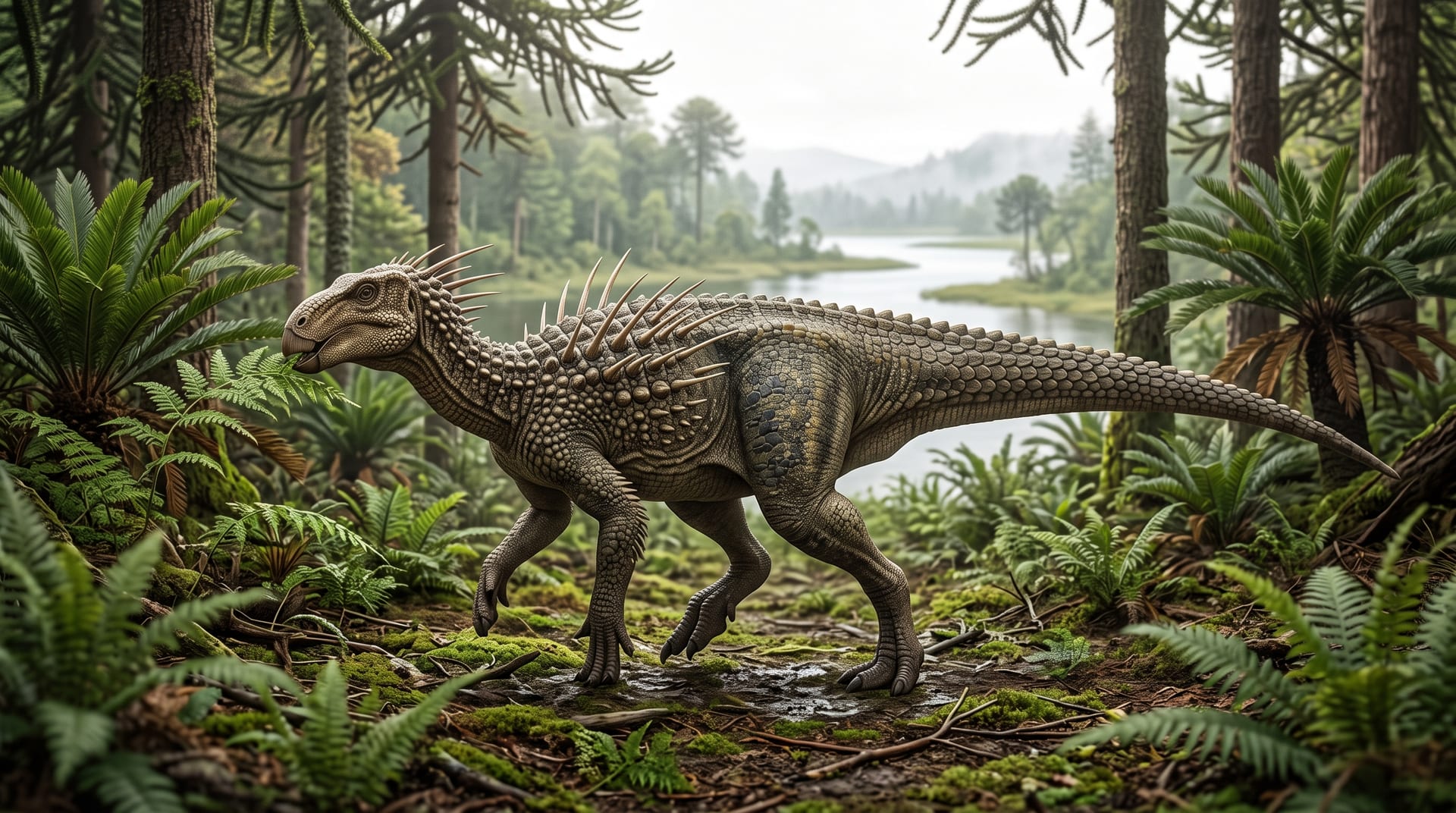
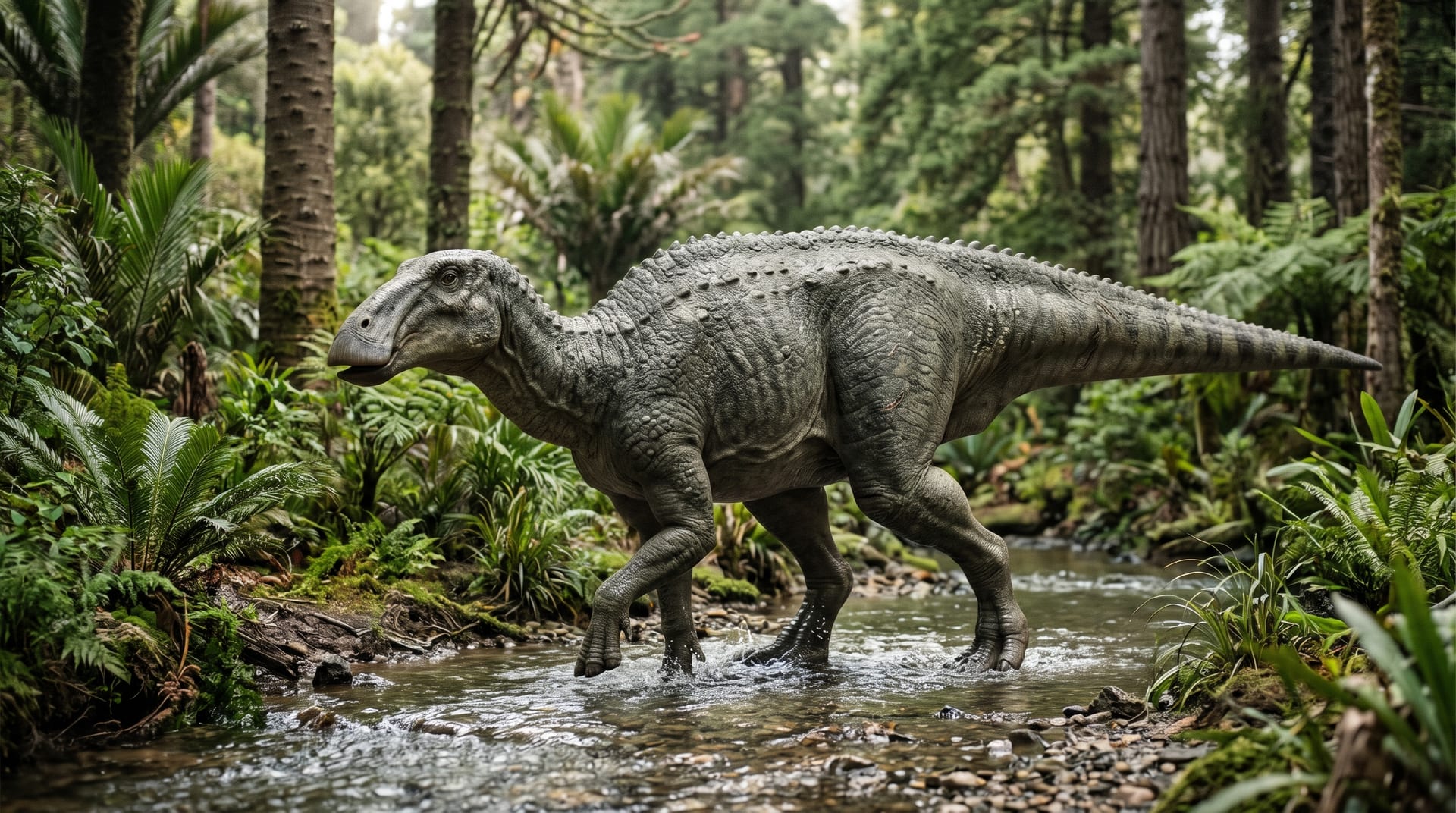
Kryptohadros was a herbivorous, duck-billed dinosaur whose incomplete skeleton was dug up in the Hațeg Basin of Romania. It lived in the Maastrichtian age of the Cretaceous, about 70 million years1 ago, and is known from a partial skull and skeleton of an animal that had at least reached a subadult stage. Its only species is Kryptohadros kallaiae, described in 20262.
How big was Kryptohadros?
The skeleton is partial, made up of a skull, rib fragments, tail vertebrae and a partial hindlimb1. The fused elements of the vertebral column and the size of the known material show that the individual at least reached a subadult stage2.
Close relatives give a sense of scale: Telmatosaurus, from the same basin, is listed at a length of 5.0 m3, while the Italian Tethyshadros, its closest relative, has an estimated body length of 4.5 metres4, though it has been argued this is an overestimate.
What did Kryptohadros eat?
Kryptohadros was a plant-eater. It was a hadrosauroid, a group of herbivorous ornithischians1 that included the famous duck-billed dinosaurs and their close relatives.
Among the bones the grey rock held was a right mandible, the animal’s lower jaw, now in the lab. Many of the remains found at the Vălioara digs belong to the Ornithischia, including the remains of the herbivorous hadrosauroid5 recognised as the new species.
When and where did Kryptohadros live?
The researchers place Kryptohadros in the early Maastrichtian2. The Paleobiology Database files it under the Maastrichtian, with a range of 72.2 to 66 million years ago6. It lived somewhat earlier than its neighbour Telmatosaurus, by up to 1–2 million years5.
The holotype was found at the vertebrate site of Fântânele-3 near Vălioara village in the Hațeg Basin, in continental deposits of the Densuș-Ciula Formation. The site lies in the westernmost part of Hunedoara County2, within the Hațeg Basin, a bowl-shaped depression in the Carpathians of present-day Romania1.
Back then the basin was an island. The area is known among palaeontologists for its unusual island-dwelling dinosaurs, and the fauna of “Hațeg Island”, which existed at the very end of the Cretaceous, may have been much more diverse5 than researchers once thought. Kryptohadros and its relatives form a lineage that evolved in the island environments of southeastern Europe1.
How was Kryptohadros discovered?
Researchers from ELTE University, the Hungarian Museum of Natural History, the Supervisory Authority for Regulated Activities (SARA) and the University of Bucharest have been digging near Vălioara since 2019. There they have collected thousands of fossils5 from the late Cretaceous.
The site of the new species was found in 2022, thanks to a newly built road. The team was mapping the rocks north of Vălioara, and the road cut into the hillside exposed the dark gray sand layers they knew held bones at other sites. Besides single bones, they found a partial skeleton of a hadrosauroid5. The holotype, LPB [FGGUB] R.2882, was dug up between 2022 and 20242.
Identifying the new species took several years. Skeletons that include skull bones, vertebrae and limb bones are very rare in the Hațeg Basin, especially for hadrosauroids, and most isolated bones from this group were thought to belong to Telmatosaurus. Telmatosaurus and its remains had to be redefined5 before the new skeleton could be compared with it in detail. In the end, the fragments were enough to set the new species apart from Telmatosaurus transsylvanicus, the dinosaur it had been confused with for over a century1.
In 2026, János Magyar and colleagues named it Kryptohadros kallaiae in the Journal of Systematic Palaeontology1. The Paleobiology Database records the author as Magyar et al. 20266. The name means “hidden” plus hadros, Ancient Greek for “thick” or “bulky”2, a word often used to name hadrosauroids. It is “hidden” because for almost 130 years only one hadrosauroid species was known from Transylvania, and this second one stayed in the shadow of Telmatosaurus. The species name honours Csilla Kállai5, the first author’s mother, who died early and always encouraged her son’s interest in natural science.
What kind of animal was Kryptohadros?
Kryptohadros was a hadrosauroid ornithopod dinosaur: a relative of the duck-billed hadrosaurs that sat outside the hadrosaurid family itself. It is the second non-hadrosaurid hadrosauroid2 named from the Hațeg Basin, after Telmatosaurus.
Two datasets found Kryptohadros to be the sister taxon to Tethyshadros2 from Italy, with Telmatosaurus as the sister of those two. The authors named the group of these three genera Telmatosauridae1, an endemic lineage of southeastern Europe. The three represent a separate evolutionary branch of Asian origin5 that is typical of Southeast Europe.
Kryptohadros and Telmatosaurus are close relatives, and their similarity is quite high1; the differences show mostly in the shape of the skull bones.
The analyses also found several different hadrosauroid lineages in the Late Cretaceous European Archipelago. Hadrosauroids that evolved in Asia appear to have reached Africa and North America through Europe in at least 7 separate migration events5, one of which brought the common ancestor of Kryptohadros and its relatives to southeastern Europe. Those ancestors arrived before the Campanian1, which ran from 84 to 72 million years ago.
Similar dinosaurs
- Telmatosaurus: the other hadrosauroid of the Hațeg Basin, named by Nopcsa in 19037. It lived somewhat later than Kryptohadros5, and the two differ mostly in the shape of the skull bones1.
- Tethyshadros: the closest relative, found in northern Italy5, listed in the Campanian8. Its holotype, nicknamed “Antonio”, is a mostly complete4 skeleton, unlike the partial one of Kryptohadros.