Contents
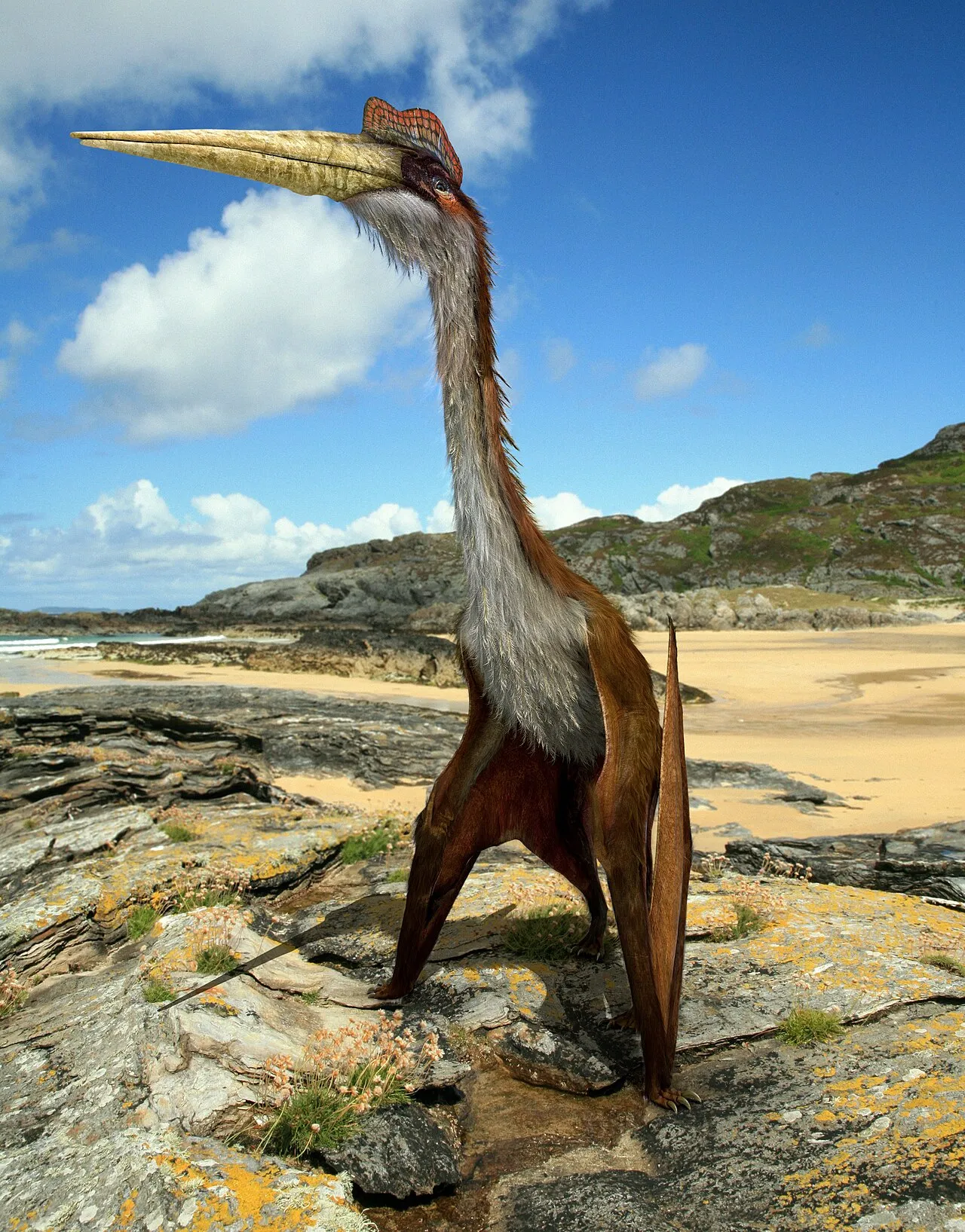
Quetzalcoatlus was a giant pterosaur, a flying reptile and not a dinosaur, that lived in the Late Cretaceous, about 72 to 66 million years ago. Its confirmed fossils come from the Javelina Formation of Texas, in the United States. The best-known species, Quetzalcoatlus northropi, had a wingspan of around 10 to 11 metres, which makes it one of the largest flying animals ever known.
How big was Quetzalcoatlus?
The genus contains two very differently sized species. Q. northropi, the type species, had a wingspan estimated at 10 to 11 metres, while the smaller Q. lawsoni had a wingspan of only about 4.5 to 5 metres.
The wingspan of Q. northropi has been debated since its discovery. Douglas Lawson’s original 1975 estimate put it at around 15.5 metres, or alternatively as little as 11 metres or as much as 21 metres, but current research has converged on the smaller figure of 10 to 11 metres.
Weight estimates vary just as widely, because there is no complete skeleton to measure directly. The modern consensus for Q. northropi puts it at around 200 to 250 kilograms. Other studies disagree sharply: a 2021 estimate by Kevin Padian put it at about 150 kilograms, while a 2010 estimate by Donald Henderson gave a much heavier outlier of up to 540 kilograms.
What did Quetzalcoatlus eat?
Quetzalcoatlus was a carnivore, most likely hunting small animals on the ground rather than catching prey in flight. Researchers have compared its probable feeding style to that of a stork or a ground hornbill, stalking small prey on foot with its long neck and beak.
The smaller species may have fed differently. Q. lawsoni is linked to alkaline-lake environments and may have eaten small aquatic invertebrates there.
When and where did Quetzalcoatlus live?
Quetzalcoatlus lived in the Late Cretaceous, in the Maastrichtian stage, dated by the Paleobiology Database to about 72.2 to 66 million years ago. The best-dated material, from Texas’s Javelina Formation, is pinned more narrowly to 68 to 66 million years ago.
Its confirmed fossils all come from one place: the Javelina Formation of Big Bend National Park in Texas. Possible material has turned up elsewhere in North America and in Morocco, but a Montana vertebra and an Alberta femur once linked to the genus have since been reassigned to the separate genera Infernodrakon and Cryodrakon, and the Moroccan specimen is only tentatively compared to Quetzalcoatlus.
How was Quetzalcoatlus discovered?
Quetzalcoatlus was named by Douglas A. Lawson in 1975, based on fossils from the Javelina Formation in Texas. The genus name honours Quetzalcoatl, the feathered-serpent deity of Aztec mythology, a fitting name for a giant flying reptile.
The type species is Quetzalcoatlus northropi; a second, much smaller species, Q. lawsoni, was described later from more complete remains.
What kind of animal was Quetzalcoatlus?
Quetzalcoatlus was not a dinosaur. It was a pterosaur, a flying reptile, and belongs to the family Azhdarchidae, within the subfamily Quetzalcoatlinae. Pterosaurs were reptiles that evolved flight independently of both dinosaurs and birds, and azhdarchids were a group of pterosaurs known for their long necks, long legs and, in genera such as Quetzalcoatlus, enormous size.
Similar pterosaurs
- Hatzegopteryx: another giant azhdarchid, among the largest flying animals ever known alongside Quetzalcoatlus.
- Arambourgiania: a large azhdarchid pterosaur from Jordan, also among the biggest flying animals of the Late Cretaceous.
- Pteranodon: a smaller, earlier pterosaur from North America, better known for its toothless beak and head crest.