Contents
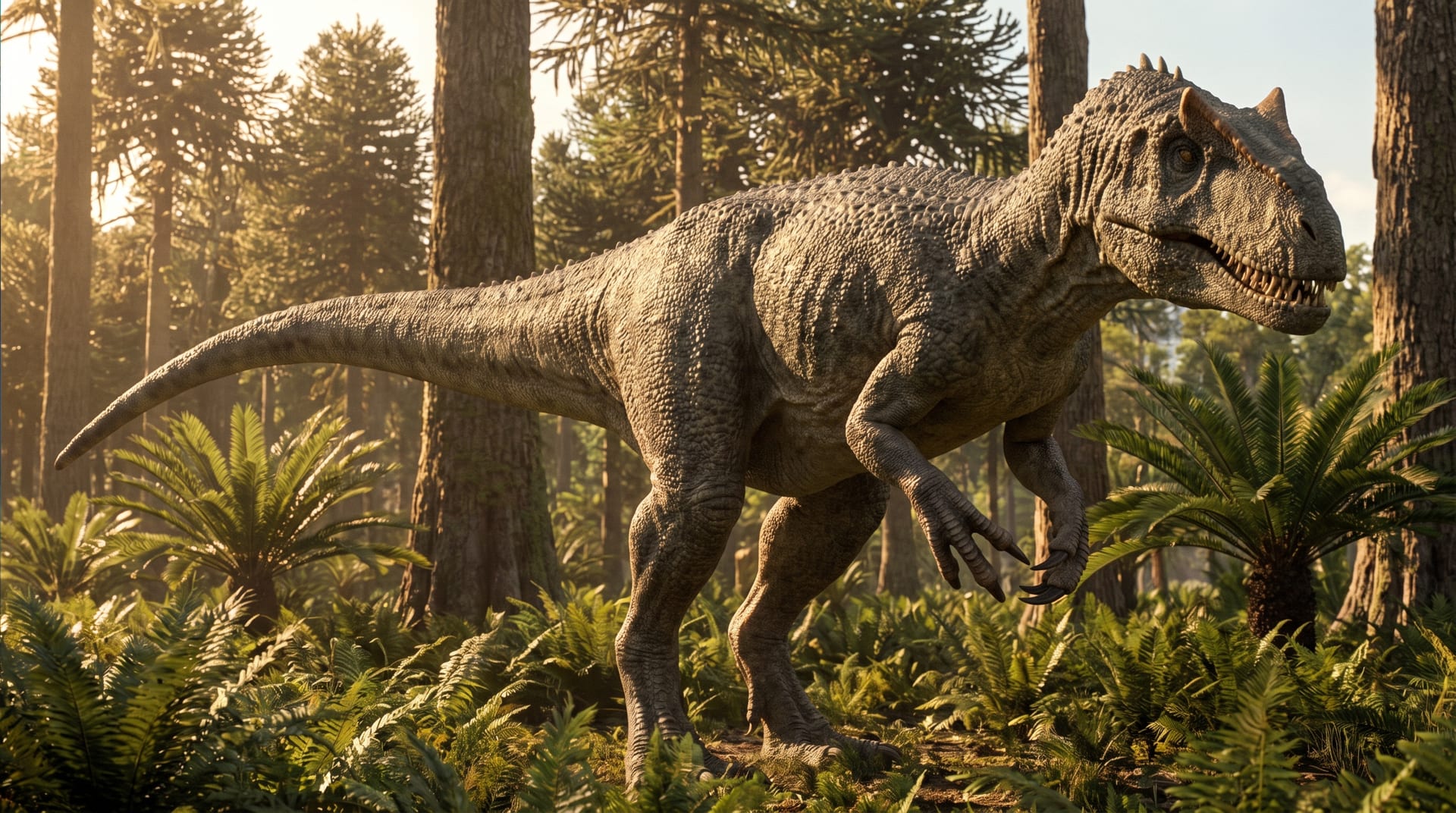
Allosaurus was a large, two-legged meat-eating dinosaur that lived in what is now the USA, during the Late Jurassic, about 152 to 145 million years ago; later finds pushed its range as far as Portugal. A typical adult is put at about 9.7 metres long1, though a count of most known skeletons of the type species puts the average closer to 7.5 to 8 metres2. It was one of the top predators of its day, hunting and scavenging the plant-eating dinosaurs it shared its world with.
How big was Allosaurus?
Size estimates vary with the specimen and the method. The Natural History Museum’s figure for a typical adult is 9.7 metres long and about 2,700 kilograms1. A tally of known skeletons of the type species, A. fragilis, instead finds most individuals 7.5 to 8 metres long, up to 2.7 tonnes in large adults. A separate, larger species, formerly assigned to the dubious genus Saurophaganax and renamed Allosaurus anax in 2024, is estimated at 3.8 to 4.6 tonnes2, the heaviest known Allosaurus.
The skull carried small horns above and in front of the eyes1, formed by ridges on the nasal and lacrimal bones; a 7.9-metre individual’s skull measured about 845 millimetres long, and the horns themselves were probably too delicate for combat, serving instead as sunshades or display structures. The arms were short next to the powerful hind legs, but each hand carried three fingers tipped with large, strongly curved claws2.
What did Allosaurus eat?
Dagger-like, serrated teeth marked Allosaurus out as a carnivore that hunted plant-eating dinosaurs such as Stegosaurus and Diplodocus, and Stegosaurus fossils turn up with Allosaurus bite marks on them1. Fossils show the fight went both ways: an Allosaurus tail bone carries a partially healed puncture wound that fits a Stegosaurus tail spike, while a separate Stegosaurus neck plate carries a U-shaped wound that matches an Allosaurus snout2.
Its skull was not built like a crushing tool: engineering studies found its bones could withstand almost 55,500 newtons, far more than its muscles’ 8,724-newton bite, leading researchers to compare it to a machete built for slashing flesh rather than cracking bone. A maximum jaw gape of about 92 degrees, wider than has been estimated for Tyrannosaurus, may have let it bring its skull down onto prey in a fast, hinging strike. Allosaurus scavenged too: tooth marks and shed teeth turn up on sauropod carcasses at every stage of decay2, with no sign it was put off by decomposition.
When and where did Allosaurus live?
Allosaurus lived in the Late Jurassic, about 152 to 145 million years ago, in the Kimmeridgian and Tithonian stages, with its main fossil record coming from the Morrison Formation of the USA1. A wider dating for material referred to the genus runs from the Oxfordian to the Tithonian, about 155 to 143 million years ago, a range that also covers bones found in the Lourinhã, Bombarral and Alcobaça formations of Portugal2, described as the species Allosaurus europaeus.
The Morrison Formation was shared with sauropods such as Apatosaurus, Brachiosaurus, Diplodocus and Camarasaurus, the plated Stegosaurus, and the smaller, horned theropod Ceratosaurus3. Allosaurus was abundant there: the Cleveland-Lloyd Dinosaur Quarry in Utah alone has produced remains of 73 individual dinosaurs, at least 46 of them A. fragilis. Because its fossils turn up across the state, Allosaurus was named Utah’s official state fossil in 19882.
How was Allosaurus discovered?
The first known Allosaurus bones were collected in 1869 by Ferdinand Hayden near Middle Park, Colorado2; Joseph Leidy initially placed the fragment in the European genus Poekilopleuron before creating a new genus, Antrodemus, for it. Othniel Charles Marsh named Allosaurus fragilis in 18774, based on a collection of fragmentary bones. The name means “different lizard”1, chosen because Marsh found the lightweight construction of its backbone unlike that of other dinosaurs known at the time.
A nearly complete skeleton, collected in 1879 by one of Edward Drinker Cope’s fossil collectors, sat unpacked until 1903, then became the first free-standing theropod skeleton ever mounted, posed scavenging an Apatosaurus. A 95 percent complete subadult skeleton nicknamed “Big Al” was found in 1991 at the Howe Ranch Quarry in Wyoming and was later assigned to the species A. jimmadseni along with several other specimens. The species’ holotype is a different skeleton, excavated between 1990 and 1996 from Dinosaur National Monument2, ranking among the most complete Late Jurassic theropod skeletons known.
What kind of animal was Allosaurus?
A large theropod, Allosaurus is the type genus of the family Allosauridae. Despite a broadly similar build, it was not closely related to Tyrannosaurus, which belongs to a separate theropod lineage and lived about 79 million years later1.
More than one species is recognised in the genus: A. fragilis, the original type species, is best known from the Morrison Formation and the Cleveland-Lloyd Quarry; A. jimmadseni was formally described in 2020, named for palaeontologist James H. Madsen; A. europaeus was described in 2006 from Portuguese material, though its status as distinct from A. fragilis is debated; and A. anax, named in 2024 for the largest known material2, was previously assigned to the dubious genus Saurophaganax.
A CT scan of an Allosaurus braincase found a brain shaped more like a crocodilian’s than a bird’s, with balance organs suggesting it normally held its skull close to horizontal2 and an inner ear tuned more to low-frequency sounds than to subtle ones.
Multiple skeletons are sometimes found together, and while this has fuelled speculation about pack hunting, some remains also carry bite marks from other Allosaurus, so the animals likely also competed and fought with each other1.
Similar dinosaurs
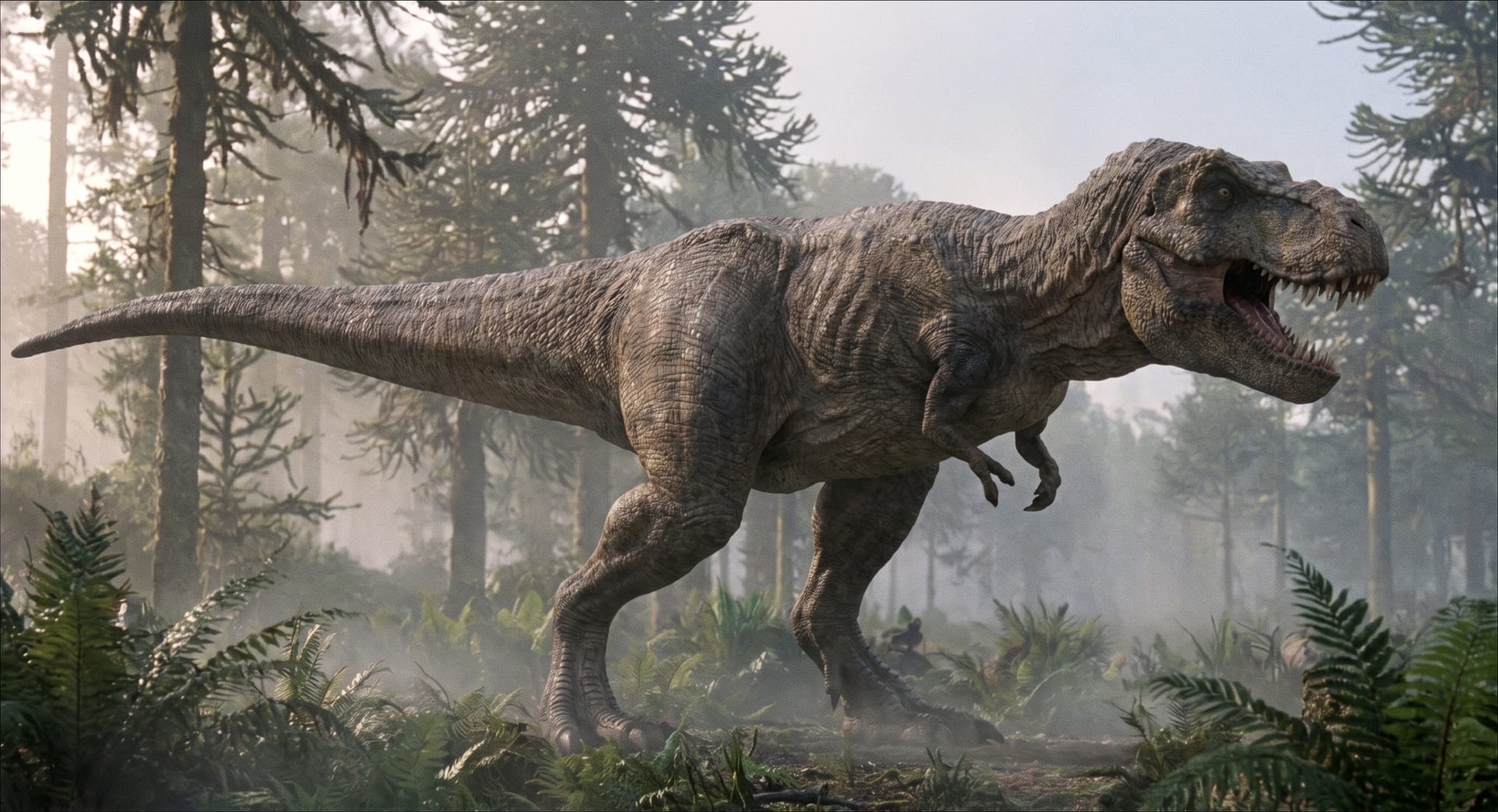
- Tyrannosaurus: a similarly built giant theropod, but not a close relative of Allosaurus, living roughly 79 million years after Allosaurus1 and typically bigger, at about 12 metres long against Allosaurus’s typical 9.7 metres5.
- Stegosaurus: the plated plant-eater Allosaurus is best documented preying on, with bite and puncture wounds on both animals recording their fights2.
- Ceratosaurus: a smaller contemporary theropod in the same Morrison Formation ecosystem, easily told apart by the horn on its snout and bony armour down its back; its fossils are much rarer than those of Allosaurus3, which it occasionally fed on, leaving probable tooth marks on Allosaurus bones.