Contents
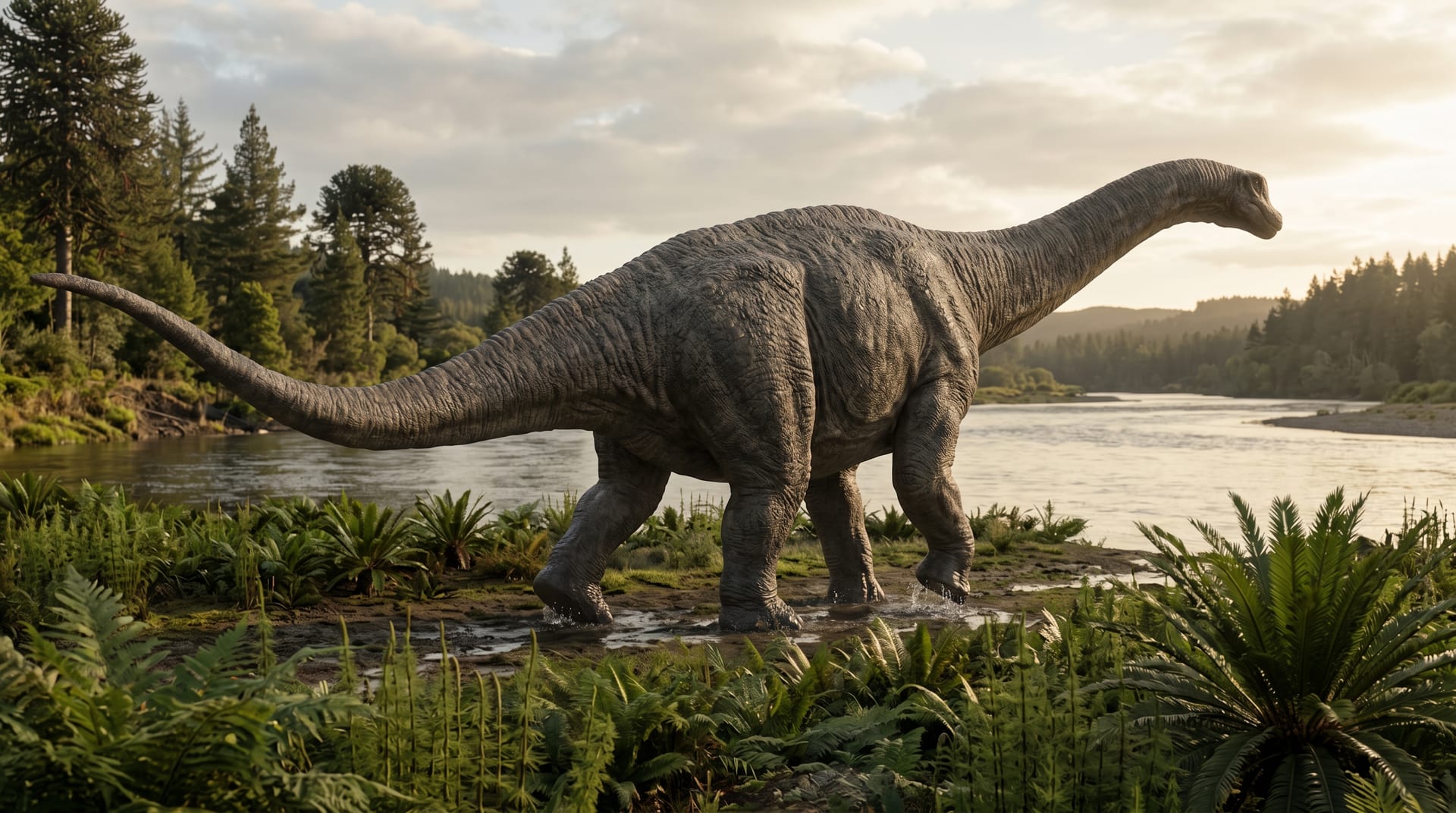
Nagatitan was a large sauropod dinosaur that lived in what is now northeastern Thailand during the Aptian–Albian ages of the Early Cretaceous, 121.4 to 100.5 million years ago. Its describers obtained an estimated body mass of approximately 27 tonnes and a length of 27 m1, which, as of its 20262 description, makes it the largest dinosaur known from Southeast Asia. The only species is Nagatitan chaiyaphumensis, known from a partial skeleton3.
How big was Nagatitan?
The team that named Nagatitan estimated its weight from the minimum shaft circumference of the humerus and femur, the upper arm and thigh bones, arriving at a body mass of 26,582 kilograms and a body length of 27.15 metres; their summary gives the mass as a range of 25–28 tonnes1. National Geographic reported the same animal as over 88 feet long and nearly 30 tons4.
In Asia, Nagatitan was big but not the largest titanosauriform: Ruyangosaurus is the largest species, with an estimated body mass of over 50 tonnes1. The right forelimb of Nagatitan is longer than that of Patagotitan and Dreadnoughtus, though the whole animal likely was not as big as those two, which weighed an estimated 60 and 50 tons. One dorsal rib recovered from the site is about six feet long4.
The researchers also place Nagatitan in a wider pattern: Asian titanosauriforms from before the Aptian had an average body mass of approximately 9 tonnes, while most titanosauriforms from the Aptian onwards exceed 20 tonnes1.
What did Nagatitan eat?
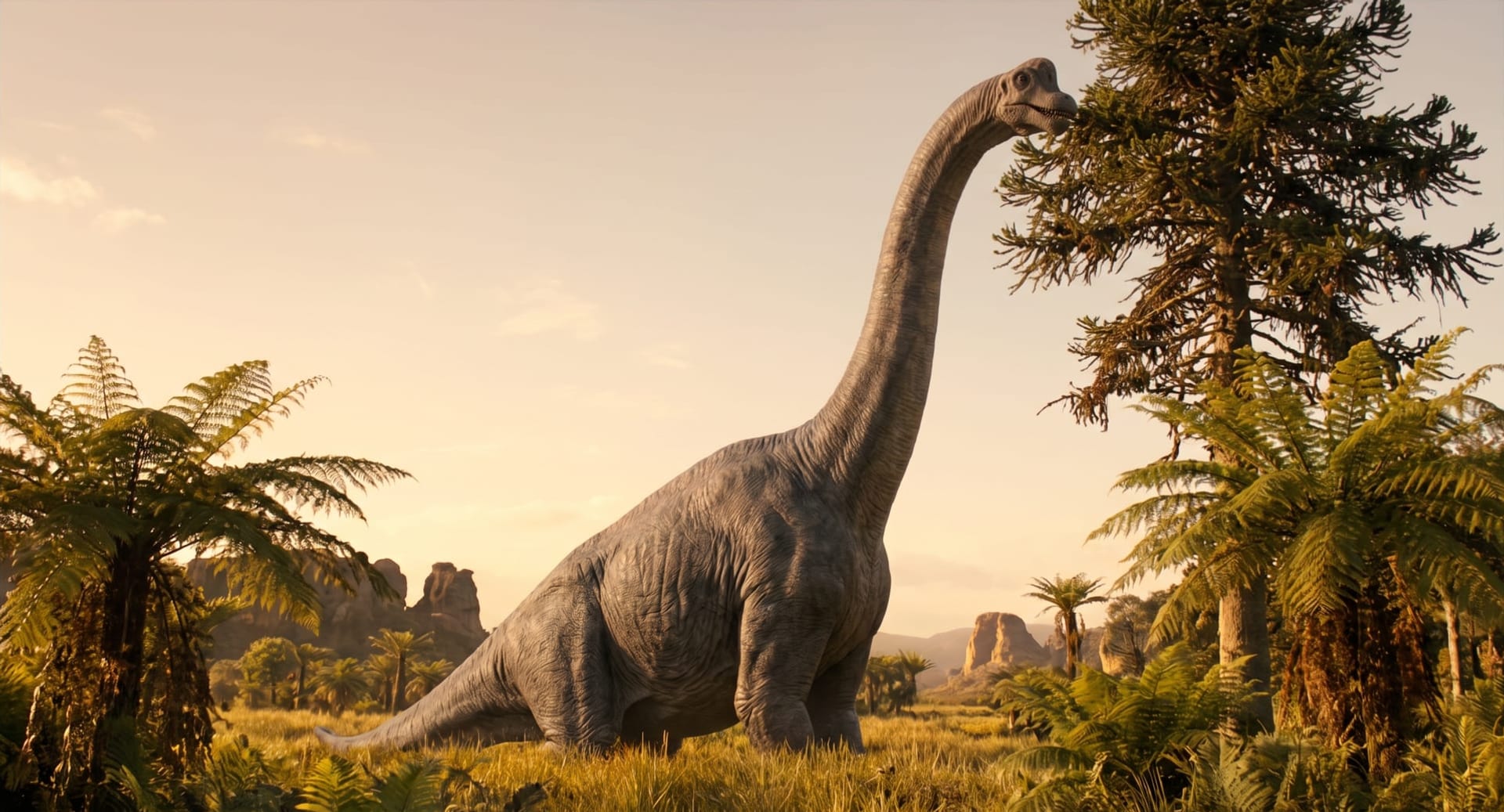
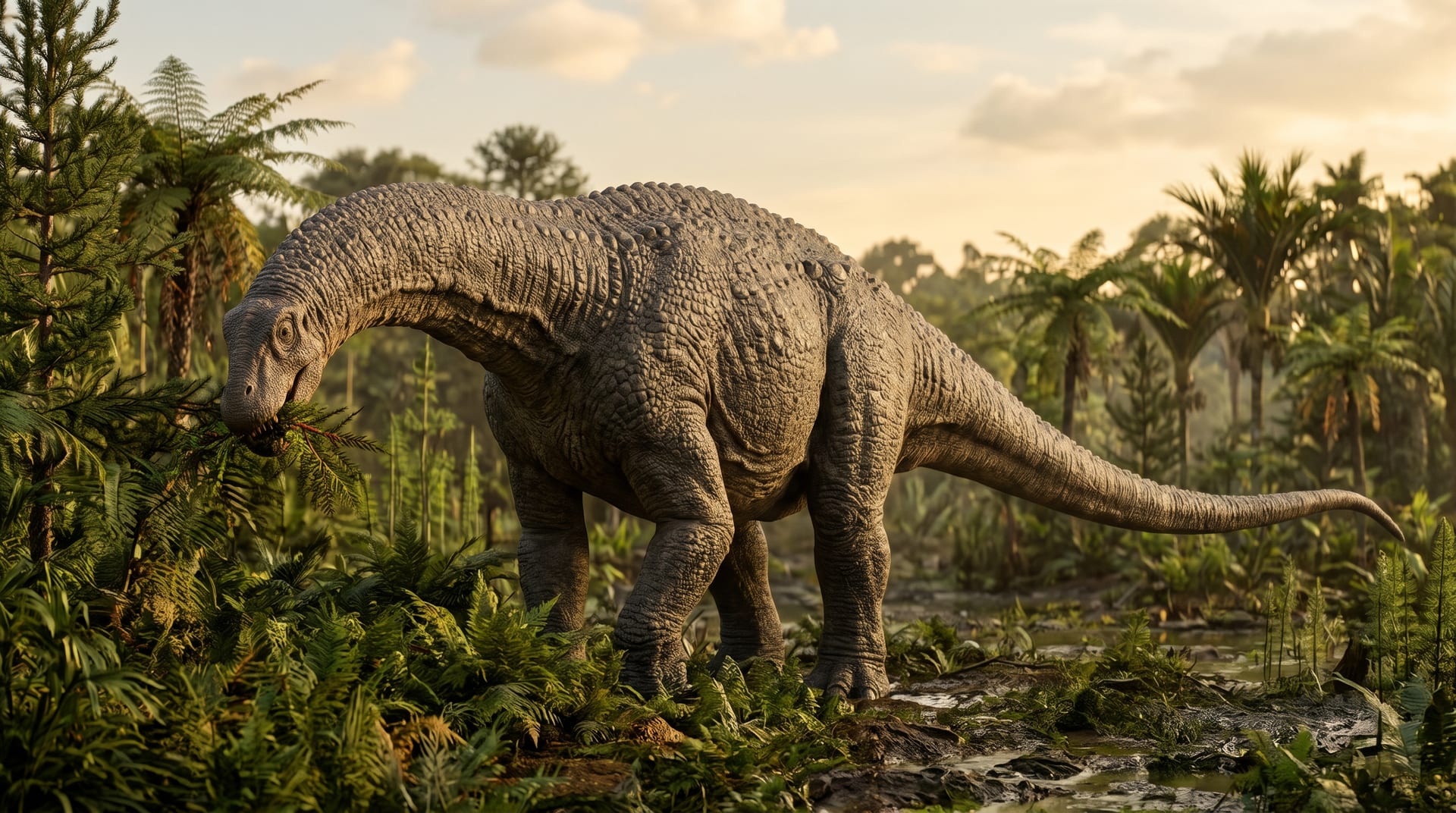
Nagatitan was one of the humongous herbivores of its world, which could travel through the woodlands, browsing on trees and nibbling plants like horsetails and ferns down low, and their feeding and trampling kept habitats open and savanna-like4. The describing paper says rising temperatures might not have directly driven the increase in body mass, but contributed to the trend towards savanna-like arid environments, which favour large primary consumers such as sauropods1.
The type skeleton is postcranial, made up of vertebrae, ribs, hip bones, an upper arm bone and a mostly complete thigh bone, with no skull or teeth. Earlier finds from the Khok Kruat Formation included two peg-like tooth morphologies1, tentatively identified as coming from a titanosauriform similar to Euhelopus.
When and where did Nagatitan live?
The fossils come from the Khok Kruat Formation, the youngest fossil-bearing Mesozoic rock unit in Thailand, at the Ban Pha Nang Sua site in the Nong Bua Rawe District of Chaiyaphum Province. Palynomorph data indicate an upper Aptian age1 for the formation, with its upper part possibly reaching into the Albian. National Geographic describes the bones as entombed in 113-million-year-old rock4.
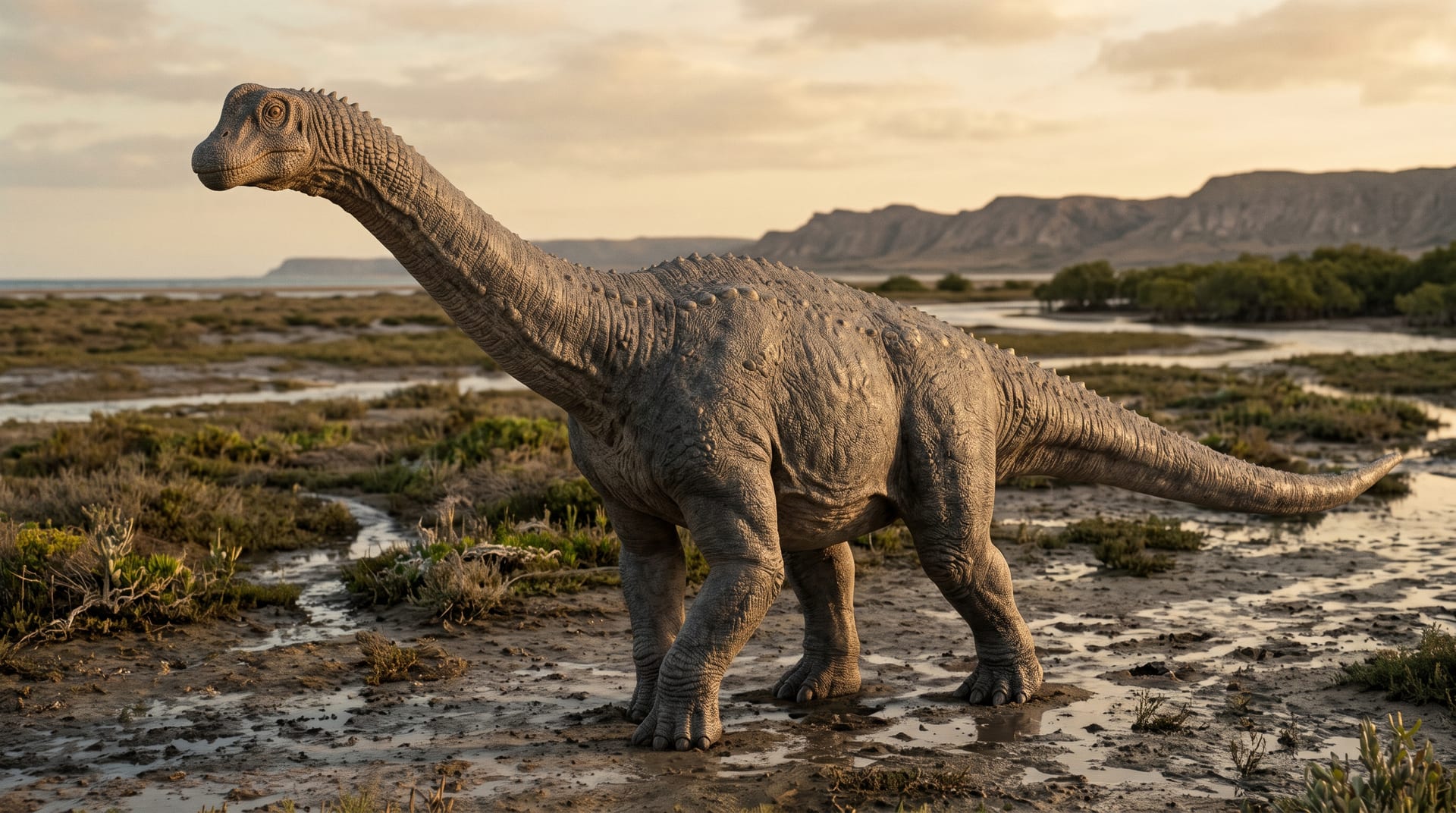
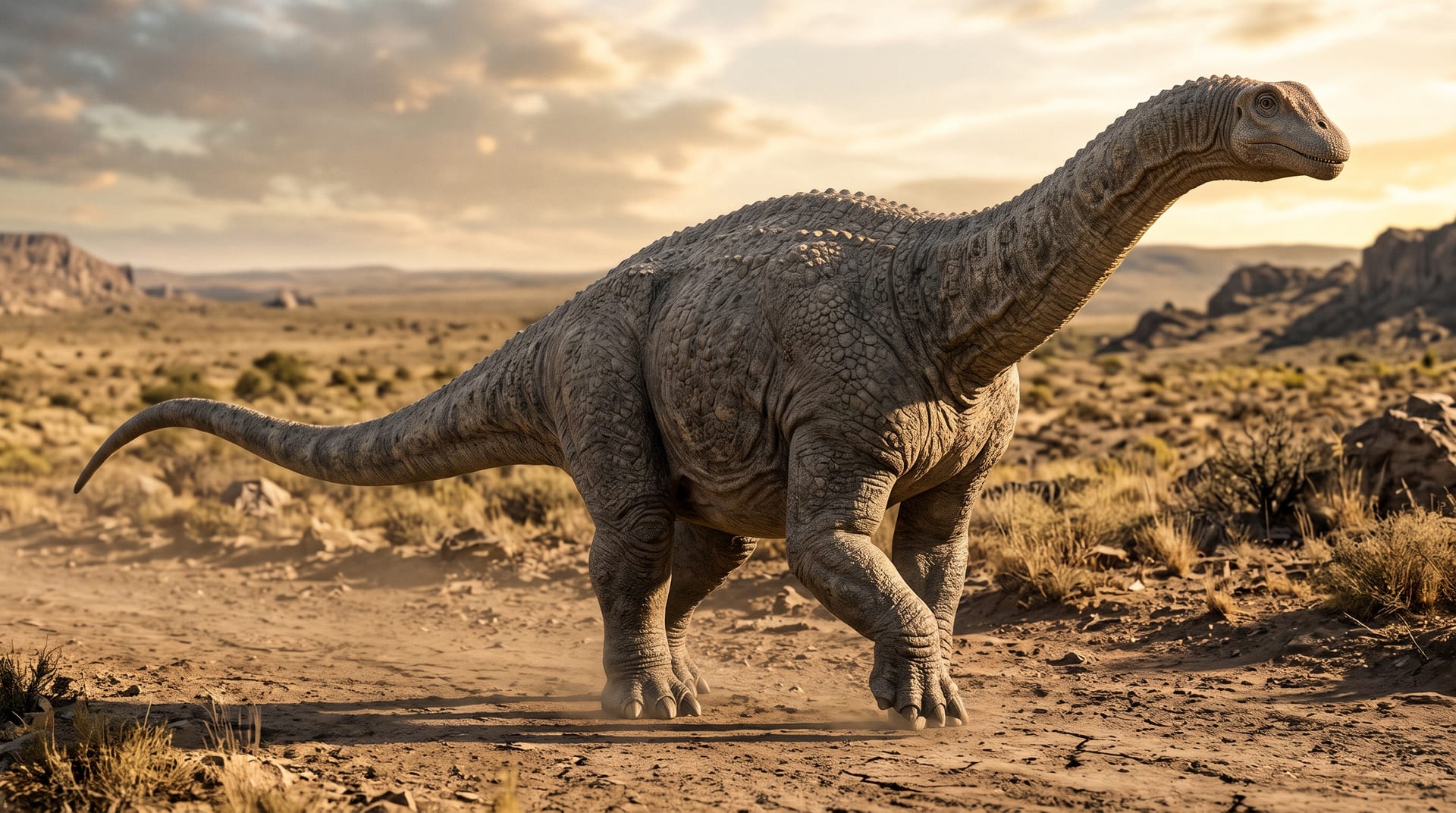
The rocks at the site record a meandering river system in a semi-arid paleoenvironment1. At that time Thailand was closer to the equator than it is today, and clues from the same formation point to relatively open, slightly dry shrublands4.
The same site produced an allosauroid tooth, a spinosaurid tooth, a crocodyliform tooth and a tooth of Heteroptychodus steinmanni. The wider Khok Kruat Formation has yielded fish, sharks, turtles, crocodyliforms, pterosaurs, ornithischians and theropods1.
How was Nagatitan discovered?
The first bones were found in 2016 by a local man named Thanom Luangnan4, who noticed strange-looking rocks on the banks of a public pond. The bone bed was exposed during the dry season, when lower water levels uncovered it on the side of the pond. Fieldwork ran from 2016 to 2019, and the remaining specimens were excavated in 2024. The bones are kept at the Sirindhorn Museum in Kalasin Province1.
Thitiwoot Sethapanichsakul and colleagues named Nagatitan chaiyaphumensis in the journal Scientific Reports in 20262. The name combines Naga, a mythological serpent-like creature1 found in Asian cultures and especially northeastern Thailand, with titan, a giant of Greek mythology. The species name refers to Chaiyaphum3, where it was found.
The type specimen, numbered SM2025-1-546 to SM2025-1-5561, includes four dorsal vertebrae, five dorsal ribs, four sacral vertebrae, five sacral ribs, the right humerus, the right ilium, both pubes and a mostly complete right femur. A paleontologist not involved in the study called it the most complete sauropod specimen discovered from the Khok Kruat Formation4.
What kind of animal was Nagatitan?
Nagatitan was a somphospondylan titanosauriform, a kind of sauropod, and both of the paper’s analyses place it in Euhelopodidae1, a group thought to be endemic to Asia. Somphospondylans tend to have long forelimbs compared to other sauropods, as well as a wide stance4.
The two analyses differ on its nearest relatives: with equal character weighting, Nagatitan is the sister taxon to Europatitan from Spain; with implied weighting it sits between Tangvayosaurus and Phuwiangosaurus. It does not form an endemic subclade with Phuwiangosaurus and Tangvayosaurus1, the other, approximately contemporaneous Southeast Asian euhelopodids.
Similar dinosaurs
- Phuwiangosaurus: another Thai euhelopodid, from the Valanginian–Barremian Sao Khua Formation; Nagatitan has two hyposphene shapes in its back vertebrae where Phuwiangosaurus has one, and outweighed it by approximately 10 tonnes1.
- Tangvayosaurus: from the Aptian–Albian of Laos and close in size, with an estimated approximately 23 tonnes and 24 m; its middle back vertebrae lack a lamina (aSPDL) that Nagatitan has1.
- Europatitan: a partial skeleton from the Barremian–Aptian of Spain; unlike Nagatitan, its dorsal pneumatic openings are divided by internal ridges1.