Contents
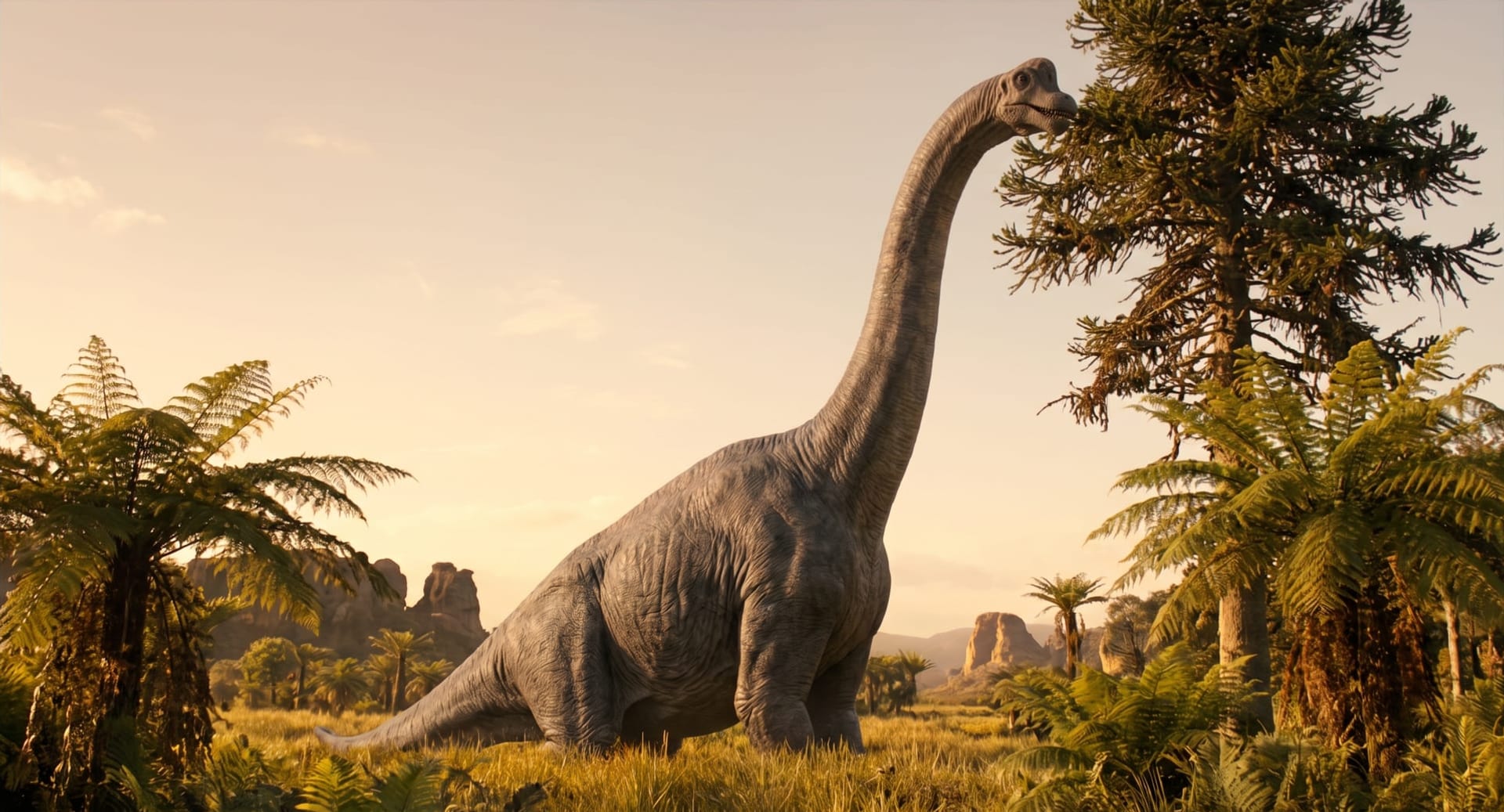
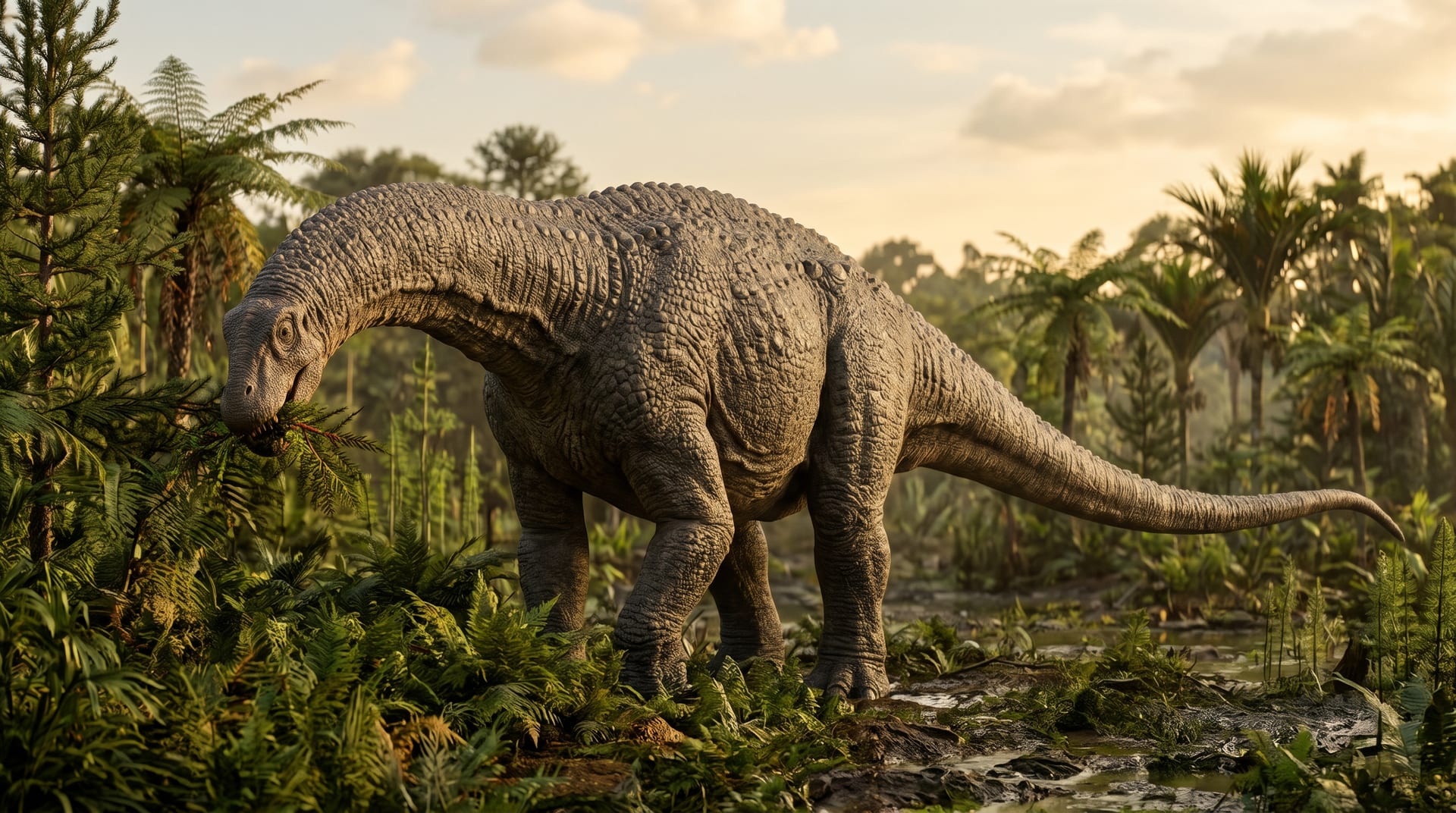
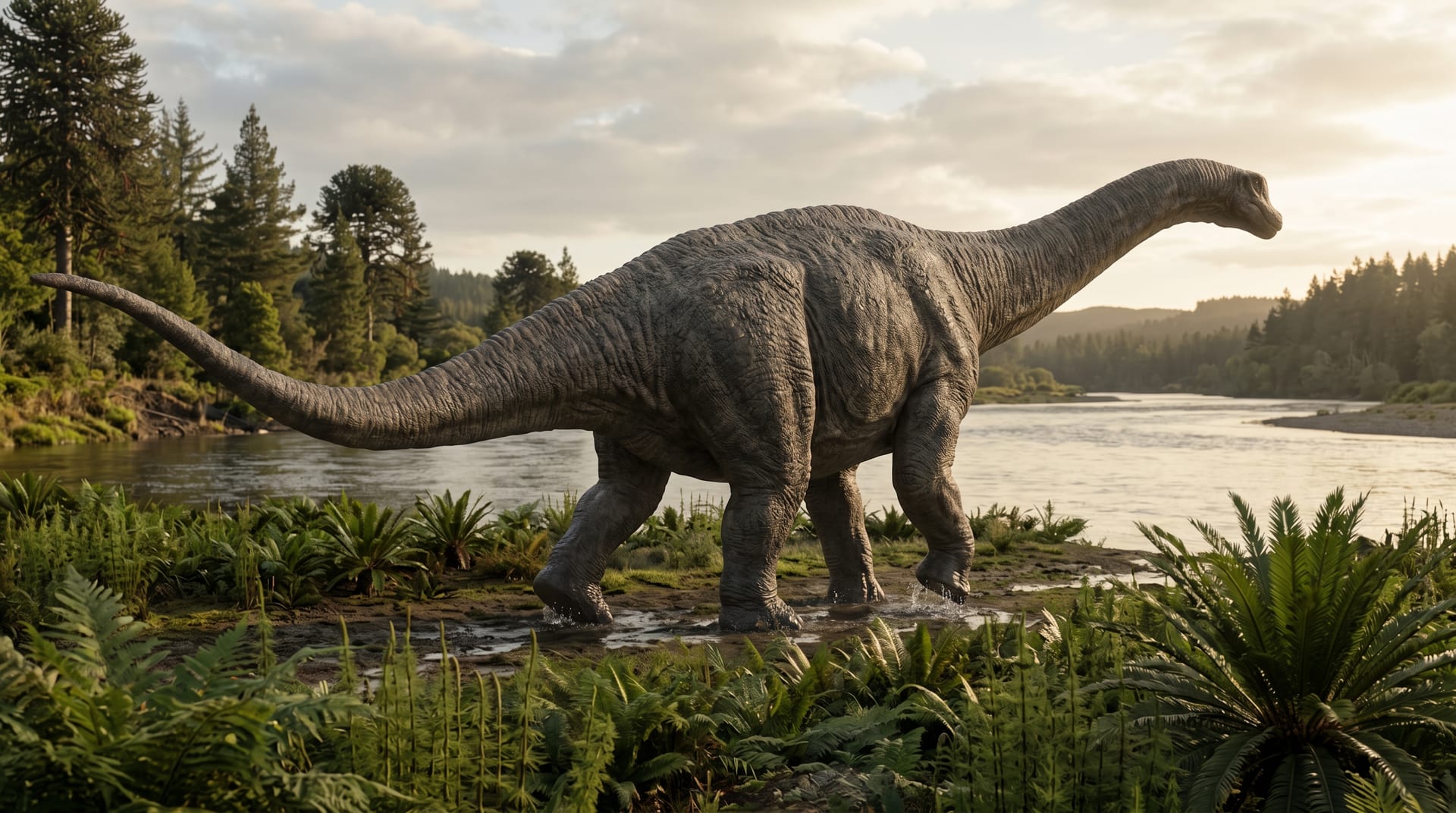
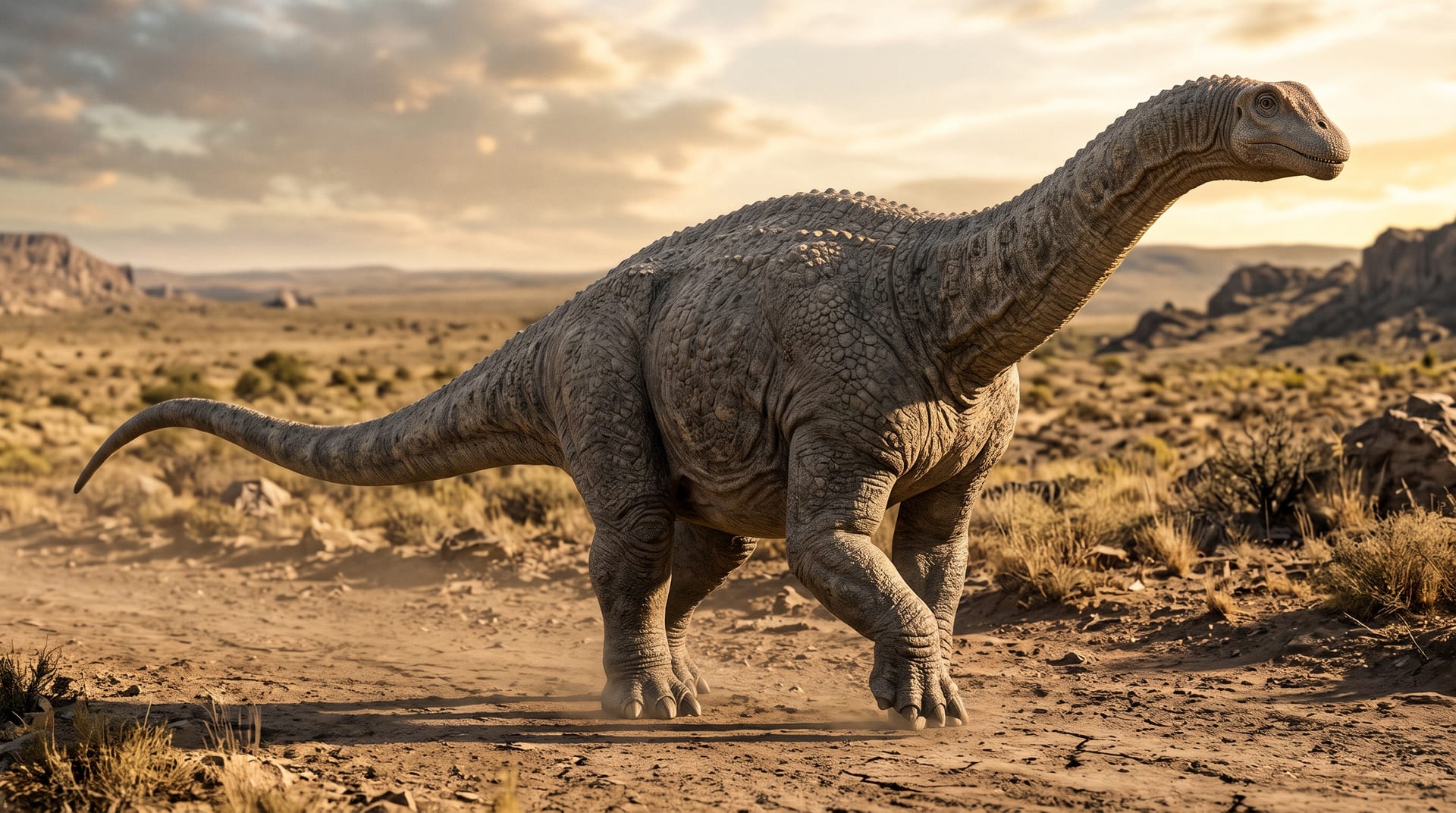
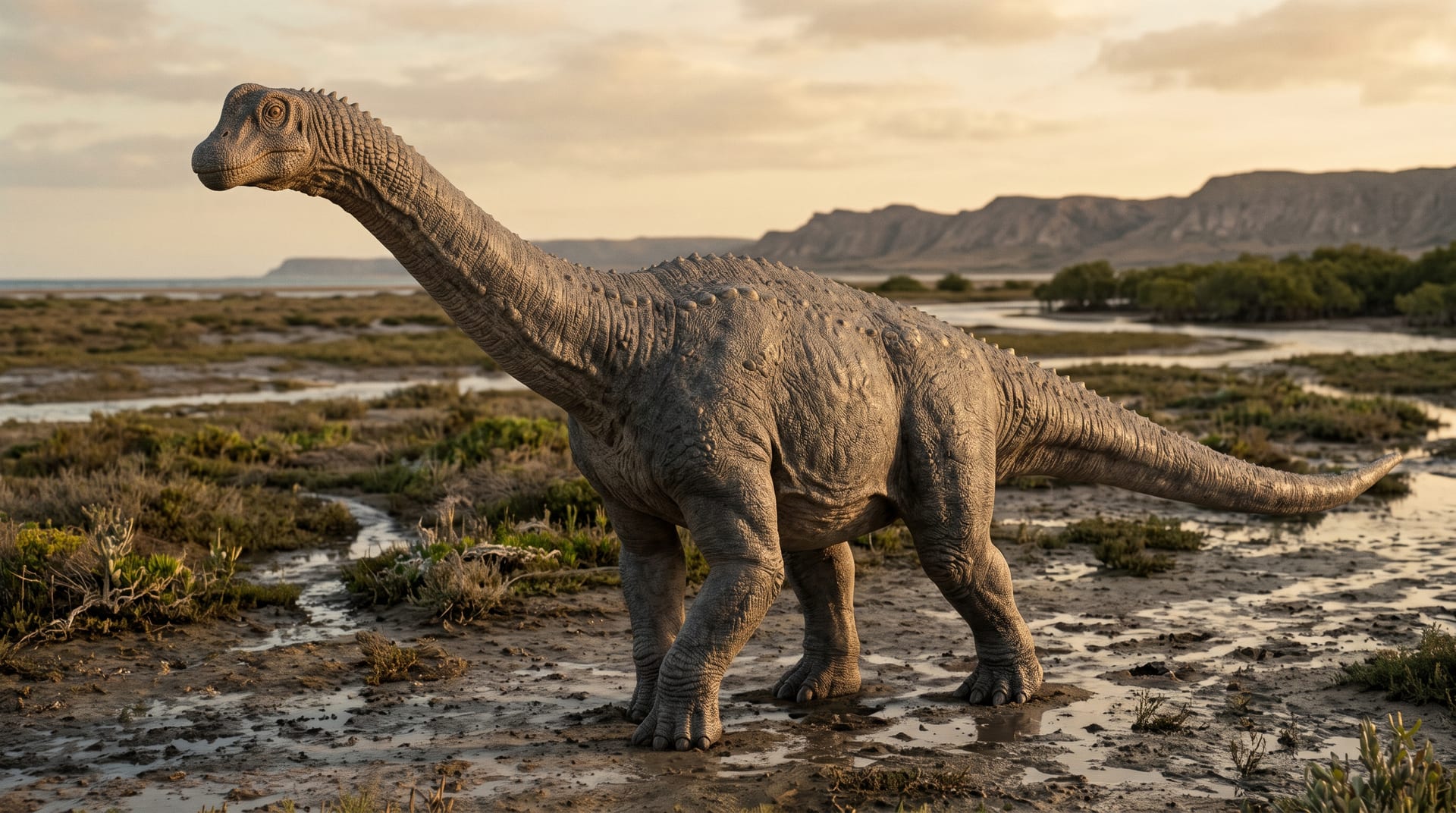
Phosphatotitan was a long-necked, plant-eating titanosaur sauropod that lived in what is now Morocco during the late Maastrichtian, roughly 70 million years ago1. Unlike its colossal South American relatives2, it was relatively modest in size, with an estimated weight of 3.5 to 4.3 tonnes. The only species is Phosphatotitan khouribgaensis, known from a partial skeleton3.
How big was Phosphatotitan?
The weight estimate starts from the backbone. The centrum of its dorsal (back) vertebra is 15.9 centimetres tall, and the linear dimensions of the fossils are about 39.75% of those of Patagotitan. From that, its weight works out at 3.5 to 4.3 tonnes, around 6.3% of the mass of Patagotitan3.
That is less than 10% of the estimated 57 to 69 tonnes of Patagotitan, one of the largest land animals ever recorded. A second, unnamed titanosaur from the nearby Sidi Daoui site was estimated at around 4 to 5 tonnes1.
The describers read its small size relative to other lognkosaurs as a sign of a lineage selected for small size4, and Longrich and colleagues suggested two possible reasons. One is island dwarfism: high sea levels and seaways may have turned parts of North Africa into island-like landmasses1, and smaller landmasses tend to produce smaller animals. The other is that conditions in the latest Cretaceous favoured the diversification of smaller herbivores over giant ones3, as seen in South America, where the most common titanosaurs were fairly small.
What did Phosphatotitan eat?
Like all sauropods, Phosphatotitan was a plant-eating dinosaur1. The group as a whole was herbivorous, four-legged and usually long-necked5, often with spatula-shaped teeth. The known bones of Phosphatotitan are dorsal and tail vertebrae, along with parts of the sacrum and pelvis2.
Its giant relative Argentinosaurus had teeth for stripping vegetation from branches and fed on tough plant material. It probably used its long neck to sweep the ground or to reach high up6 in search of vegetation.
When and where did Phosphatotitan live?
The fossils come from the Sidi Chennane phosphate mine in the Oulad Abdoun Basin of Khouribga Province, Morocco. Sci.News dates the animal to the ‘late, but not latest,’ Maastrichtian, around 70 million years ago2; the Paleobiology Database places the genus in the Maastrichtian, 72.2 to 66 million years ago7. Its bones come from the lower part of Couche III, which makes it the first dinosaur known from that layer. All dinosaurs previously described from Morocco’s phosphates came from the upper part of Couche III1, dated to the latest Maastrichtian.
The phosphates are phosphatic sandstones, marls and limestones, laid down in a warm, shallow epicontinental sea2 along the margins of the Atlantic and the Tethys Ocean. They preserve a nearshore marine environment dominated by mosasaurs, fish3 and other sea animals, from shortly before the Chicxulub asteroid impact that ended the age of dinosaurs.
Dinosaurs are less common in these rocks. They include the hadrosaurids Ajnabia, Minqaria and Taleta3 and the abelisaurid theropod Chenanisaurus, estimated at around 7–8 m long8. Morocco’s late Cretaceous ecosystem included three species of lambeosaurine hadrosaurids, abelisaurid predators and at least two argentinosaur titanosaurs1.
How was Phosphatotitan discovered?
Before Phosphatotitan, titanosaurian sauropods were known from the Moroccan phosphates, but no diagnostic titanosaur remains4 had been recovered. The specimen, numbered MHNM.KHG.888, is kept at the Natural History Museum of Marrakech. It is a fragmentary skeleton with some vertebrae, namely one dorsal, a sacrum of at least four vertebrae and one tail vertebra, plus parts of the pelvis, and it is cracked and crushed3.
Nicholas R. Longrich and colleagues named it in 20267, in a paper published in the journal Diversity on 22 April 20264. The team was led by Longrich of the University of Bath and Nour-Eddine Jalil1 of the Museum of Natural History of Marrakech and the Muséum National d’Histoire Naturelle in Paris, with other contributors from Argentina, Germany, Spain and France.
The name Phosphatotitan means “phosphate giant”: it refers to the Moroccan phosphate deposits where the fossils were found, plus “titan”, a common ending for sauropod names. The species name khouribgaensis refers to Khouribga Province3, where the type specimen was discovered.
What kind of animal was Phosphatotitan?
Phosphatotitan differs from titanosaurs described from Africa and Europe but resembles South American Lognkosauria, and especially Patagotitan4, in its short dorsal and tail centra, expanded neural spines and broad pubis. Phylogenetic analysis placed it in a newly defined clade, Argentinosauridae, alongside Patagotitan and Argentinosaurus1. Within that group it came out as the sister taxon of the unnamed Sidi Daoui titanosaur3 from Morocco.
Lognkosauria had been known only from South America before this find. In their 2026 paper, the authors wrote that the link may reflect a wide distribution of these clades4 prior to the opening of the South Atlantic, when Africa and South America were still joined. Sci.News adds the alternative that dinosaurs later crossed narrow ocean barriers2 between the continents.
The find also points to a separate Moroccan fauna. Together with earlier hadrosaurid finds, it suggests that Morocco supported a unique, endemic fauna in the latest Cretaceous2, distinct from the rest of Africa. Egypt, by contrast, had saltasaurid and lirainosaurine titanosaurs1.
Similar dinosaurs
- Patagotitan: the South American titanosaur it most resembles, from the Albian Cerro Barcino Formation of Argentina9, 113.2 to 100.5 million years ago10; with an estimated 57 to 69 tonnes1, Phosphatotitan reached less than a tenth of that.
- Argentinosaurus: another argentinosaurid, about 35 metres long and 70,000 kilograms, from Argentina 90 million years ago6; one of the largest land animals ever found, against the 3.5 to 4.3 tonnes3 of Phosphatotitan.