Contents
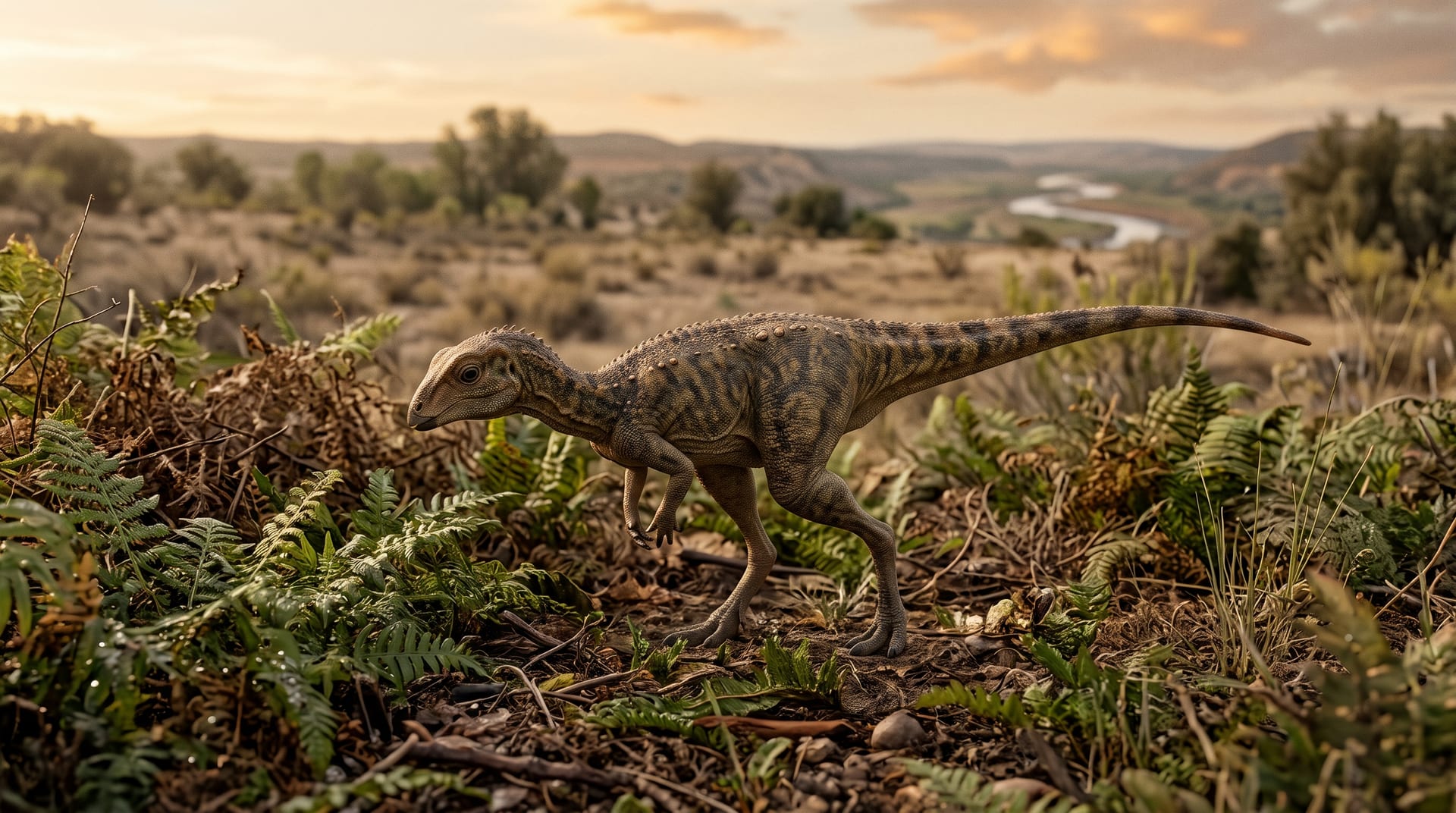
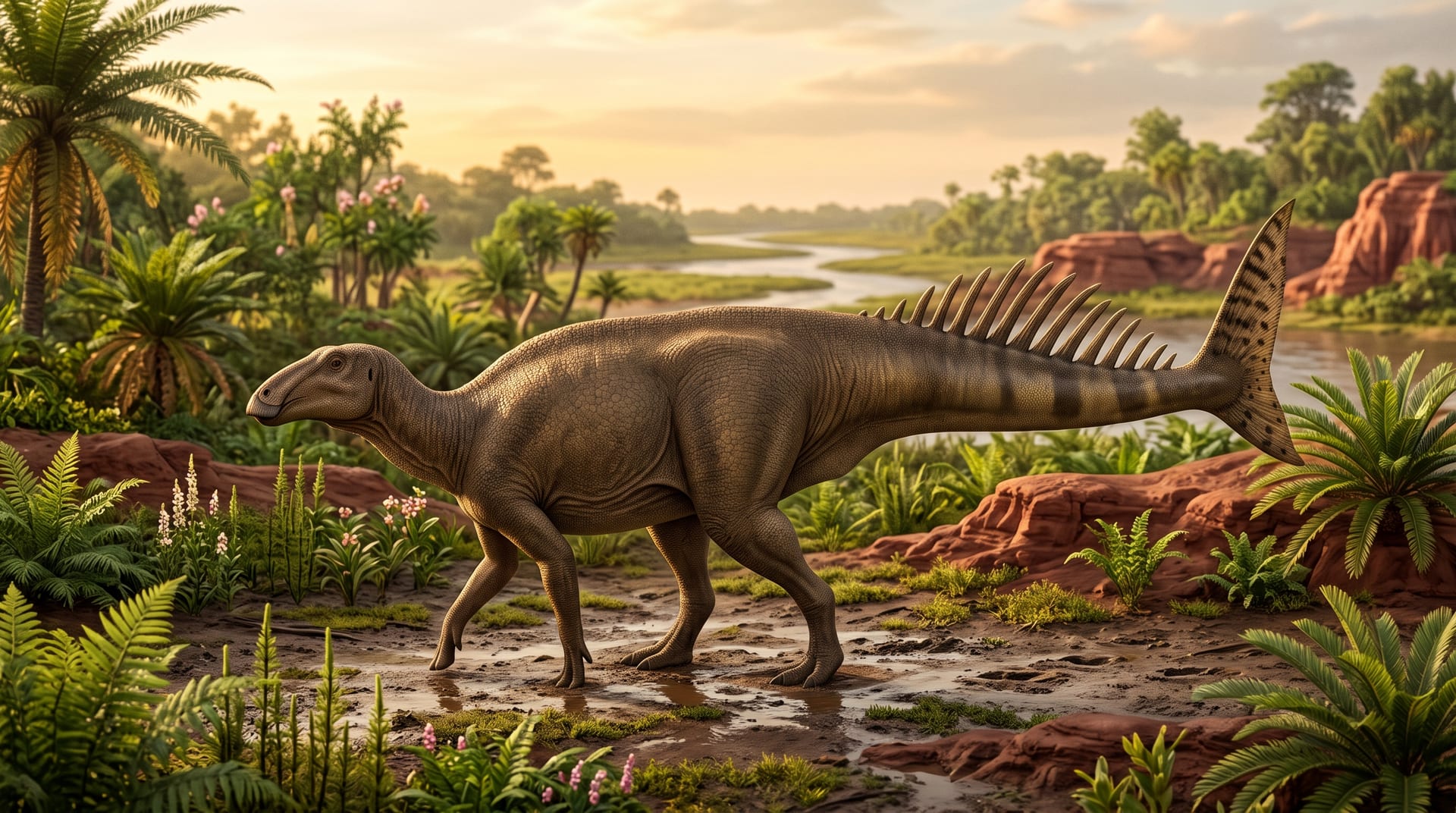
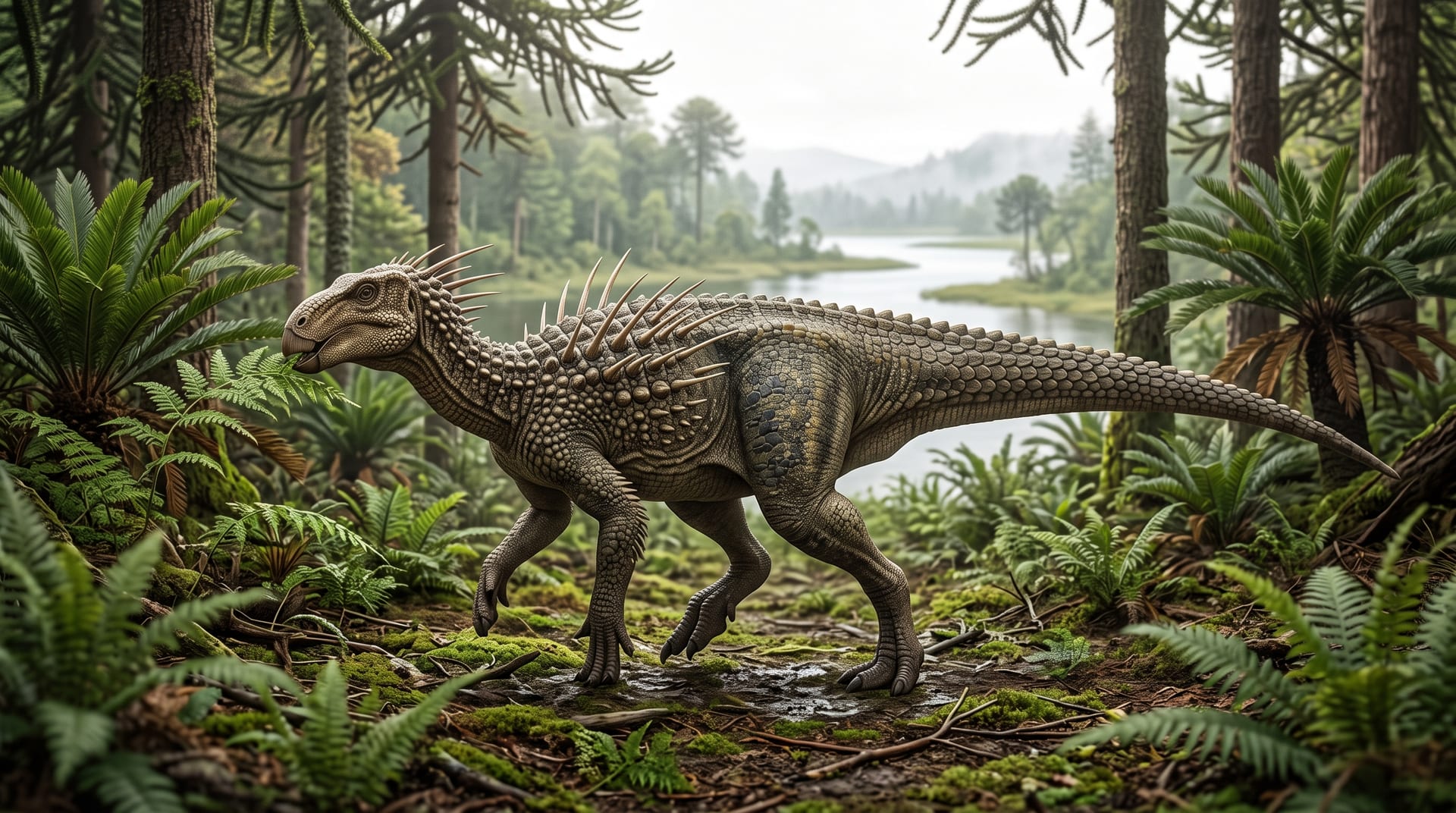
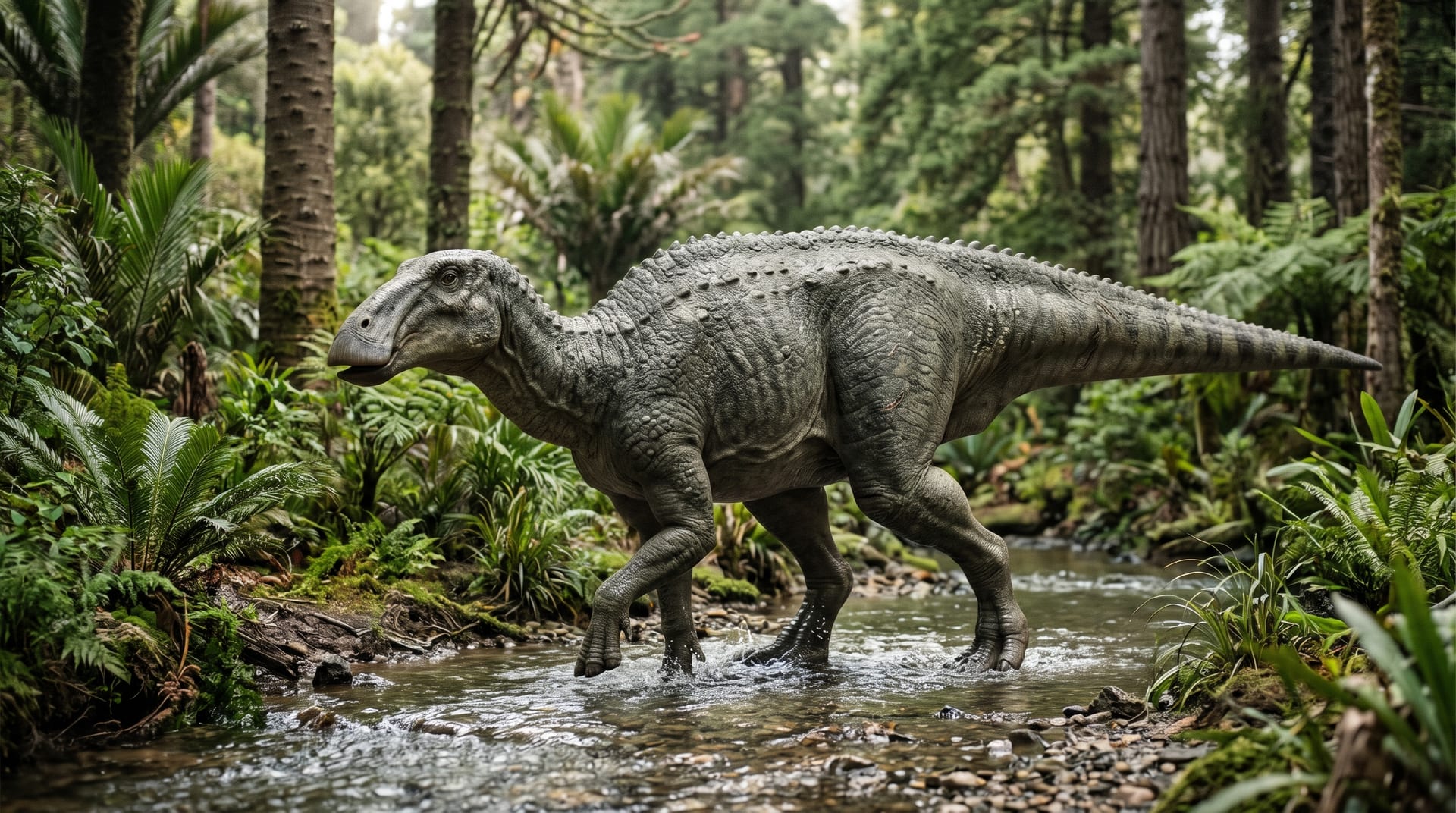
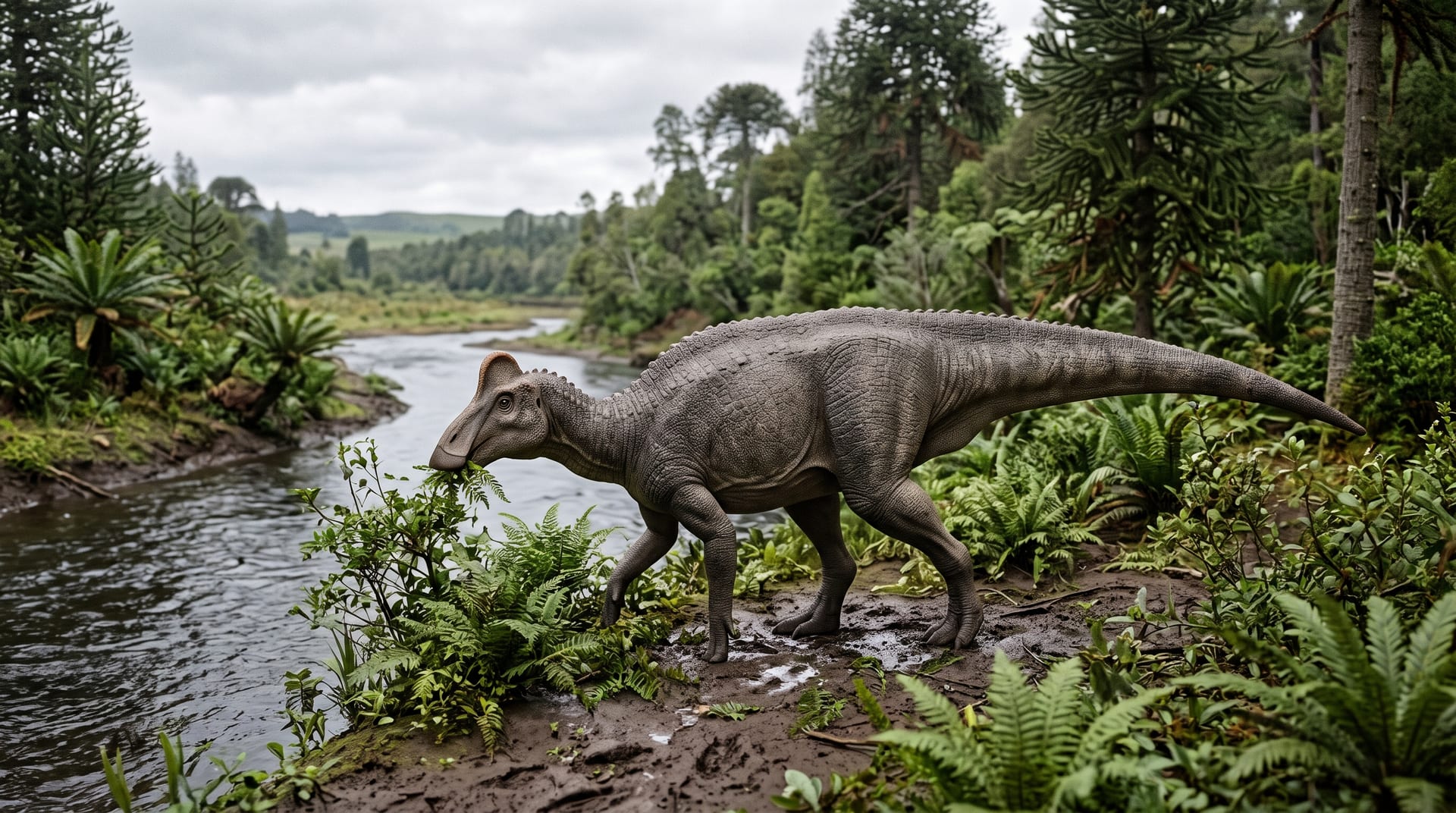
Plesiolophus was a lambeosaurine hadrosaurid dinosaur, one of the hollow-crested duck-billed dinosaurs, found in southern Alberta, Canada. It lived 77 million years ago, in the Campanian age of the Cretaceous period, and is known only from a partial skull2. Its only species is Plesiolophus warnerensis, which cannot be excluded as a potential ancestor1 of the famous crested dinosaur Parasaurolophus.
How big was Plesiolophus?
It was identified from a fossil skull roof and braincase1, the back part of the top of the head.
The researchers describe it as the first diagnostic material of an adult lambeosaurine1 from the Oldman Formation.
For comparison, the Natural History Museum lists Parasaurolophus at a length of 9.0 m and a weight of 5000 kg3. Those are figures for Parasaurolophus, not for Plesiolophus.
What did Plesiolophus eat?
Plesiolophus was a hadrosaurid dinosaur2, a member of the family that includes Edmontosaurus and Parasaurolophus and that was a common group of herbivores4 during the Late Cretaceous Period.
The teeth of hadrosaurids are stacked into complex structures known as dental batteries4, which acted as effective grinding surfaces. Its close relative Parasaurolophus lived on a diet of plants and ate with a tooth-grinding chewing motion, with hundreds of teeth of which it used only a few at a time; the Natural History Museum lists its food as pine needles and tree leaves3.
When and where did Plesiolophus live?
Plesiolophus dates back 77 million years1, to the Campanian age of the Cretaceous period. The Paleobiology Database files the genus under the Campanian, with a range of 83.6 to 72.2 million years ago5.
Its skull was found near the Milk River Ridge Reservoir, close to the village of Warner in southern Alberta. The fossil came from the layers of the Oldman Formation, a rock unit that has yielded surprisingly little diagnostic material1 from the ancestors of the region’s later, more diverse duck-billed dinosaurs.
The Oldman Formation underlies much of southern Alberta and has a stratigraphic range of 77.5 to 76.5 million years ago. It consists mainly of sandstones laid down in river channel and floodplain environments. The Oldman lies beneath the Dinosaur Park Formation6, and that overlying formation is where Parasaurolophus occurs1.
Lambeosaurines reached their greatest known abundance and diversity1 in western North America, a landmass called Laramidia, later in the Campanian, until 72 million years ago. The formation was named for exposures along the Oldman River6 and is known mainly for its dinosaur remains.
How was Plesiolophus discovered?
The fossil was found by fossil hunter Wendy Sloboda1 near Warner, Alberta. It is kept at the Royal Tyrrell Museum of Palaeontology as specimen TMP 2016.023.00392, the holotype, and consists of a partial skull, including the back of the skull roof and the braincase.
Carleton University palaeontologist Bradley McFeeters and colleagues named Plesiolophus warnerensis in the Canadian Journal of Earth Sciences, in a paper published online on July 13, 20261. The Paleobiology Database records the author as McFeeters et al. 20265.
The genus name combines Ancient Greek words meaning “near” and “crest”. It refers to the animal’s place close to Parasaurolophus on the family tree, while it kept more primitive anatomy. The species name warnerensis refers to the discovery near Warner2, Alberta.
What kind of animal was Plesiolophus?
Plesiolophus was a duck-billed dinosaur of the lambeosaurine subfamily, the hollow-crested hadrosauroids that were widely distributed across the northern hemisphere towards the end of the Cretaceous. Lambeosaurinae probably originated in Asia1, where early members were present as early as the Santonian, 86 to 84 million years ago.
Within that group it belongs to Parasaurolophini, the clade that eventually produced Parasaurolophus. Unlike later members of its lineage, Plesiolophus retained several ancestral features1 in its skull.
To place it on the family tree, the researchers compared it with 87 other dinosaur species1. The analysis consistently recovered it as one of the earliest members of the North American parasaurolophin lineage. In their tree the Asian Charonosaurus is the earliest-diverging member2 of Parasaurolophini, followed by an exclusively North American clade of which Plesiolophus is the basalmost member.
The authors write that it is diagnosed by a unique combination of characters but does not appear to be strongly autapomorphic. At present it cannot be excluded as a potential ancestor to Parasaurolophus. They also see its likeness to immature examples of later parasaurolophins1 as a reflection of the process thought to have produced the group’s exaggerated crests.
Similar dinosaurs
- Parasaurolophus: the famous crested relative, named by Parks in 19227. Its crest was hollow3, with a tube that ran from the nostrils through the crest and back to the skull, and it comes from the overlying Dinosaur Park Formation1, while Plesiolophus kept more ancestral skull features.
- Charonosaurus: the Asian member of Parasaurolophini, which falls outside the North American clade2 that Plesiolophus opens. It comes from the Yuliangze Formation of China and lived later, in the Maastrichtian9. It was a very large lambeosaurine, estimated at around 10 metres8 long.
- Lambeosaurus: a lambeosaurine from the other branch, Lambeosaurini, found in Canada and dated to 76–74 million years ago10. The authors read the greater morphological similarity1 of Plesiolophus to Lambeosaurini as a sign that it lived closer in time to the split between the two groups.