Contents
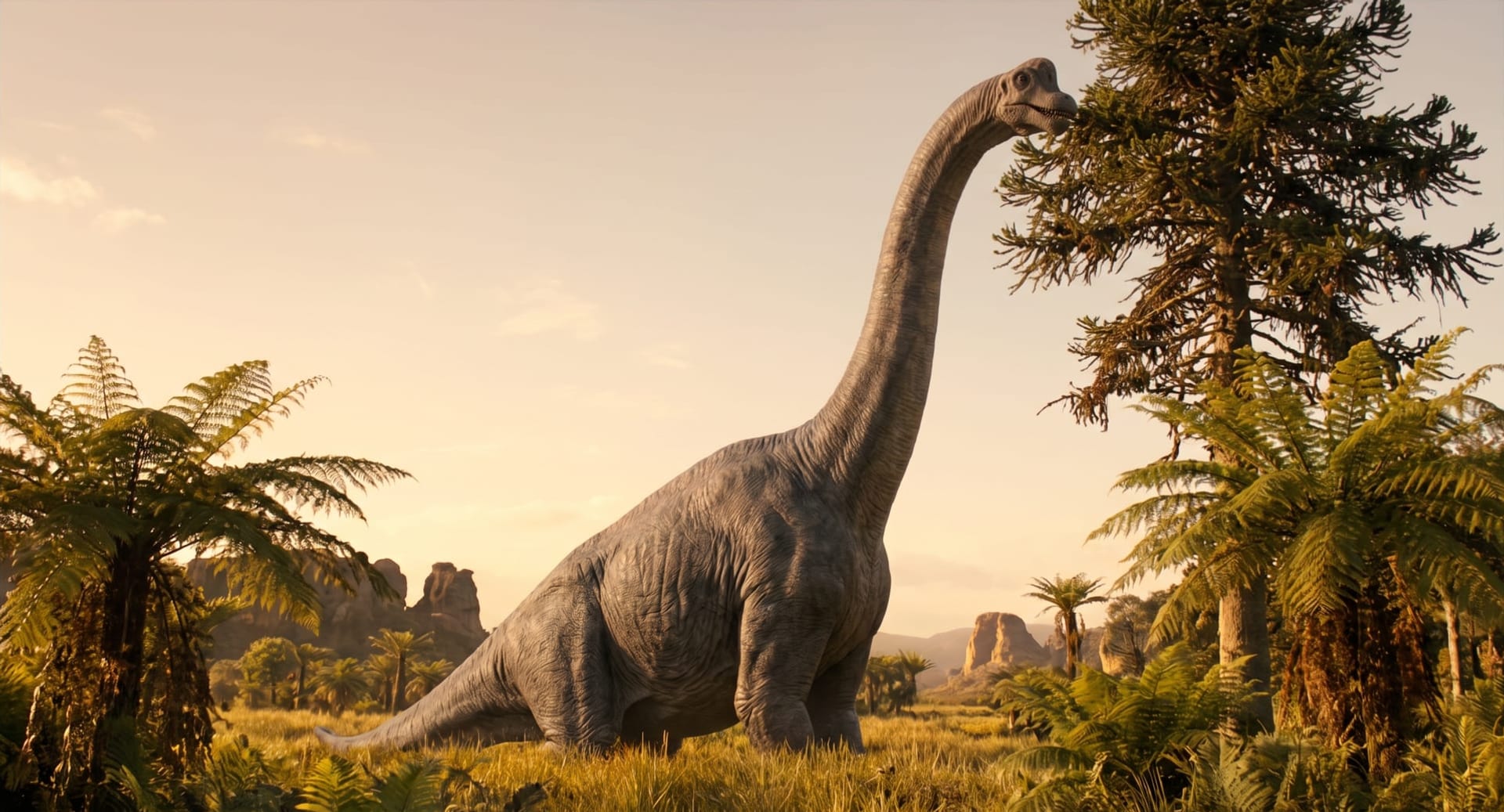
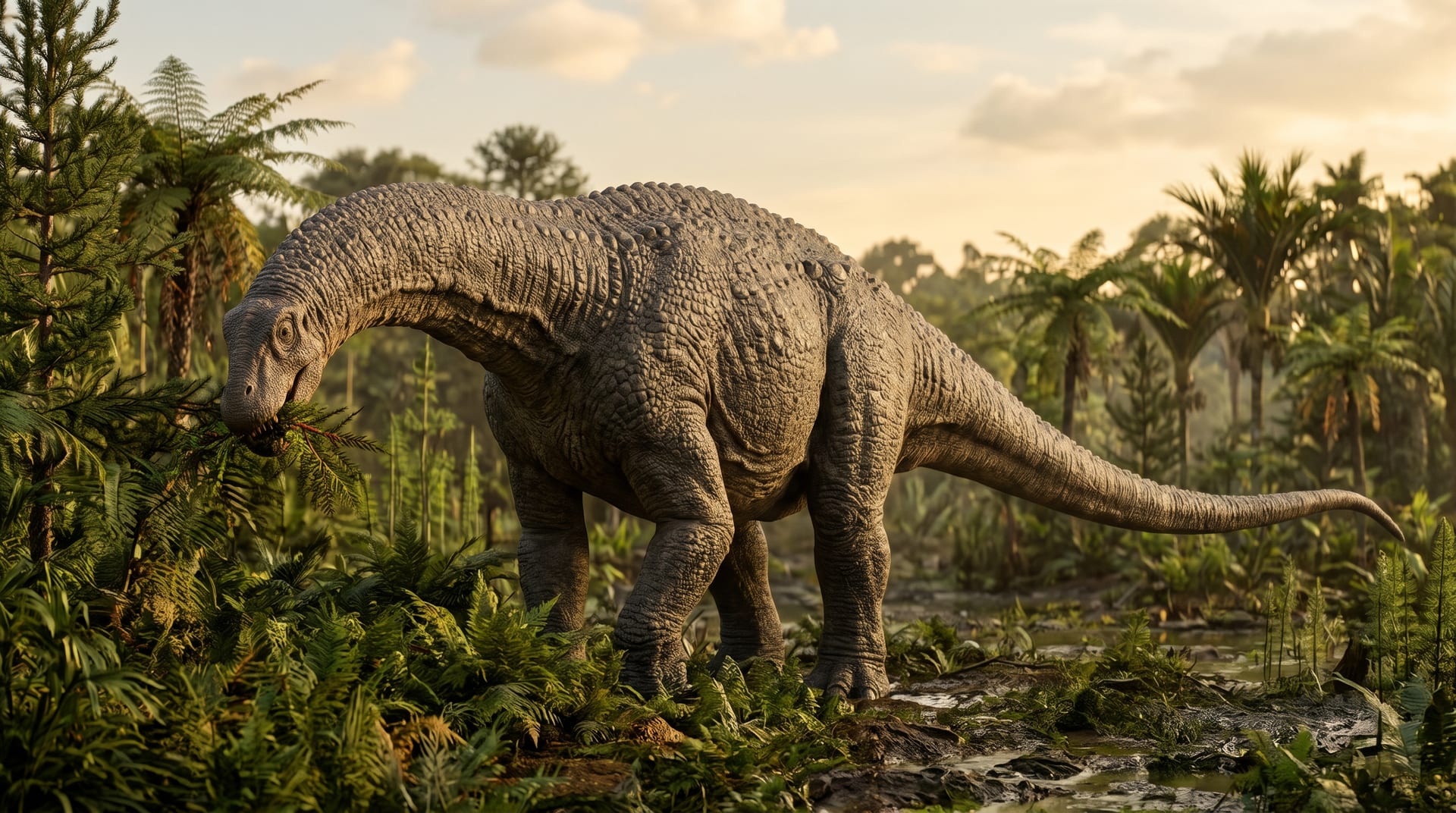
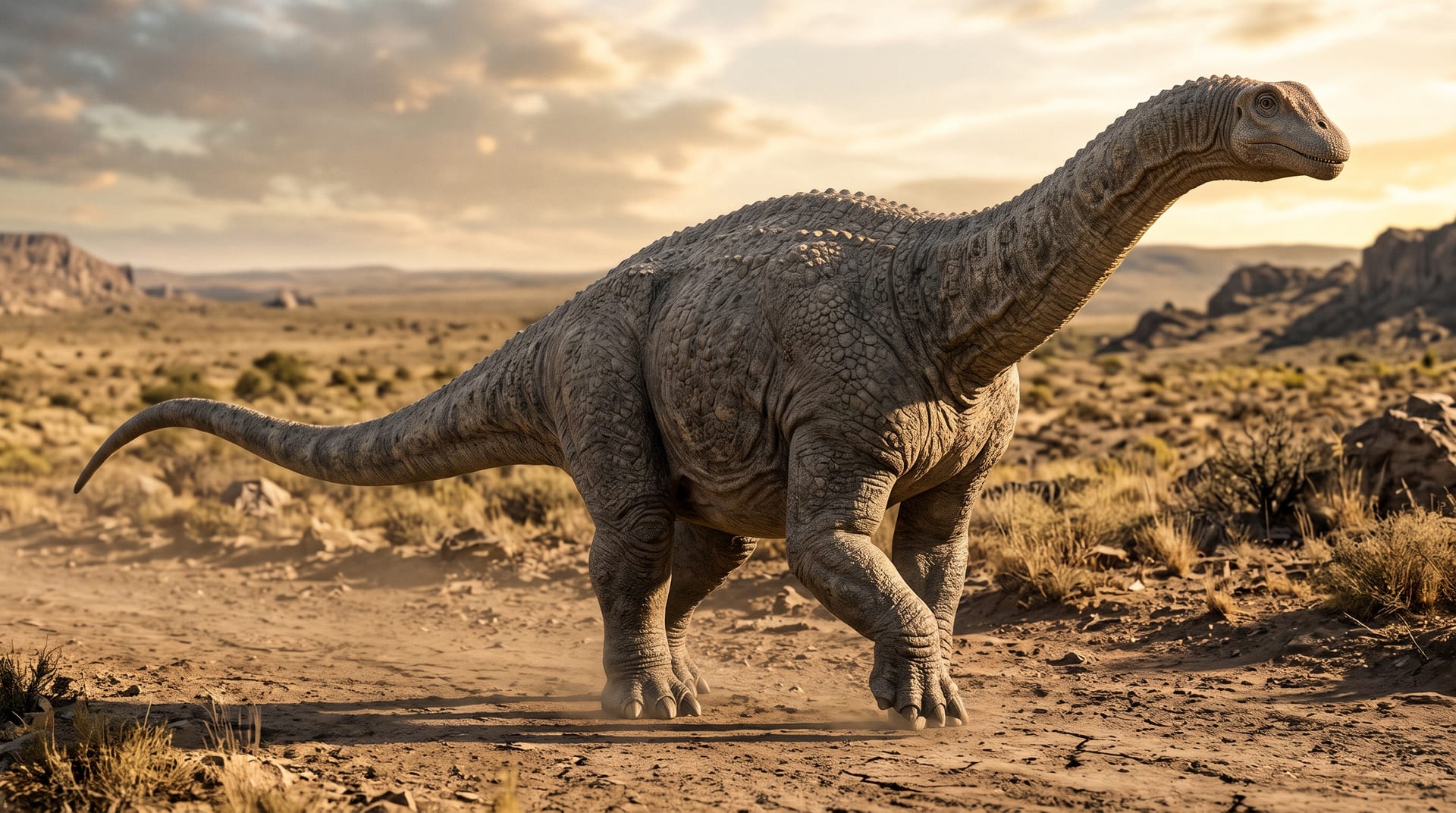
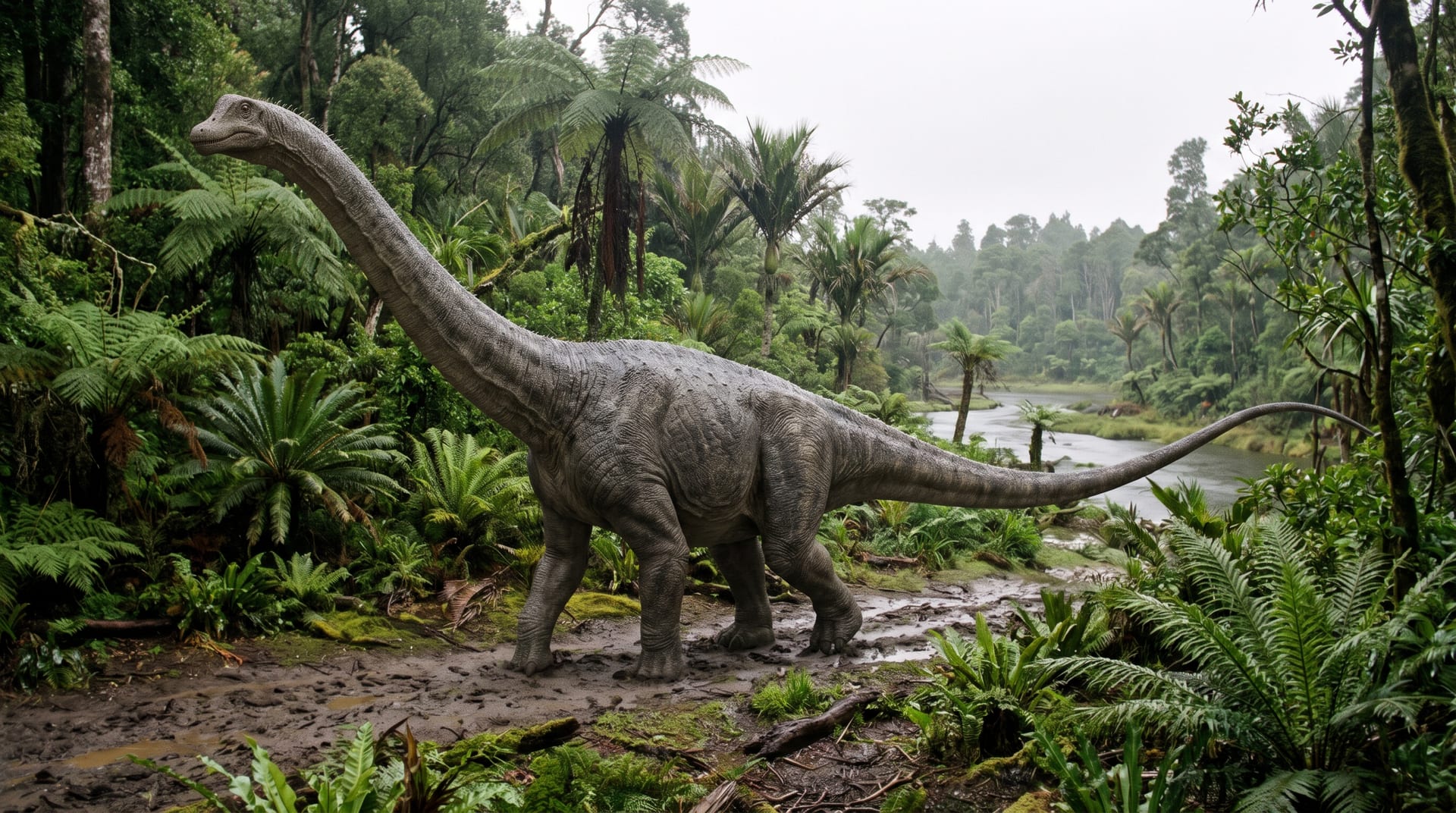
Uragasaurus was a long-necked sauropod dinosaur that lived in what is now Thailand during the latest Jurassic, between 150 and 145 million years ago. It belonged to the Mamenchisauridae, a family of sauropods famous for their extraordinarily elongated necks1. The genus has a single species, Uragasaurus kalasinensis, known from a single dorsal (trunk) vertebra2.
How big was Uragasaurus?
Everything Dinosaur gives a length of about 20 metres3. The species is based solely on the holotype vertebra4, a single back bone.
In the measurements its describers published, the vertebra has a total height of 548.9 millimetres, a little over half a metre. The same table lists the matching back vertebrae of two Chinese relatives: 488.35 millimetres for Mamenchisaurus youngi and 640.36 millimetres for Mamenchisaurus hochuanensis. The authors warn that some of their figures may be affected by post-depositional compression and should be interpreted cautiously4: the bone was flattened from front to back2.
For a sense of the family, the Natural History Museum lists Mamenchisaurus at a length of 22.0 m5.
What did Uragasaurus eat?
The Natural History Museum lists Mamenchisaurus, a mamenchisaurid from China4, as herbivorous5. Everything Dinosaur describes Uragasaurus itself as a herbivore that browsed on vegetation above head height3.
Mamenchisaurids are known for extremely elongated cervical vertebrae with highly developed pneumatic structures1. Inside the vertebra of Uragasaurus, CT scans revealed numerous small, irregular chambers separated by thin bony septa in the centrum, a camellate internal pneumatic structure. Its surface also preserves where muscles were attached: a rough platform indicative of m. longissimus dorsi attachment and weak streaks on the spine interpreted as muscle attachment scars4.
When and where did Uragasaurus live?
Uragasaurus lived in the Late Jurassic, 150 to 145 million years ago1. The Paleobiology Database gives its range as Tithonian to Berriasian6, and the describers regard the formation as possibly extending into the earliest Cretaceous. Its describers date it to the latest Jurassic, though precise chronostratigraphic constraints remain uncertain: the Phu Kradung Formation has no radiometrically datable horizons4.
The fossil comes from the Phu Noi Locality in Ban Din Chi village, Kham Muang District, Kalasin Province, in northeastern Thailand. Phu Noi lies in the lower part of the Phu Kradung Formation, the basal unit of the Khorat Group, and is one of the most prolific non-marine vertebrate fossil assemblages in Southeast Asia4.
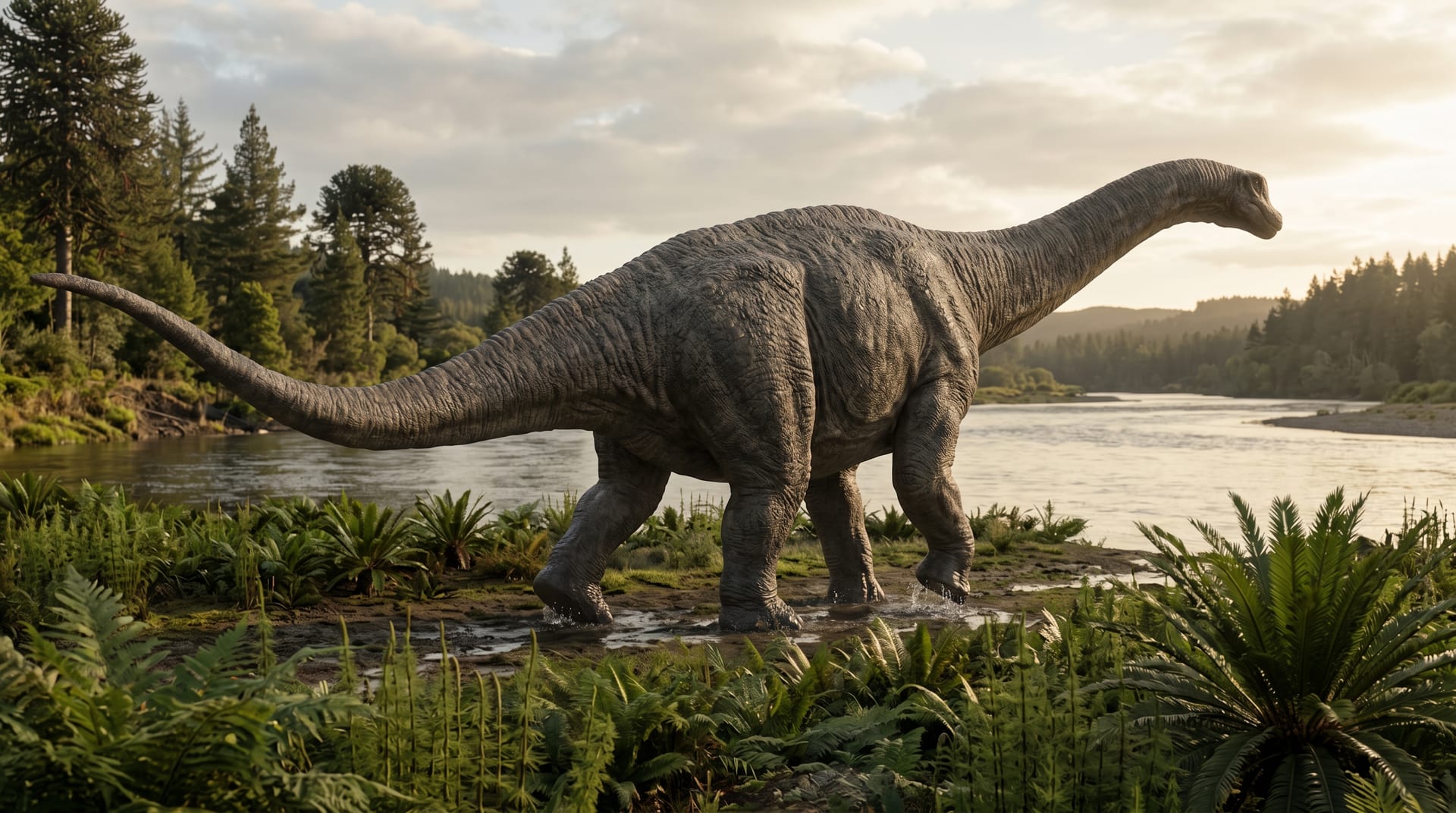
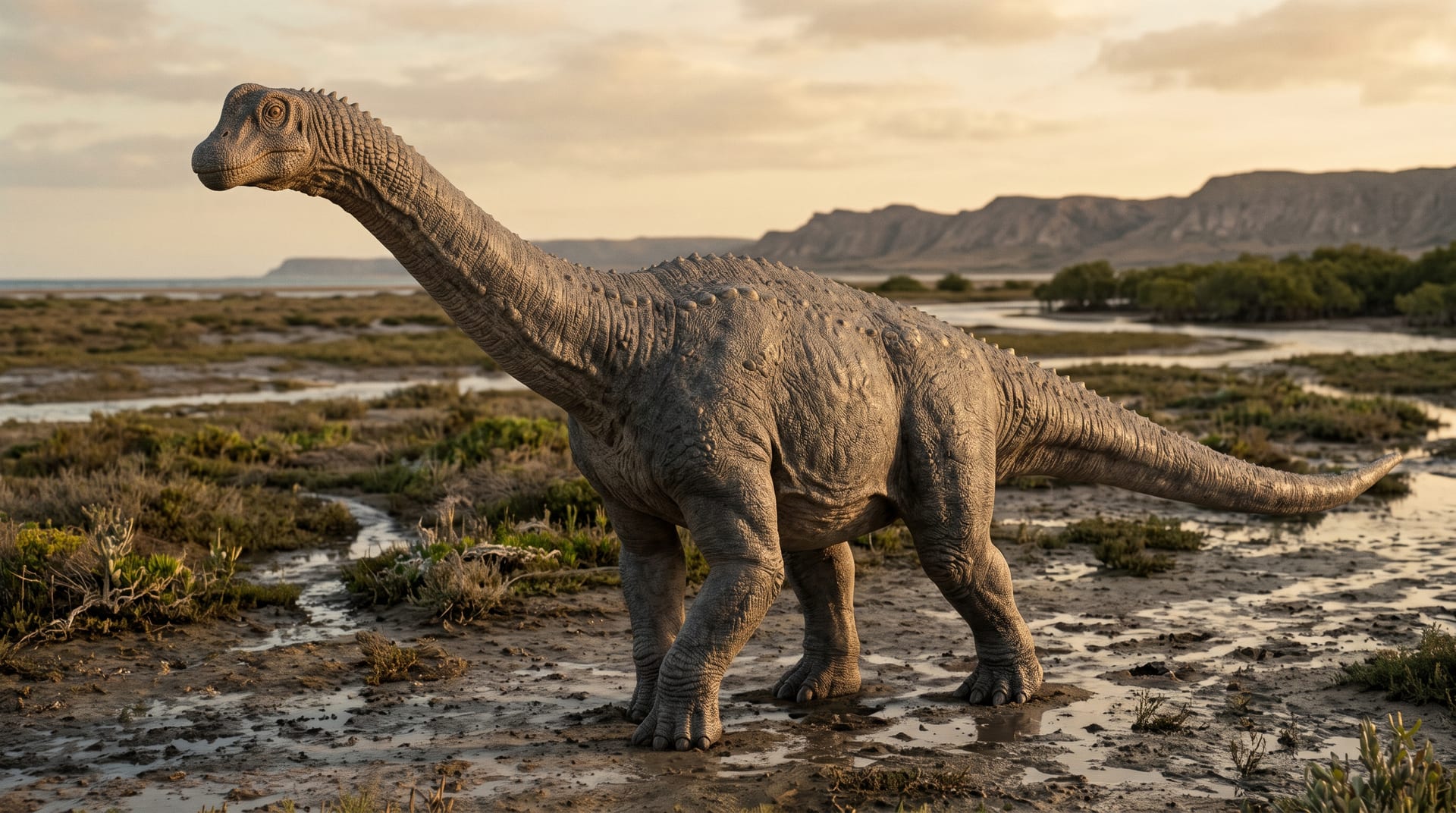
The rocks are mostly sandstones, siltstones and mudstones laid down by rivers. The formation’s sediments were deposited in a lake-dominated floodplain cut by meandering and occasionally braided river channels7. The same layer at Phu Noi has yielded hybodont sharks, ginglymodian fishes, lungfishes, turtles, teleosaurid crocodyliforms and neornithischian dinosaurs, and a rhamphorhynchoid pterosaur, a basal tyrannosauroid and metriacanthosaurid theropods4 were still under study as of 2026.
How was Uragasaurus discovered?
The holotype, catalogued as PRC 460, was excavated alongside several other sauropod bone fragments at Phu Noi. It is an anterior dorsal vertebra, a bone from just behind the animal’s neck1, and is kept at the Palaeontological Research and Education Centre, Mahasarakham University. The nearby bones include a middle cervical vertebra, a cervical rib, two dorsal neural arches, a coracoid and a fibula2, but they cannot be confidently referred to the holotype individual, so the species is diagnosed on the holotype vertebra alone4.
Apirut Nilpanapan, Sita Manitkoon, Varavudh Suteethorn and Komsorn Lauprasert named it in Scientific Reports in 2026. The genus name joins the Sanskrit word for “snake” or “serpent”, a reference to the long neck of the family, with the Greek saûros, lizard. The species name kalasinensis refers to Kalasin Province4.
Its describers diagnose it by prominent, elongated teardrop-shaped pneumatic fossae on the distal portion of the transverse processes, and a Y-shaped configuration of bony plates4 seen from the front.
Mamenchisaurid bones had turned up in Thailand before. An isolated vertebra from the Khlong Min Formation was described in 2005, and a neck vertebra from Phu Dan Ma in the Phu Kradung Formation followed. These specimens remained unnamed2, which makes Uragasaurus the first formally named mamenchisaurid from Thailand1 as of its 2026 description.
What kind of animal was Uragasaurus?
Uragasaurus was a sauropod, a member of the Mamenchisauridae, a group of long-necked eusauropod dinosaurs. Its describers’ analysis places it near the base of the mamenchisaurid family tree1, basal to a clade comprising Qijianglong and more derived mamenchisaurids. The authors call that placement weakly supported, and Uragasaurus was one of the wildcard taxa4 in their analysis.
Mamenchisaurids were common across China during the Middle to Late Jurassic, with many taxa from the Shaximiao Formation of the Sichuan Basin. The new genus expands the geographic distribution of Mamenchisauridae into mainland Southeast Asia, and the authors see possible faunal connections across the East Asian landmass1 in the Late Jurassic.
Similar dinosaurs
- Mamenchisaurus: from China, 155–145 million years ago5. In several Mamenchisaurus species the anterior back vertebrae have a V-shaped bifurcated neural spine, where Uragasaurus has a short U-shaped one4.
- Qijianglong: a mamenchisaurid from the Suining Formation of China. Uragasaurus sits basal to the clade comprising Qijianglong4.
- Klamelisaurus: from the Shishugou Formation of Xinjiang, China. Its transverse processes are comparatively smooth and lack of fossa, while Uragasaurus has distinct pneumatic fossae on the transverse process4.