Contents
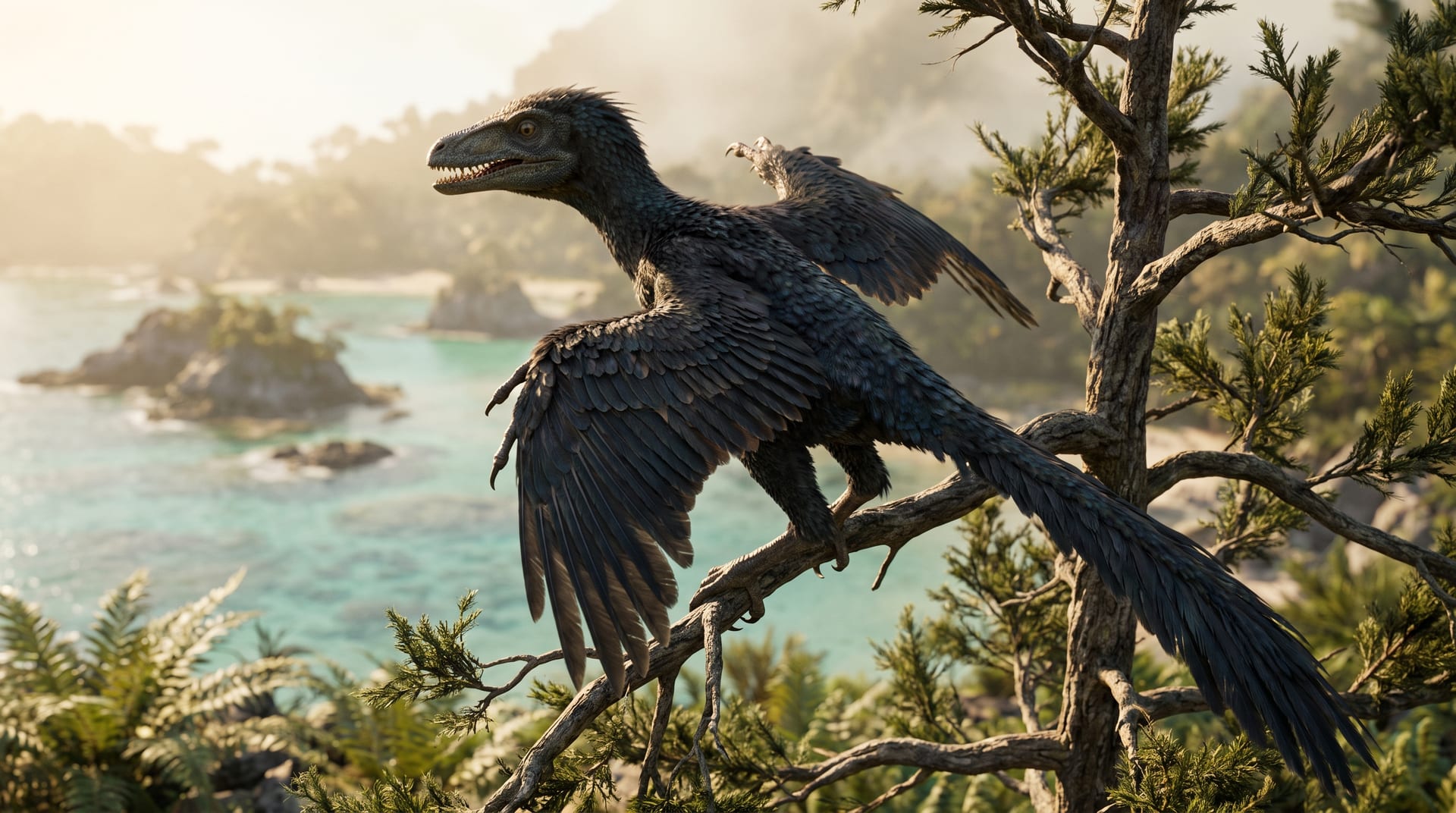
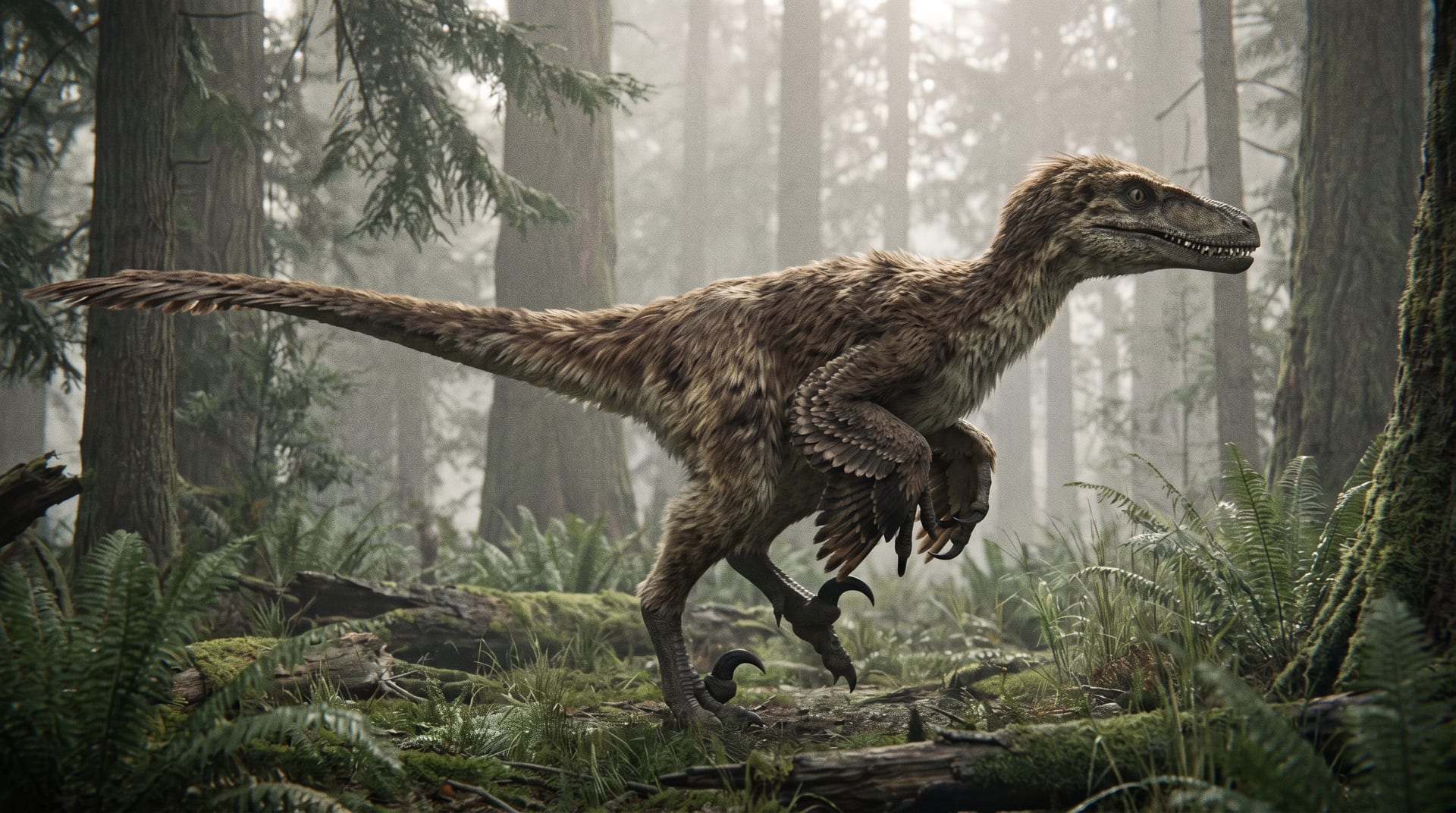
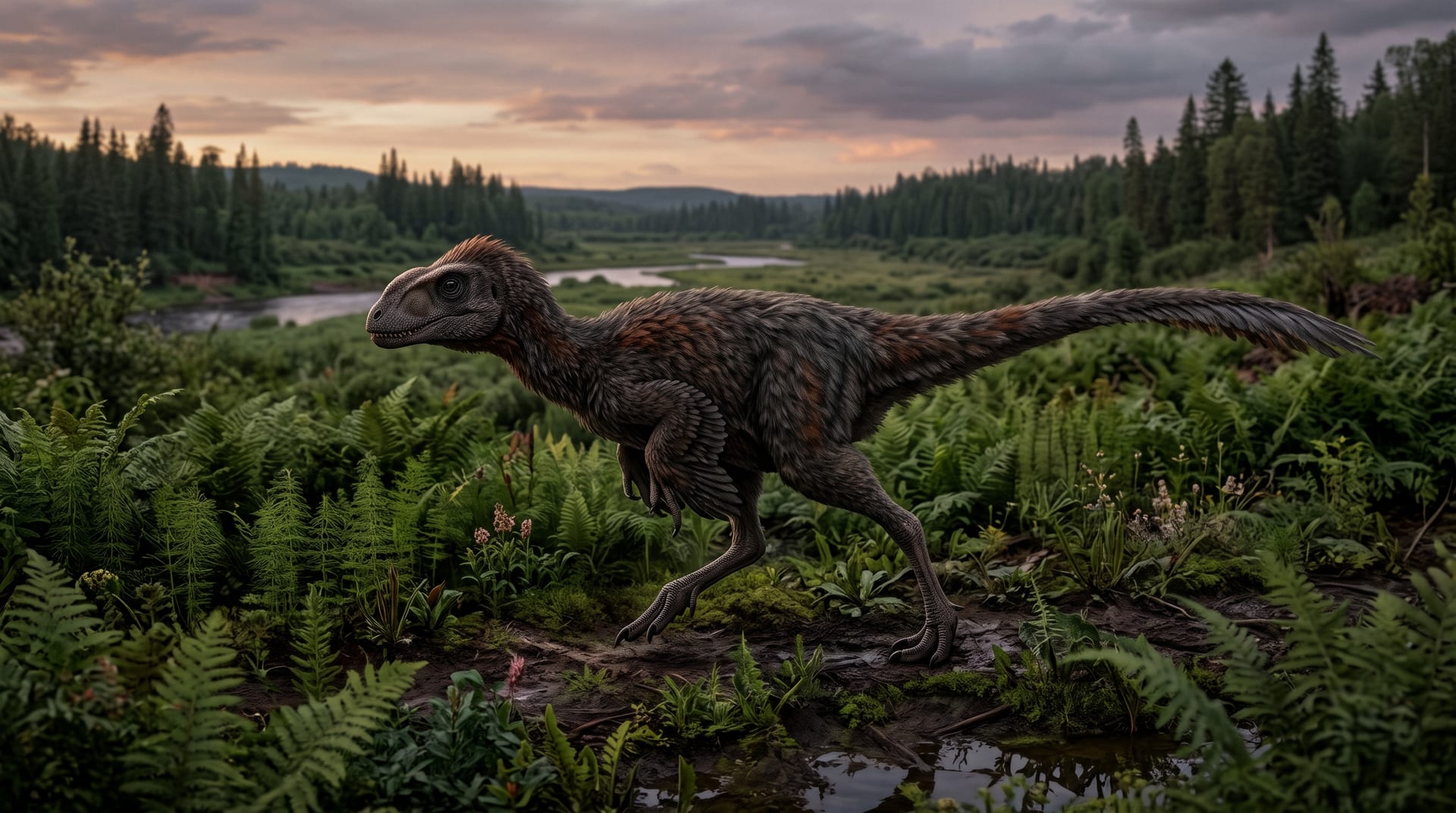
Dinevenator was a bird-like dinosaur from the family Troodontidae that lived in what is now New Mexico, in the United States, approximately 73 million years ago. It was around 2.4 to 3 metres long and weighed between 70 and 140 kilograms, which makes it one of the larger troodontids known. The only species is Dinevenator robustus, and it is known only from a nearly complete left frontal bone1, part of the skull.
How big was Dinevenator?
Sci.News puts Dinevenator robustus at around 2.4 to 3 metres (8 to 10 feet) in body length and a weight of 70 to 140 kilograms (150 to 300 pounds)1. The Albuquerque Journal gives the same size, 8 to 10 feet long and around 150 to 300 pounds, and says the researchers worked it out from data on related species2.
Then there is the bone itself. Jasinski and Sullivan list dorsoventrally thick and robust frontals, thicker towards the back, and relatively flat frontals without a well-developed trough and ridge along the midline. They call it a distinct, large, robust-skulled troodontid3. The researchers concluded that it was a bipedal troodontid2, walking on two legs.
What did Dinevenator eat?
Troodontids are described as bird-like predatory dinosaurs1, but the study itself reports that Dinevenator likely maintained an omnivorous diet, even though it was classified within a larger lineage of carnivorous dinosaurs. According to the Albuquerque Journal, it may have consumed small mammals, birds, insects, lizards, fruit and plants2.
Its whole known fossil record is a single frontal bone on the top of the skull. Its group is known for having unusually large brains relative to other dinosaurs, and the frontal of Dinevenator showed a relatively large brain and bird-like features2.
When and where did Dinevenator live?
Dinevenator lived in the Late Cretaceous, approximately 73 million years ago. The fossil comes from upper Campanian strata of the San Juan Basin3 in northwestern New Mexico. More precisely, it was found in the De-na-zin Member of the Kirtland Formation1. The top of the De-na-zin Member has been dated to 73.49 ± 0.25 million years ago4.
Dinevenator lived in a much wetter and more subtropical climate, on a flood plain with forests, open landscapes and expansive coniferous trees, very different from the New Mexico we know today2. Other dinosaurs from the same rock layer include the dromaeosaurid Saurornitholestes sullivani, also known from a nearly complete frontal4. Jasinski and Sullivan see the new genus as further evidence for dinosaurs that are unique to the Kirtlandian faunas3 of New Mexico.
How was Dinevenator discovered?
The specimen was unearthed in the summer of 2005 in the San Juan Basin, collected by paleontologist Robert Sullivan2. The nearly complete left frontal is catalogued as SMP VP-19551, in the State Museum of Pennsylvania in Harrisburg5.
Its identity changed several times. When it was first described in 2006, Sullivan classified it as a new species of the raptor-like dromaeosaurid Saurornitholestes, named Saurornitholestes robustus. In 2012 Alan Turner and colleagues considered it a possible nomen dubium (dubious name), and by 2014 the specimen had been reclassified as a troodontid, after David Evans and colleagues found that it represented an indeterminate troodontid and did not belong in Saurornitholestes. Some scientists still considered the species invalid, and then a 2026 study proposed folding it into1 Xenovenator, a troodontid from Mexico. That study, by Hector Rivera-Sylva and colleagues, had recovered it as the sister taxon to X. espinosai5.
Steven Jasinski and Robert Sullivan concluded that the fossil is distinct enough from Xenovenator and other troodontids to warrant its own genus. Their paper was published August 3 in the journal Fossil Studies, in 20261. The name Dinevenator honours the Diné (or Navajo) people of the American Southwest, where the fossil was found, combined with the Latin venator, meaning hunter. The species name robustus first referred to its robust build compared to other dromaeosaurids5, the group it was once thought to belong to.
Jasinski, the paleontology curator of the New Mexico Museum of Natural History & Science, says the case shows the importance of keeping fossils and keeping specimens like this in a museum. Had the bone not been kept at a museum, he told the Albuquerque Journal, researchers wouldn’t be learning new things 20 years after the fossil was collected2.
What kind of animal was Dinevenator?
Dinevenator was a troodontid, a member of a family of bird-like predatory dinosaurs. Jasinski and Sullivan’s analysis placed it in a group of large-bodied, thick-skulled troodontids1 together with Xenovenator espinosai from Mexico and Albertavenator curriei from Canada.
Within that group it is the earliest-diverging member of the robust-skulled lineage1, not a close relative of Xenovenator as had been proposed. The paper recovers it as the sister taxon to (Albertavenator curriei + Xenovenator espinosai)3, inside the clade Troodontini.
Similar dinosaurs
- Xenovenator: a thick-skulled troodontid from Mexico, but Jasinski and Sullivan’s comparison found differences such as the relatively flat frontals3 of Dinevenator, which lack a well-developed trough and ridge.
- Albertavenator: a Canadian troodontid in the same group of large-bodied, thick-skulled troodontids1, closer to Xenovenator than to Dinevenator in the 2026 analysis3.
- Saurornitholestes: the raptor-like dromaeosaurid1 the fossil was first assigned to, from a different family than the troodontids.