Contents
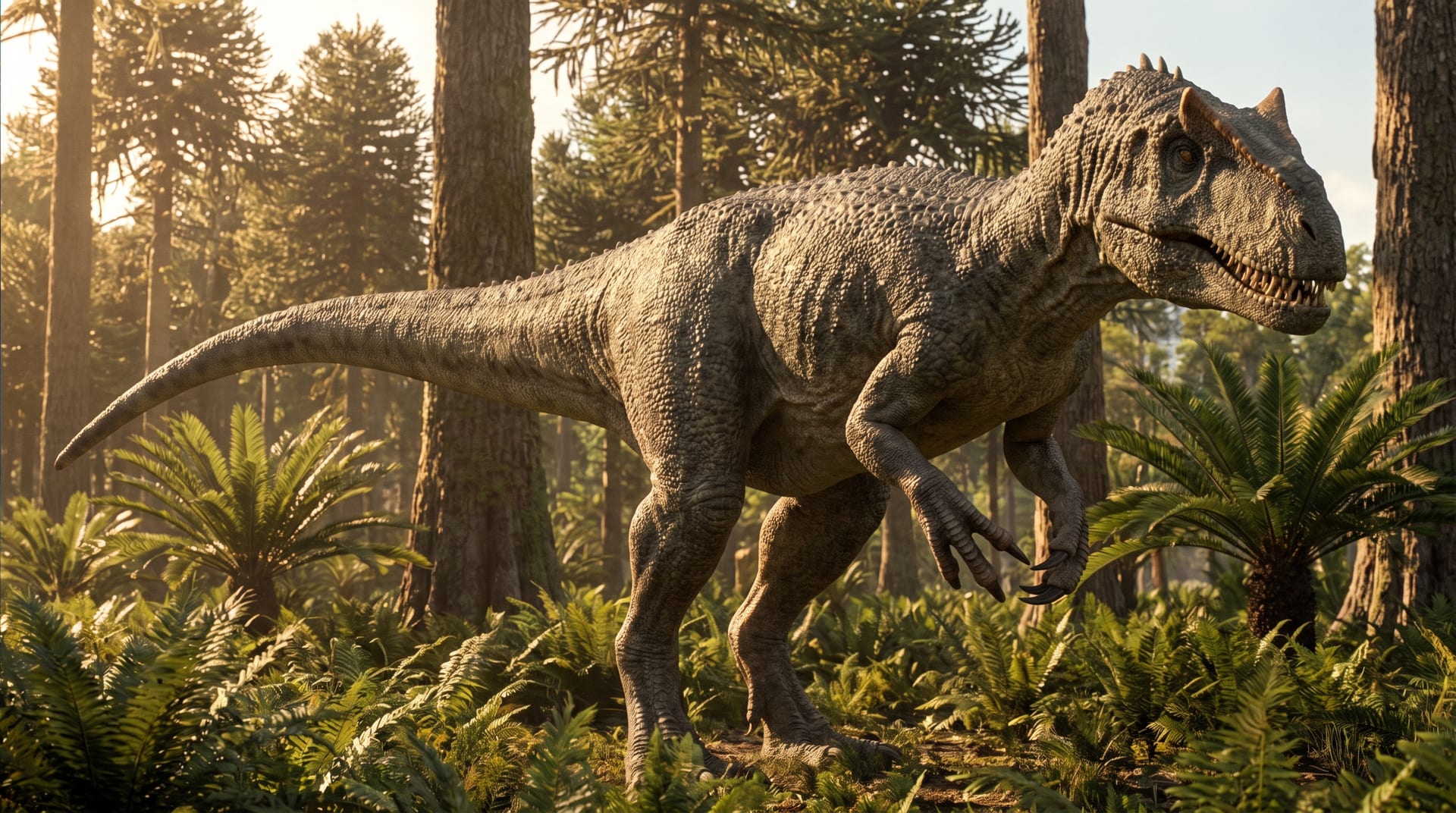
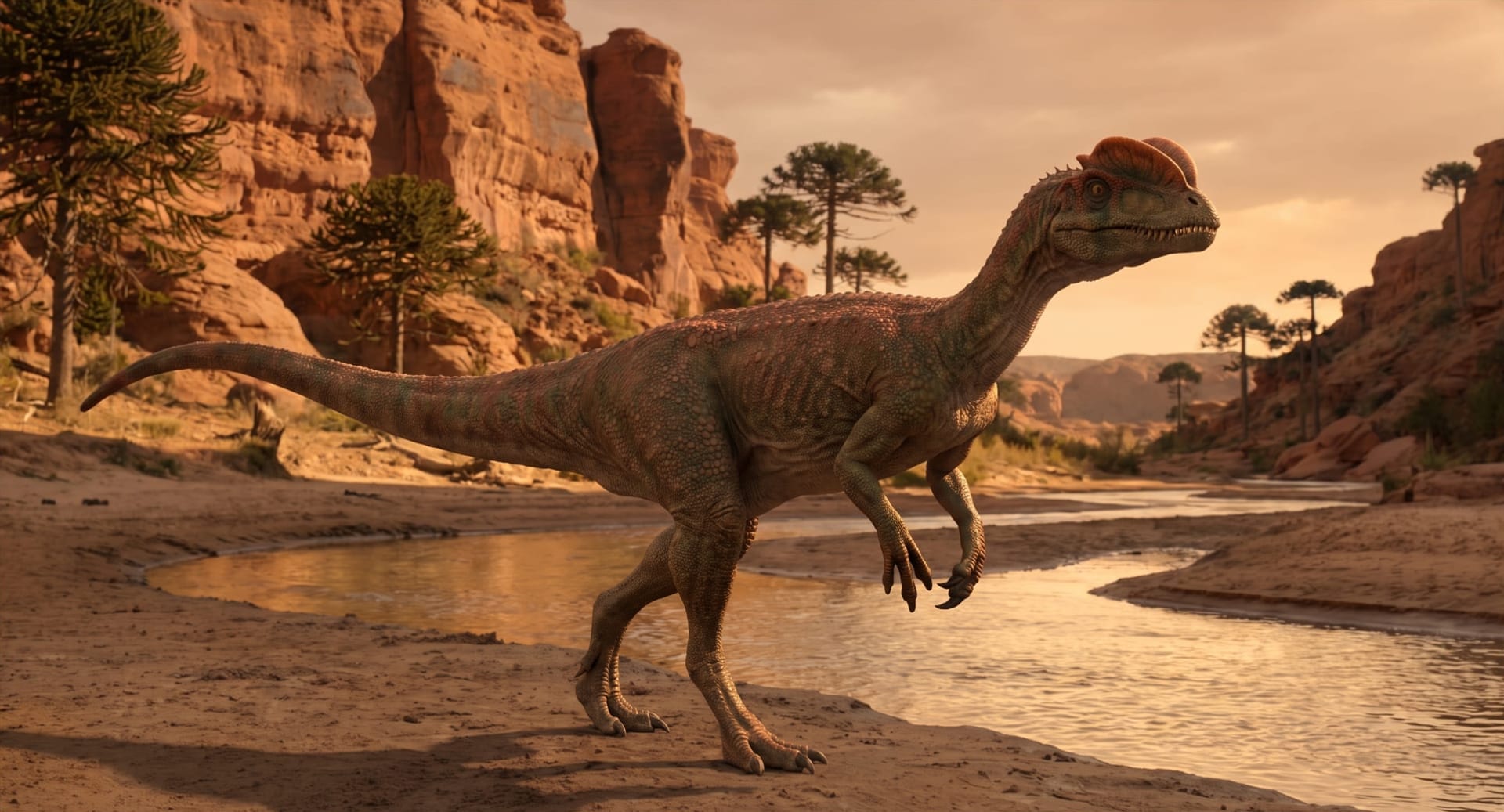
Deinonychus was a medium-sized, meat-eating dromaeosaurid that lived in the United States 115 to 98 million years ago, grew up to 3.4 m long, with a sickle-shaped second-toe claw, the feature its name comes from. It is also the dinosaur that Jurassic Park’s “Velociraptor” was modelled almost entirely on1, under a different, more dramatic name.
How big was Deinonychus?
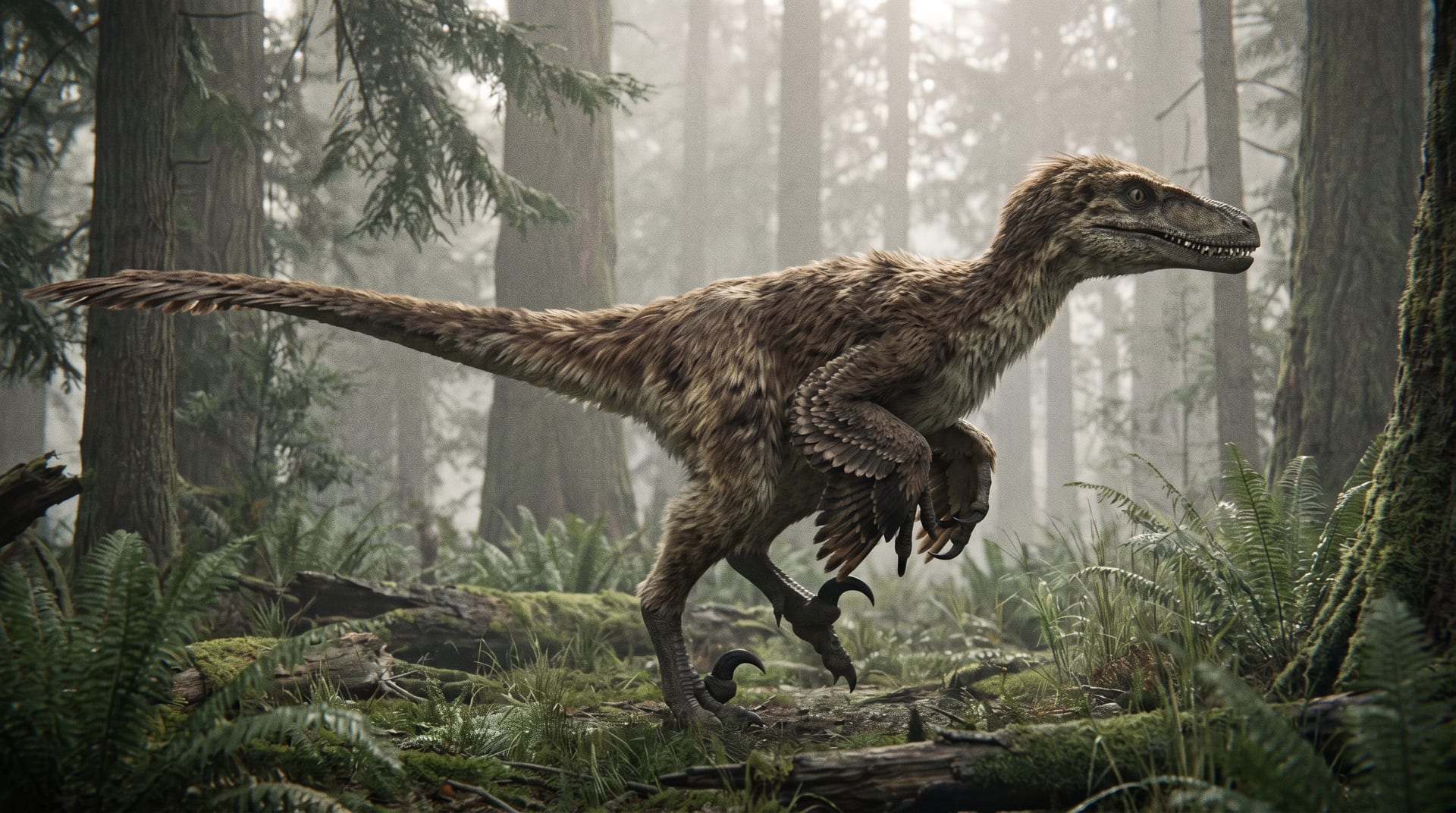
Gregory Paul estimated that Deinonychus could reach 3.3 to 3.4 m long and 60–73 kg, with a separate estimate of 100 kg from bone circumference. It had 0.87 m hips, a 410 mm skull, and around seventy teeth1.
John Ostrom reconstructed the claw on the second toe as over 120 mm long; each hand carried three claws as well. No skin impressions have ever been found1 with a Deinonychus skeleton, but it is plausible that it was covered in feathers of some sort. In its relative Velociraptor, quill knobs have been reported from a single specimen3, though that specimen’s referral to the genus may need reevaluation. One idea is that it might have used such feathers to attract mates2.
What did Deinonychus eat?
Deinonychus was a carnivore. Its remains turn up with the much larger, plant-eating Tenontosaurus: teeth found with tenontosaur specimens imply it hunted, or at least scavenged, them, and one tenontosaur humerus bears what might be Deinonychus tooth marks. An adult Deinonychus weighed 70–100 kg against an adult tenontosaur’s 1–4 tonnes. Fossils of the two together led some researchers to propose pack hunting4; more recent isotope evidence instead suggests the animals may have been gregarious, with ratite-like parental care, not wolf-like packs1.
What the sickle claw was actually for is debated. A 2011 study in PLOS ONE proposed the “raptor prey restraint” model, arguing the enlarged claw worked like the talon of a modern hawk or eagle: the animal would have pinned prey with its body weight and gripping claw, tearing at it with its jaws. Living predators rarely take prey significantly larger than themselves, and Roach and Brinkman considered coordinated pack-hunting unlikely; the study’s authors, though, do not exclude Deinonychus attacking prey much larger than itself, the way a golden eagle can take down a small deer. In living hawks and eagles, the paper notes, the same hypertrophied talons sit on the first and second toes4, for gripping rather than cutting.
When and where did Deinonychus live?
The Paleobiology Database’s own record of Deinonychus antirrhopus gives an occurrence range from the Aptian to the Cenomanian, its earliest occurrences dated to around 121 million years ago and its youngest to around 94 million years ago5, close to the 115 to 98 million years usually quoted for the genus. Its fossils come from the Cloverly and Antlers Formations1, in Montana, Utah, Wyoming and Oklahoma.
The rocks that preserve it point to a floodplain habitat, perhaps similar to modern Louisiana1, named in the same formations as the plant-eaters Tenontosaurus, Zephyrosaurus and the armoured Sauropelta, plus the larger theropod Acrocanthosaurus and the sauropod Sauroposeidon.
How was Deinonychus discovered?
The first bones turned up in Montana in 1931, but sat unstudied for decades. In the 1960s, Yale palaeontologist John Ostrom discovered a wealth of new fossils from the same species2, reshaping how scientists saw the animal. The Paleobiology Database credits Ostrom with naming Deinonychus antirrhopus in 19695, a species name meaning “counterbalancing,” likely a reference to a stiffened tail1, while the genus name means “terrible claw”.
In the 1960s dinosaurs were widely considered “sluggish scaly lumps”; Ostrom argued the animal was far more active and pictured it holding its stiffened tail straight out behind its body as it moved. He also noticed a number of similarities between its skeleton and those of birds, reviving the idea that birds descended from dinosaurs — by 2008, National Geographic described it as a connection almost universally accepted by palaeontologists2.
What kind of animal was Deinonychus?
Deinonychus belongs to the family Dromaeosauridae, one of the non-avialan dinosaur groups most closely related to birds. A close relative is the smaller Velociraptor, known from younger Late Cretaceous rock formations in Central Asia1; Microraptor, Utahraptor and Achillobator belong to the same family.
Deinonychus in popular culture
Deinonychus is the dinosaur behind Jurassic Park’s “Velociraptor”, even though the film uses a different name. Author Michael Crichton met with John Ostrom while writing the novel and later told him he had chosen the name “Velociraptor” for being more dramatic; according to Ostrom, Crichton said the raptor was based on Deinonychus in almost every detail but the name. The film-makers based their creature models almost entirely on it1 too.
Similar dinosaurs
- Velociraptor: a close relative, but far smaller and weaker-biting, at 1.5–2.07 m long with a ~304 N bite3, against Deinonychus’s 706 N; it is also the relative whose quill knobs give direct evidence of feathers that Deinonychus’s own fossils lack1.
- Utahraptor: a fellow dromaeosaurid, larger than the known Deinonychus specimens1.
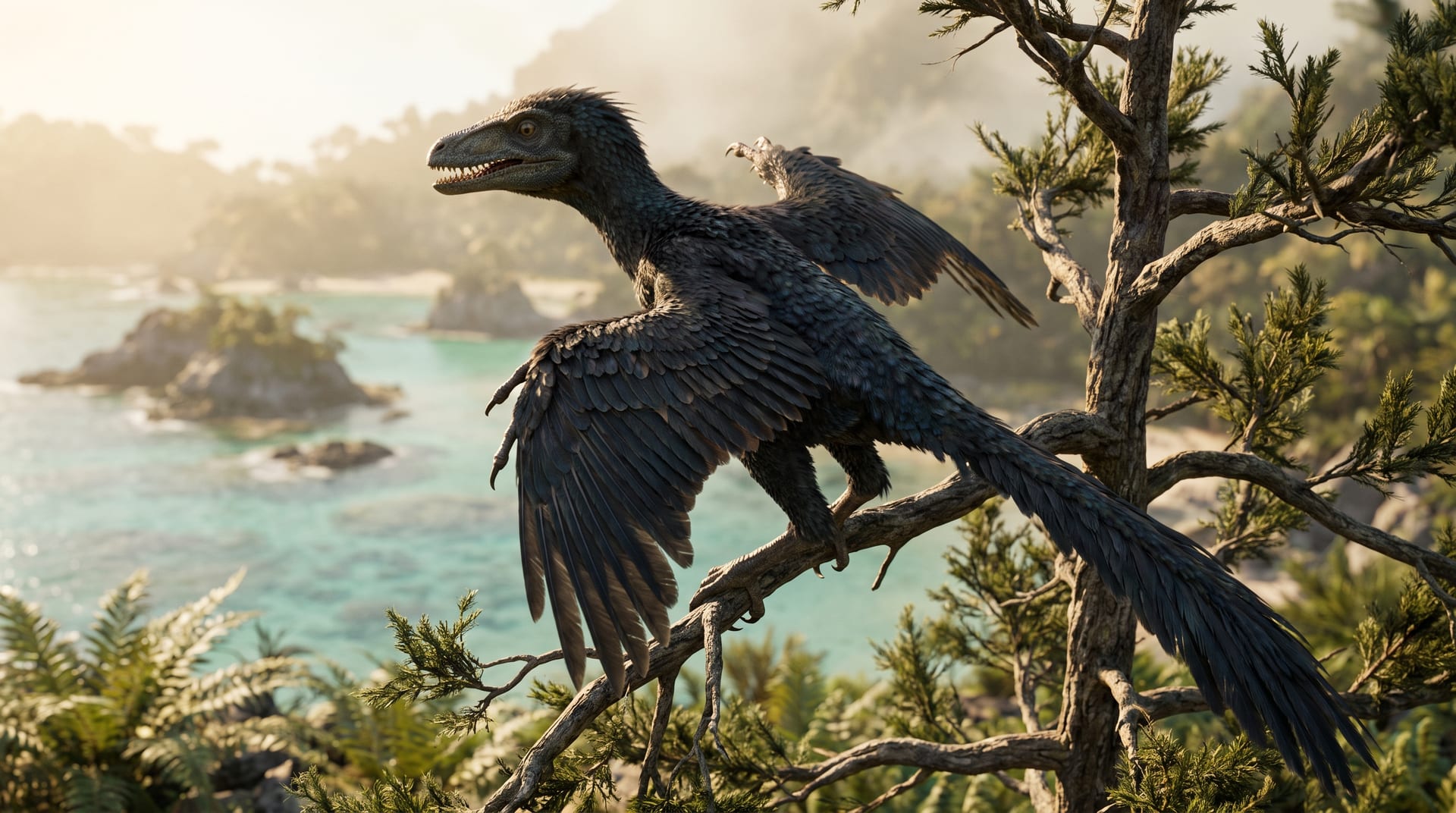
- Microraptor: a dromaeosaurid whose fossils preserve vaned feathers on the arms, legs and tail1, unlike the bare bones Deinonychus itself left behind.