Contents
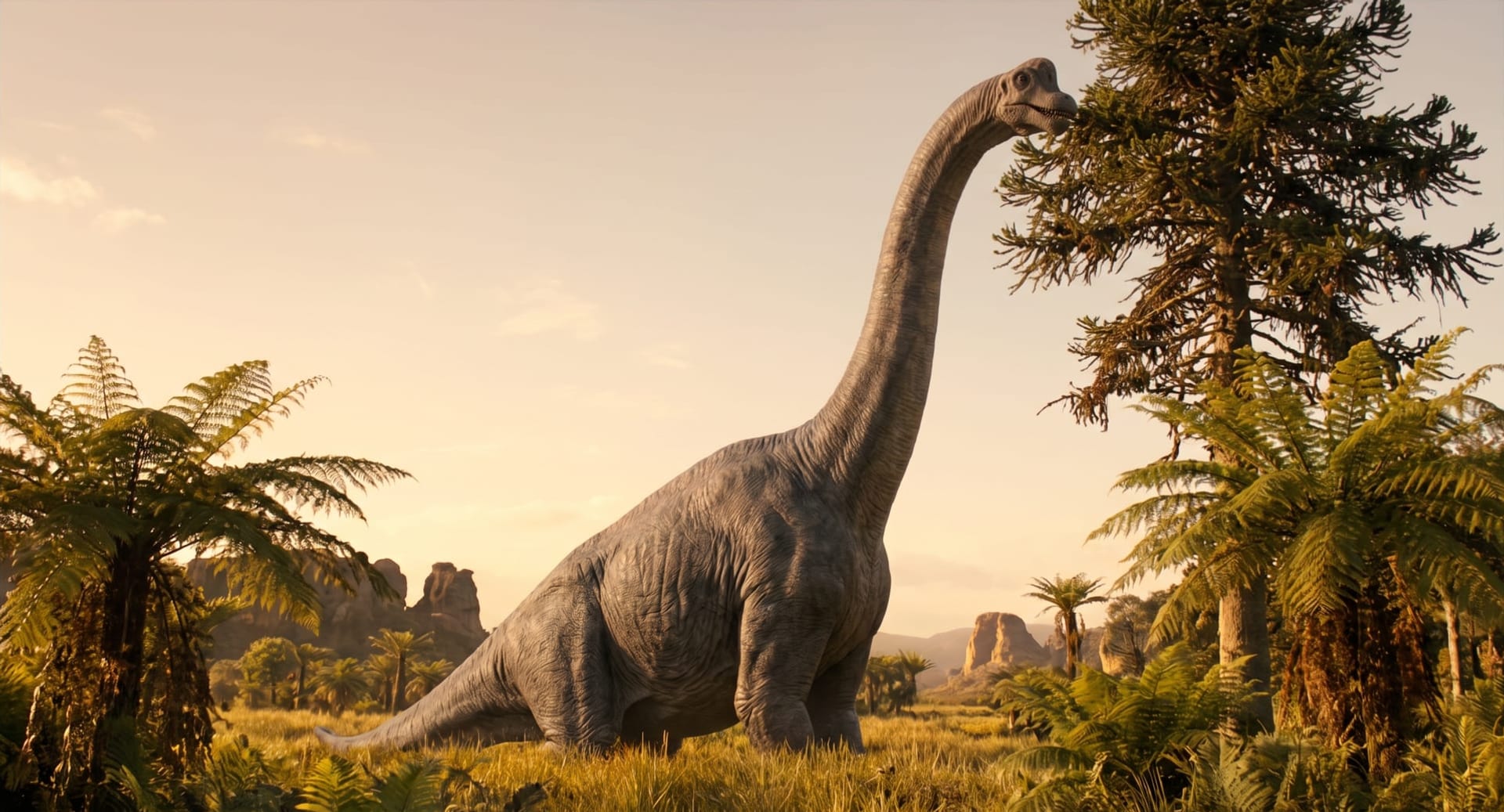
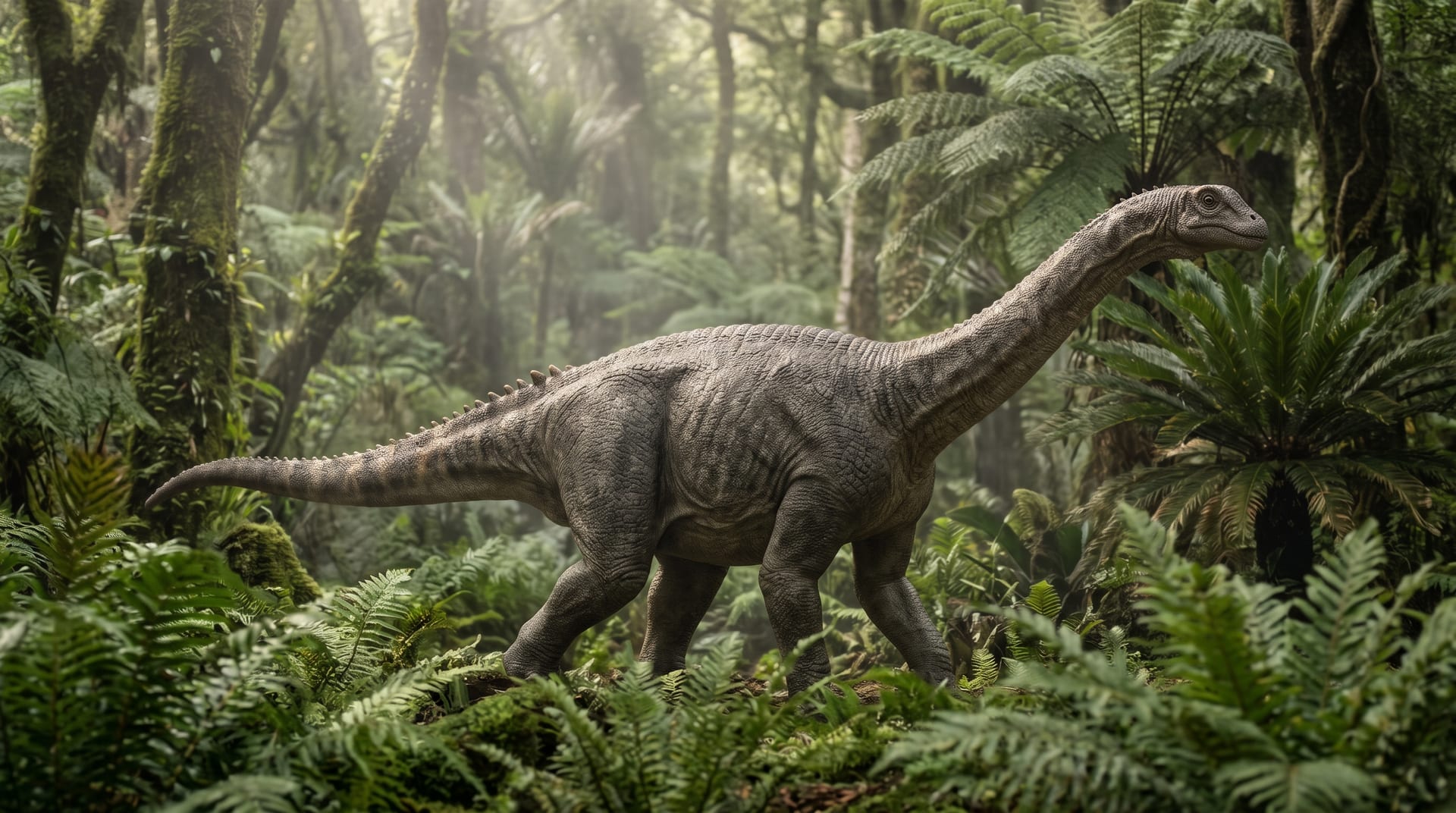
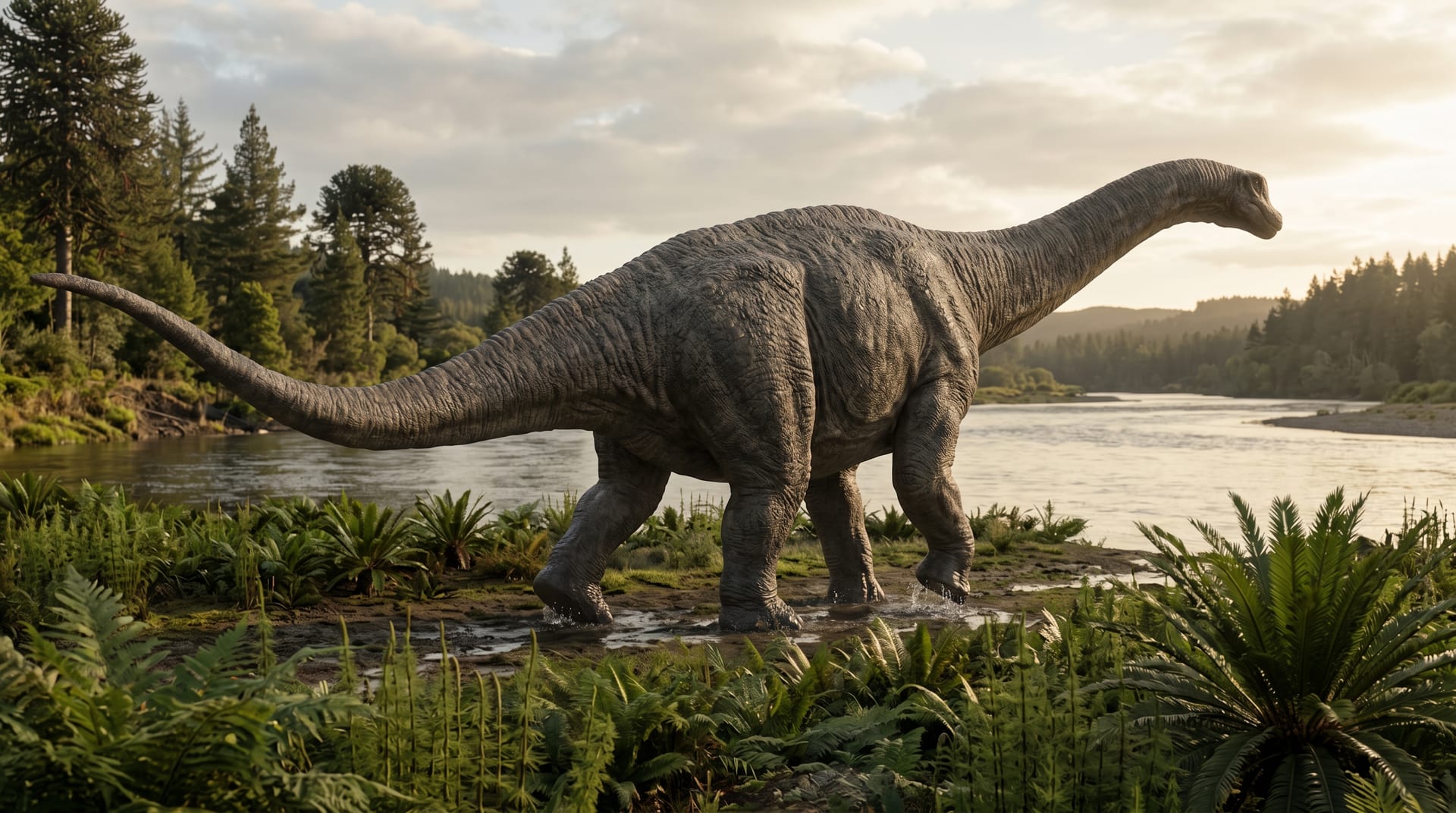
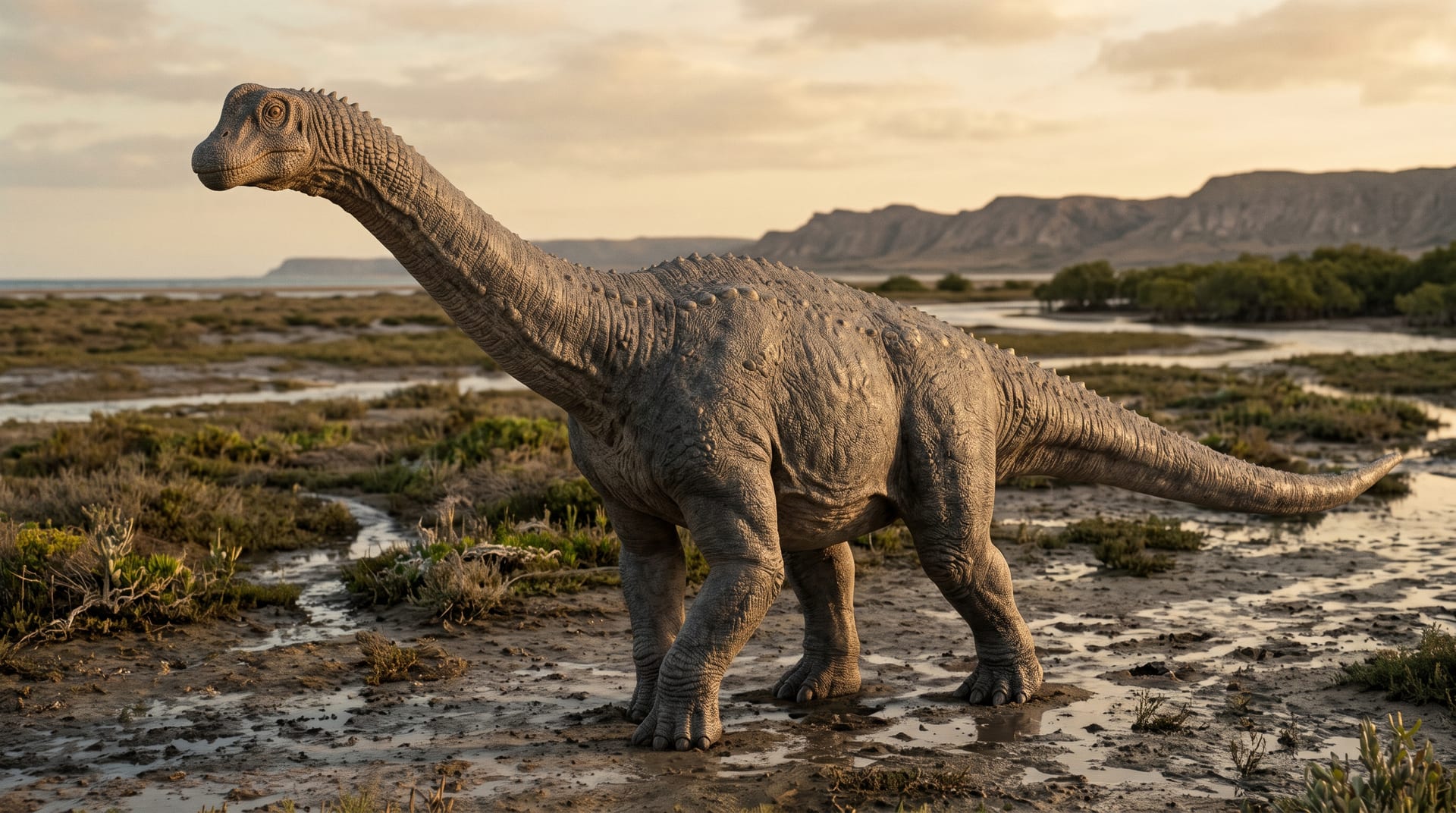
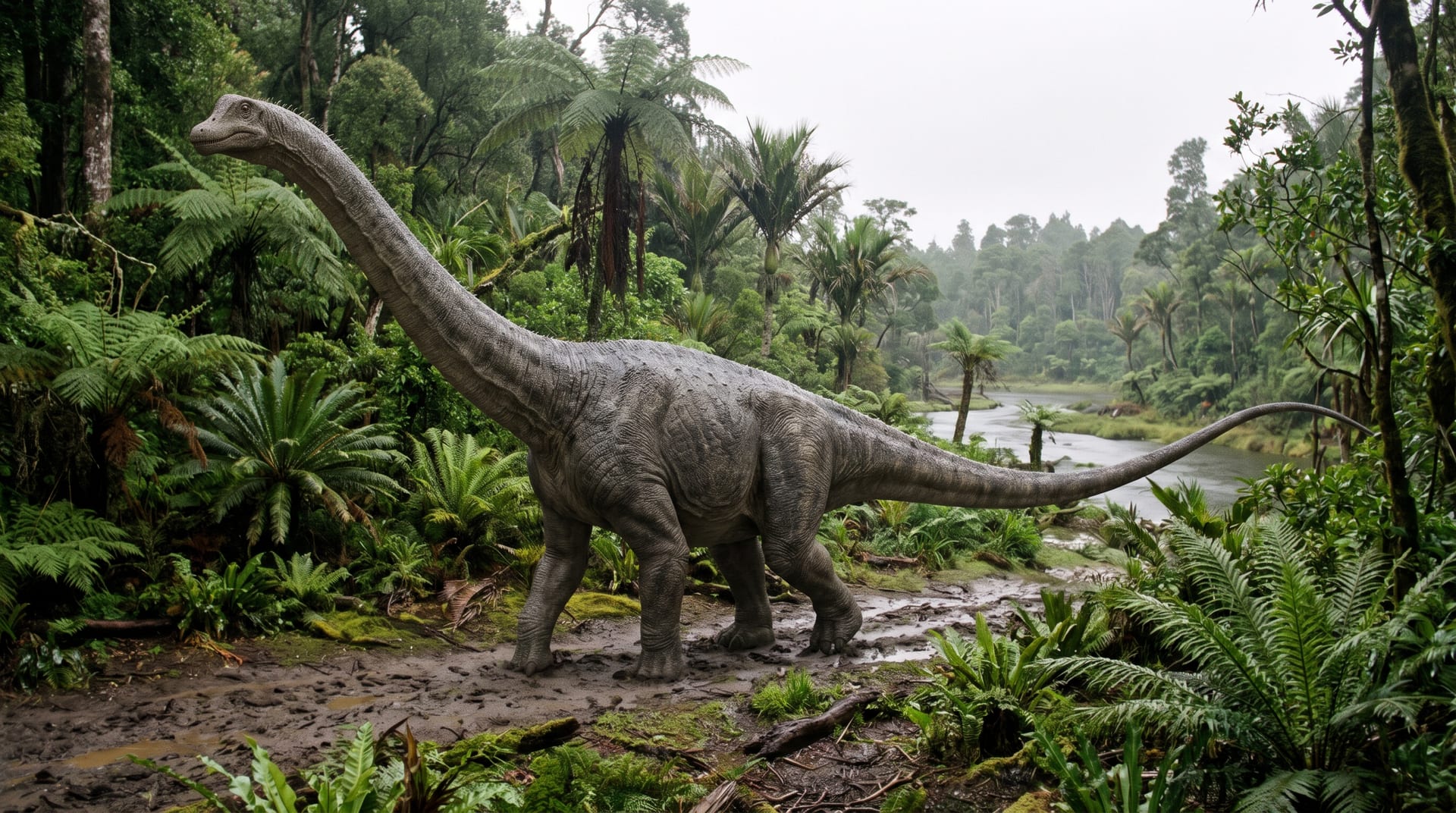
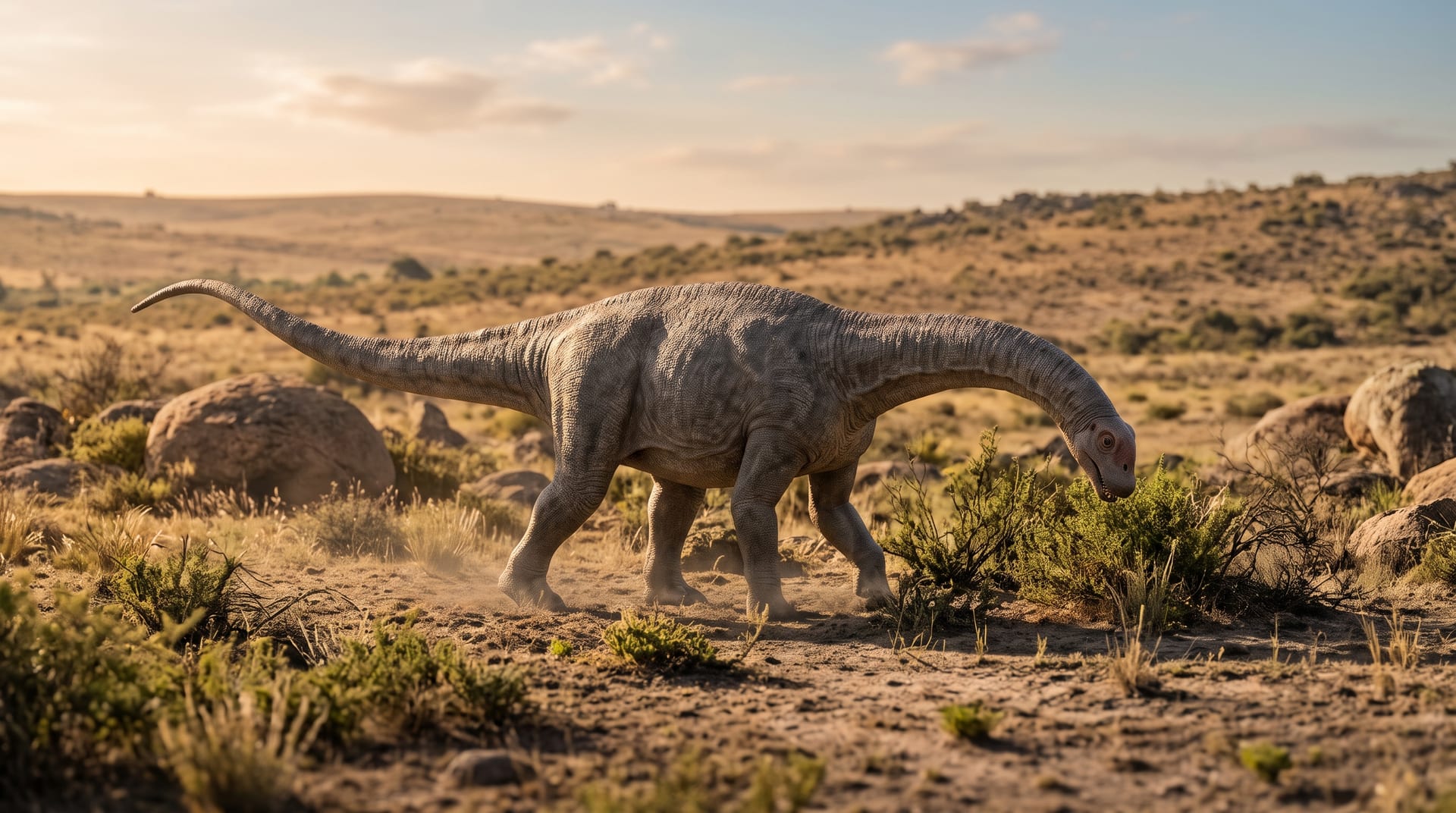
Mesetasaurus was a titanosaur, one of the long-necked, four-legged plant-eaters, that lived in what is now Uruguay between 86 and 72 million years ago, in the Late Cretaceous. Its describers estimate it was 9 to 10 metres long1. The only species, Mesetasaurus protector, is known from a pair of well-preserved tailbones2 dug up in the 1980s near the Uruguay River.
How big was Mesetasaurus?
The scientists who named it used comparative anatomy to put the animal at between 9 and 10 metres long. Their description rests on two tail vertebrae1.
Udelartitan, the other sauropod from the same rock formation, is estimated at about 15 to 16 metres3, based on titanosaurs known from more complete skeletons. For Aeolosaurus rionegrinus, a close relative from Argentina, estimates differ by author: Gregory S. Paul gives roughly 14 metres and 6 tonnes, while Molina-Pérez and Larramendi gave 18.1 metres and 14.7 tonnes4 in 2020.
What did Mesetasaurus eat?
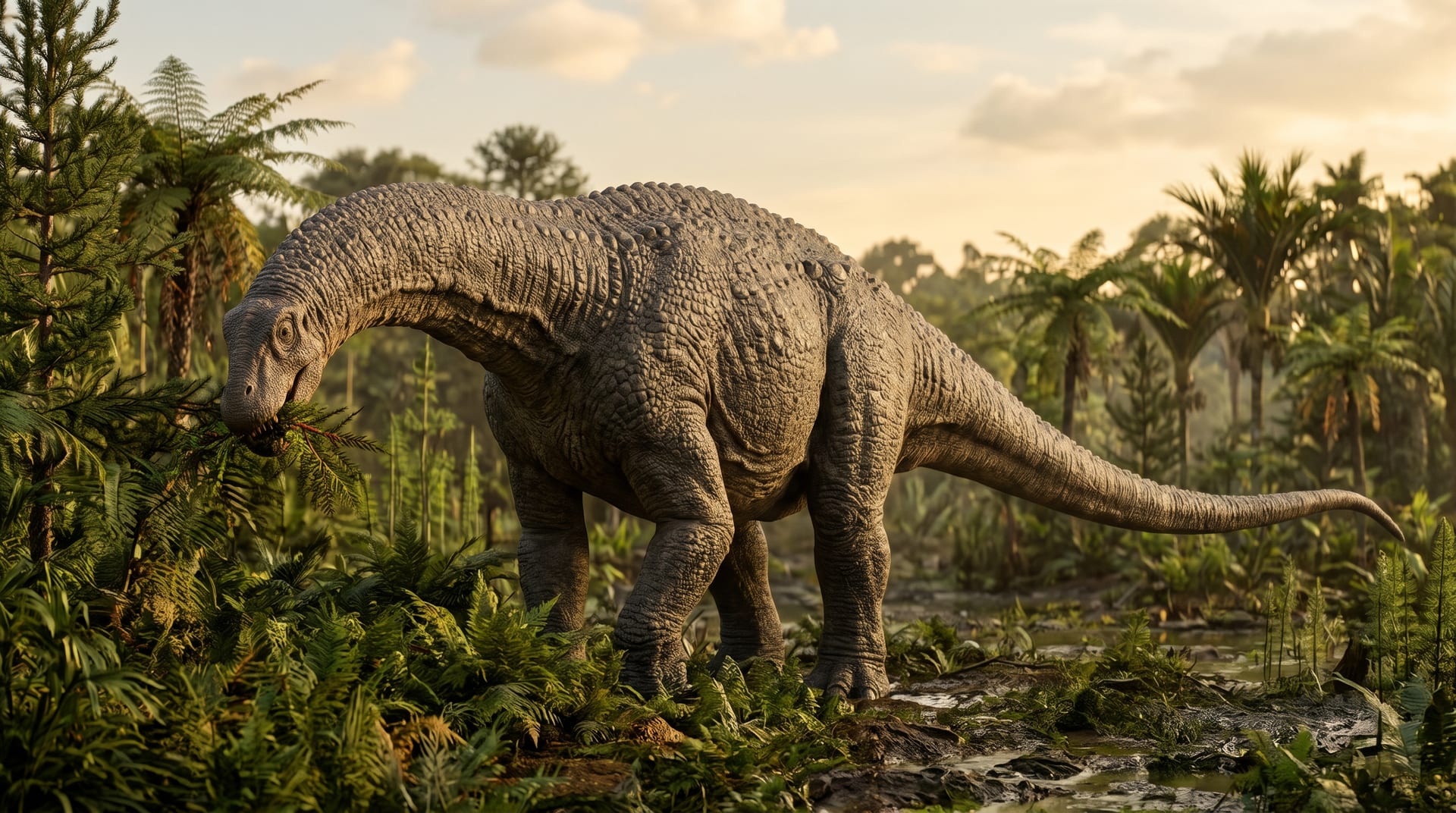
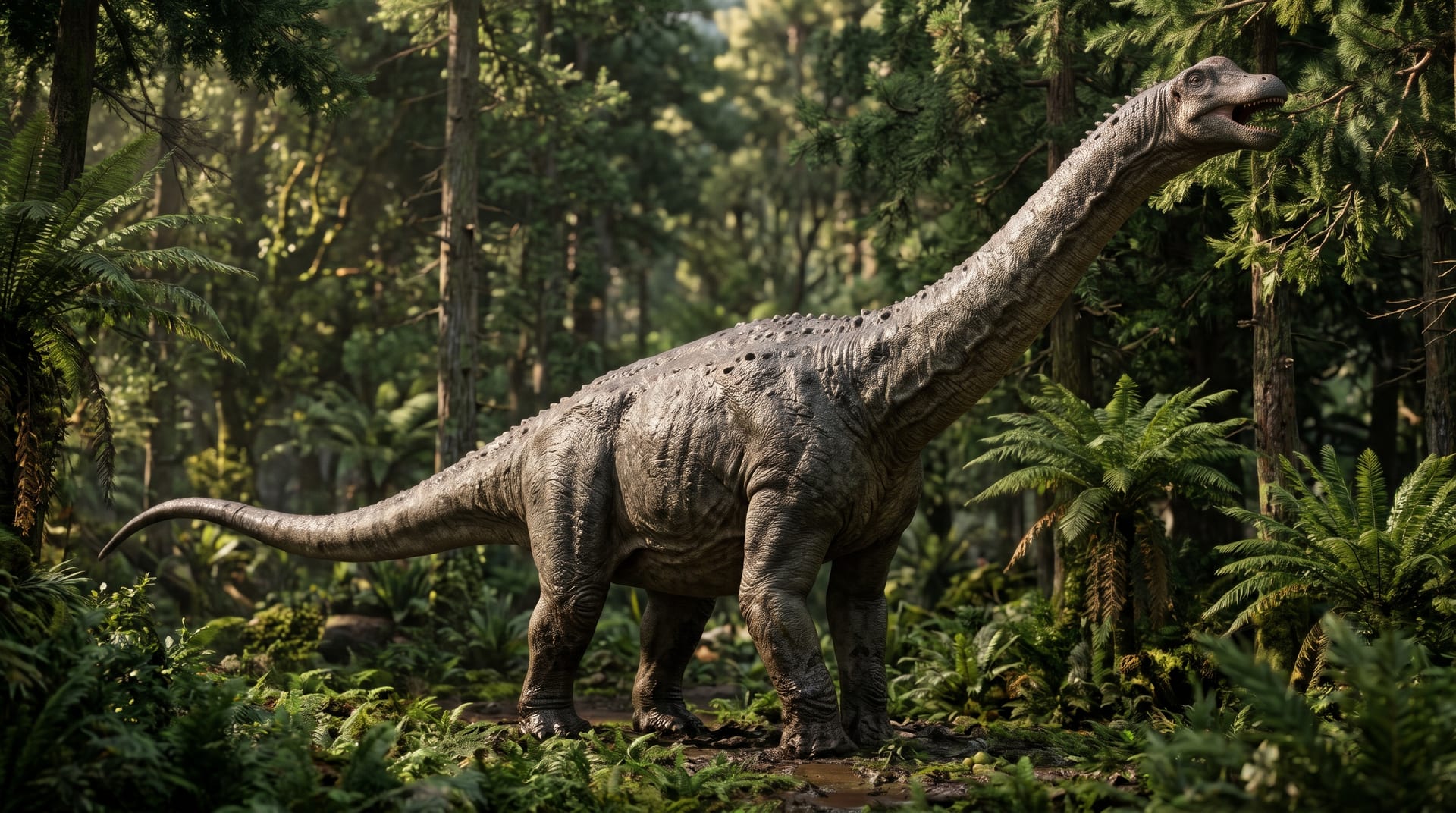
Mesetasaurus ate plants. Palaeontologist Matías Soto places it among the titanosaurs, a group of long-necked, four-legged herbivores1. According to Sci.News, its discovery shows that several lineages of giant plant-eating dinosaurs2 lived in what is now Uruguay during the Late Cretaceous, rather than a single isolated population.
No skull or teeth are among its fossils, which are two caudal (tail) vertebrae5. Its relative Aeolosaurus is better known, but no remains of its skull are known either; like all sauropods, it was a large, long-necked, four-legged herbivore4.
When and where did Mesetasaurus live?
Sci.News dates Mesetasaurus to 86 to 72 million years ago2, and Uruguayan press coverage of the find rounded this to about 80 million years ago1. The Paleobiology Database places the genus in the Santonian to Campanian stages, 85.7 to 72.2 million years ago6.
The two vertebrae come from the Meseta de Artigas site of the Guichón Formation, in the Paysandú department of northern Uruguay. They lay close together in a small exposure of reddish sandstone2, which suggests they came from one animal.
The age of the Guichón Formation itself is uncertain. Some authors once proposed an Early Cretaceous (Aptian–Albian) age for it, but the describers of Mesetasaurus suggested it could date to the Coniacian to Maastrichtian5, when other aeolosaurines are known to have lived. Uruguayan coverage called the fossil a “geological clock”1 that makes the formation younger and places it at the end of the Cretaceous.
Rivers laid down the formation’s sandstones in low-sinuosity channels across sandy plains, under a warm, semi-arid climate7. Other fossils from it include the crocodyliform Uruguaysuchus and teeth of iguanodontians and theropods5, and the titanosaur Udelartitan. The study also linked these Uruguayan ecosystems with rock units of Argentine Patagonia, such as the Allen and Los Alamitos formations1.
How was Mesetasaurus discovered?
The tail bones were collected in the 1980s. Two fishermen came across them by chance, after an excavator had passed through1 the Guichón Formation near the Meseta de Artigas. The bones, catalogued as FC-DPV 3740A and FC-DPV 3740B2, are among the best-preserved sauropod vertebrae known in Uruguay. They are kept in the vertebrate fossil collection of the Universidad de la República in Montevideo, and probably sat in the third and sixth positions5 of the tail.
Matías Soto, Felipe Montenegro and Daniel Perea described the new species in the journal Ameghiniana, where the paper appeared online on 8 July 20262. What sets it apart as a species is an unusual “blind fossa”1, a pit on the back of the vertebra.
The genus name means “Meseta de Artigas lizard”, after the place where the fossils were found. The species name protector honours the Uruguayan national hero José Gervasio Artigas5, known as “Protector de los Pueblos Libres”; the second monument to him in Uruguay stands at the Meseta de Artigas1.
What kind of animal was Mesetasaurus?
Mesetasaurus was a sauropod dinosaur in Aeolosaurini, a group of titanosaurs that flourished across South America at the end of the Cretaceous. Its describers call that group an endemic part of South American latest Cretaceous faunas2, with tail vertebrae so distinctive that they are easily recognised. Aeolosaurines had specialised tails that leaned forward1, according to Soto.
A comparison with dozens of other titanosaurs placed it deep within Aeolosaurini, next to Aeolosaurus rionegrinus and Arrudatitan maximus. When it was described in 2026, it was the second sauropod species from Uruguay, from a different titanosaur lineage than the saltasauroid Udelartitan. It is also the second record of aeolosaurines in the country, after a tail vertebra from the Asencio Formation2 referred to Aeolosaurus.
Titanosaurs as a whole were the most abundant and diverse sauropods of the Late Cretaceous, with several dozen genera, many of them from South America. They were also the only sauropods that lasted until the end of the Cretaceous2, 67 million years ago. In the describers’ family tree, Aeolosaurini splits into two smaller clades, called Clade A and Clade B5 by the authors.
Similar dinosaurs
- Aeolosaurus: a close aeolosaurine relative, named by Powell in 19878; it is known from several individuals of at least two species4 from Argentina and Brazil, while Mesetasaurus rests on two tail bones.
- Udelartitan: the other sauropod of the Guichón Formation, a saltasauroid titanosaur from another lineage, estimated at about 15 to 16 metres3 long.